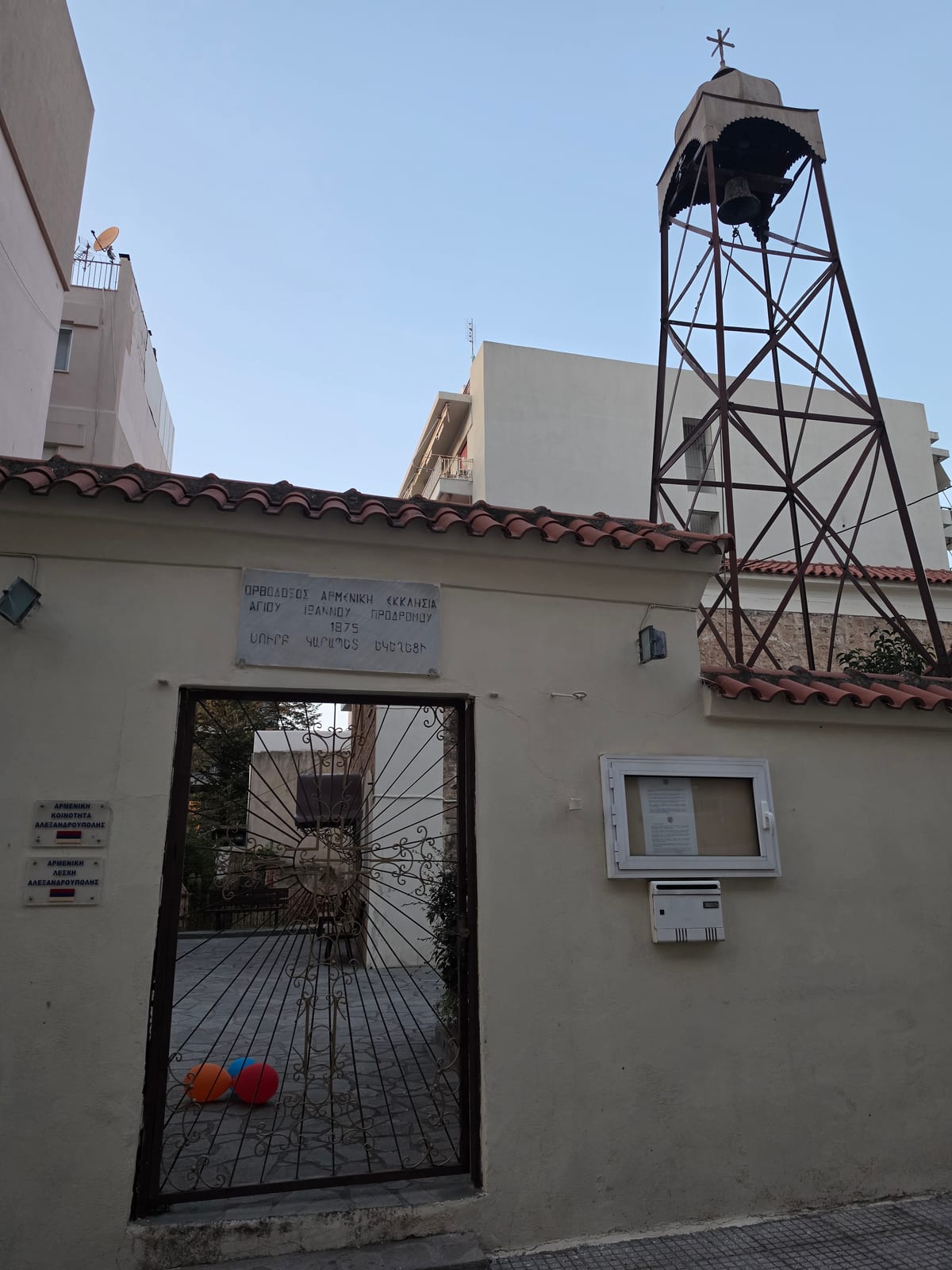
Armenian Church of Saint John the Forerunner
0.31 km from the center
About
At the junction of Anatolikis Thrakis and 14is Maiou streets, the Armenian Church of Saint John the Forerunner is one of the most important records of Alexandroupoli's multicultural history. Known in Armenian as Sourp Hovannou Garabed, the church is directly tied to the beginnings of the modern city and to the story of the Armenian community that settled here in the 19th century.
In the 1870s Dedeagach was a growing settlement in Ottoman Thrace. The development of the port and the railway works drew workers and families from different parts of the wider region. Among them were Armenians from Muş, a historic town in eastern Anatolia, in present-day Turkey. The first Armenians who reached Dedeagach around 1870 formed the core of a community that looked for ways to organise its religious, social and educational life.
The need for a place of worship of their own led to the decision to build a church dedicated to Saint John the Forerunner. The name Sourp Garabed is linked to the saint of that name and to the church tradition of the region the first members of the community came from.
The foundations of the church were laid in 1875. Building it was not just a construction project but a collective effort by the first Armenian residents of Dedeagach. According to the historical account of the Armenian Orthodox Metropolis of Greece, the faithful contributed their own labour to the building. The church was completed in August 1886, after eleven years of effort. The project shows how much religious life mattered to the community, and how determined it was to establish a lasting presence in the new town.
The church is considered the first Christian church built in Alexandroupoli. Its historical importance is therefore closely bound to the early growth of Dedeagach, long before the city took its present name.
The church is stone-built and follows the type of a basilica without a dome. Its exterior is plain, and its architecture reflects the religious tradition of the community that created it. Its form differs from the more imposing churches found in larger cities. Its value, however, lies not only in its architecture but also in the story of collective effort it stands for. Inside, historic ecclesiastical heirlooms are kept, linking the church's life today with the long course of the Armenian community in the area.
The church was not the only concern of the first Armenian residents. A school was also built next to it, so that the community could organise the education of its children as well. The pairing of church and school reflects a basic feature of the history of Armenian communities: faith, language and cultural identity were preserved through worship and education. The church became a point of reference for the city's Armenians, a place of gathering and shared life at a time when Dedeagach was taking shape as a new urban centre.
The history of Alexandroupoli was not written by one community alone. Greeks, Armenians, Jews, Muslims and other groups contributed, in different periods, to the economic and social life of the city. The Armenian Church is one of the most tangible traces of that coexistence. Its presence is a reminder that the city grew through the movement of populations, work at the port and on the railway, trade and the creation of new communities. The church's history continues today through the religious life of the Armenian community and the preservation of its cultural heritage.
Photos
Contact
- Ανατολικής Θράκης 54, Αλεξανδρούπολη 68131
- 2551036683
Useful Information
- Category
- Historic Buildings
Weather in Alexandroupoli
LiveFrom April to June and from September to October you get warm days, calm sea, and fewer crowds. July and August are hot and busy along the seafront, while winters stay mild but rainy.
Share
You Might Also Like
Discover more suggestions from the same category.
 FEATURED
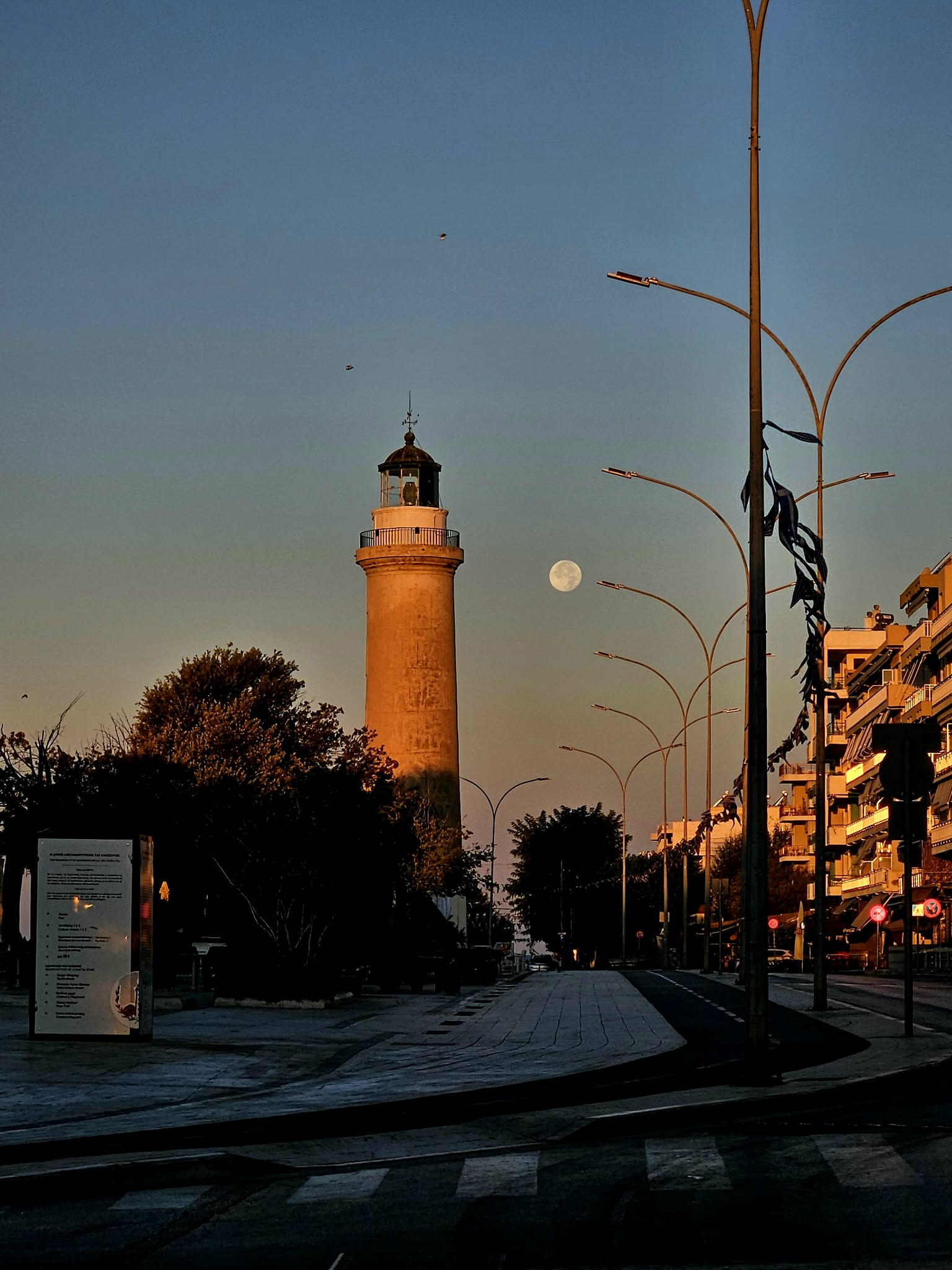
The Alexandroupoli Lighthouse
The Lighthouse of Alexandroupoli is the city's most recognisable monument and one of the most distinctive landmarks of all Thrace. It stands right on the seafront, in the square that bears its name, and is an inseparable part of Alexandroupoli's image. The lighthouse is directly linked to the great growth of Dedeagach in the second half of the 19th century, when the city was developing into a major port and railway hub of the Ottoman Empire. One of the City's Symbols Its construction began around 1850 by the Administration Générale des Phares de l'Empire Ottoman, the French lighthouse administration/company of the Ottoman Empire, and was completed several years later. The Lighthouse was inaugurated and put into operation on 1 June 1880, and has operated continuously ever since. It stands 18 metres tall and is visible from a distance of about 24 nautical miles, roughly 44 kilometres. The lighthouse is built of stone and has an internal staircase leading up to the lamp room at the top. From Oil to Electricity For many decades the lamp ran on oil. In 1973 the old system was replaced, and the lighthouse switched to electric power. The lighthouse's operation is no longer merely a historical memory. It remains an active maritime aid, while the structure itself has been officially designated a monument by the Ministry of Culture. Its Relationship With the Port and the City The Lighthouse's creation should be seen within the wider development of Dedeagach. The city was growing rapidly thanks to the port and the railway, while the lighthouse's presence secured an important navigation point for ships approaching the area. It is therefore no accident that the Lighthouse stands exactly where the city, the seafront avenue and the sea meet today. Its location is part of its story. The Square and the Seafront The area around the Lighthouse is today one of Alexandroupoli's most distinctive public spaces. This is essentially where the experience of the seafront city begins, with the pedestrian walkway, dining spots and views over the Thracian Sea. The square in front of the Lighthouse is also a point from which one can start a walk towards the seafront zone and the port, or towards the western part of the city. In 2026 the Ministry of Culture approved the use of part of Faros Square for cafe seating, with specific restrictions to keep access walkways clear and preserve unobstructed views of the monument and the sea. Can You Go Inside? The Lighthouse's interior is not a permanently visitable museum or sight. It isn't open to visits on a permanent basis, though special activities occasionally take place, such as on World Lighthouse Day, allowing the public to visit the interior and climb up to the lamp room. A Must-See for Every Visitor Even without going inside, the Lighthouse is one of the things no visitor to Alexandroupoli should miss. The best experience is to visit it in the late afternoon, when you can combine: Lighthouse to Faros Square to a walk along the seafront to sea views to coffee or a meal on the waterfront. And of course, it is one of the city's most distinctive photo spots, especially at sunset.
0 km
 FEATURED
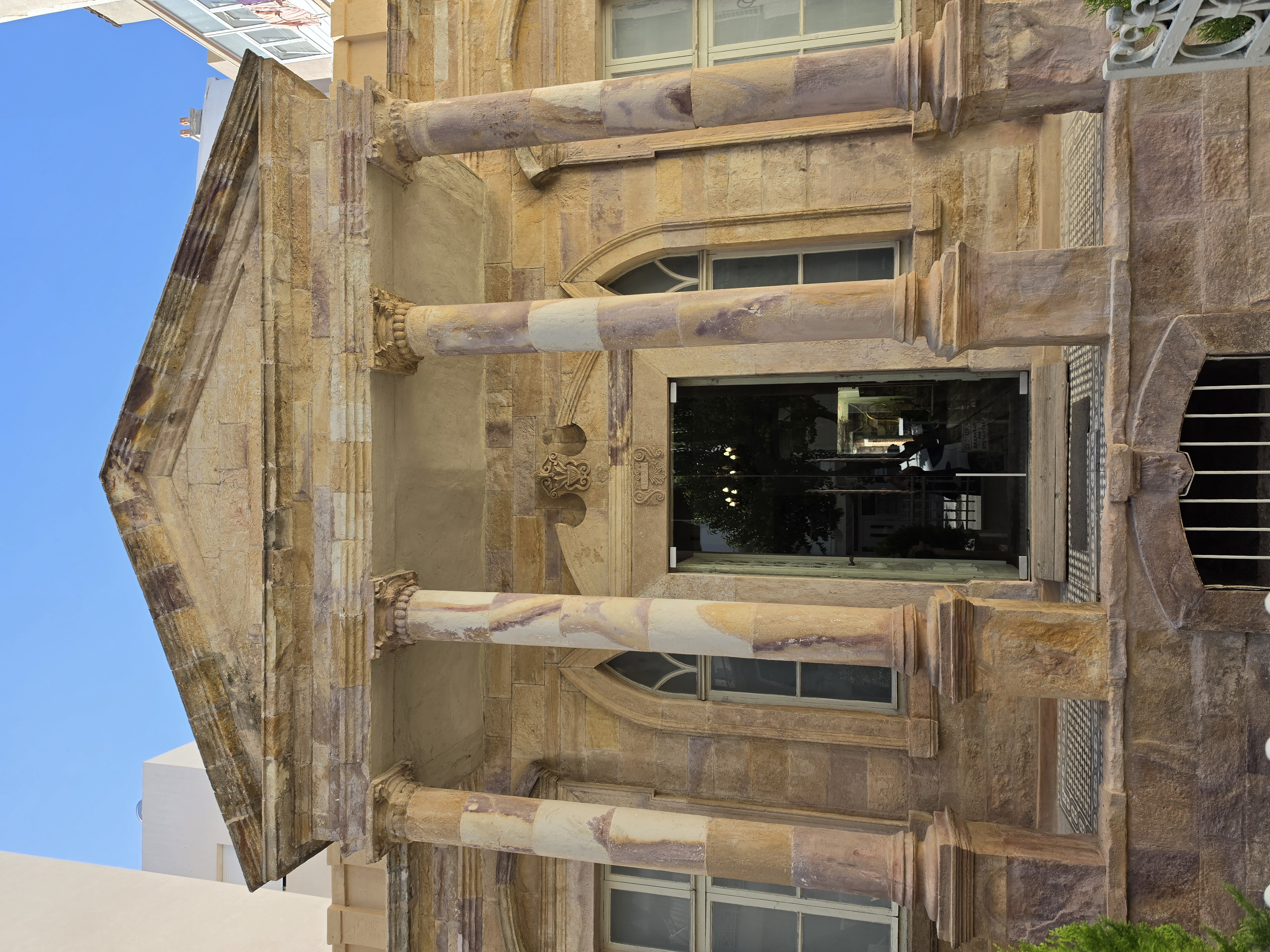
Ethnological Museum of Thrace "Angeliki Giannakidou"
A beautiful stone neoclassical building from 1899, on 14is Maiou street, houses the Ethnological Museum of Thrace "Angeliki Giannakidou", one of Alexandroupoli's most important museums for getting to know the folk culture and daily life of Thrace. The museum has operated since 2002 and was founded by Angeliki Giannakidou to preserve, study and promote the historical and cultural memory of Thrace. Daily Life in Thrace The museum's collection includes around 5,000 objects, along with significant photographic and archival material, while more than 500 objects are on permanent display. The material mainly covers the period from the late 17th to the early 20th century. This isn't simply a collection of old objects. The exhibition tries to show how the people of Thrace lived, worked, dressed, ate and celebrated, presenting the region's culture through everyday life. What You'll See The permanent exhibition is organised into thematic sections presenting different aspects of life in Thrace. The ground floor presents, among other things, traditional Thracian costumes, maps and information about the region, music and worship, ceramics, metalwork, and food along with pre-industrial confectionery. The basement presents activities and products linked to Thrace's agricultural and productive life, such as farming land and grain, sorghum, honey, water, wine and tobacco. The courtyard and adjoining building also present traditional productive activities such as sesame-oil pressing, dye works and textile processing. A Culture of Many Influences One of the museum's interesting features is that Thracian tradition is presented as the result of the coexistence and interaction of different populations, cultures and religious traditions that lived in the region. This is why the visit isn't only about Greek traditional customs, but helps visitors understand the cultural richness and diversity of Thrace. A Living Museum The Ethnological Museum of Thrace is not limited to its permanent collection. It holds archival material, photographs, a library and recordings from fieldwork, and runs temporary exhibitions, events, educational activities and research into the intangible cultural heritage of Thrace. The museum also organises activities that bring traditional music, songs, customs and oral traditions to the fore, maintaining its relationship with local communities. The Building Itself The building itself is worth noting too. It is a stone neoclassical building from 1899, a distinctive example of the architectural heritage of old Alexandroupoli. The building's history is part of the visiting experience. Why It's Worth a Visit If you want to get to know Alexandroupoli and Thrace beyond the beaches and modern sights, the museum is a very good stop. Through the costumes, tools, everyday objects, traditional techniques and productive activities, Thrace is presented through its people and way of life. And because it is in the centre of Alexandroupoli, it can easily be combined with a walk through the market and the area's historic buildings.
0.58 km
Historic OSE Railway Offices Building
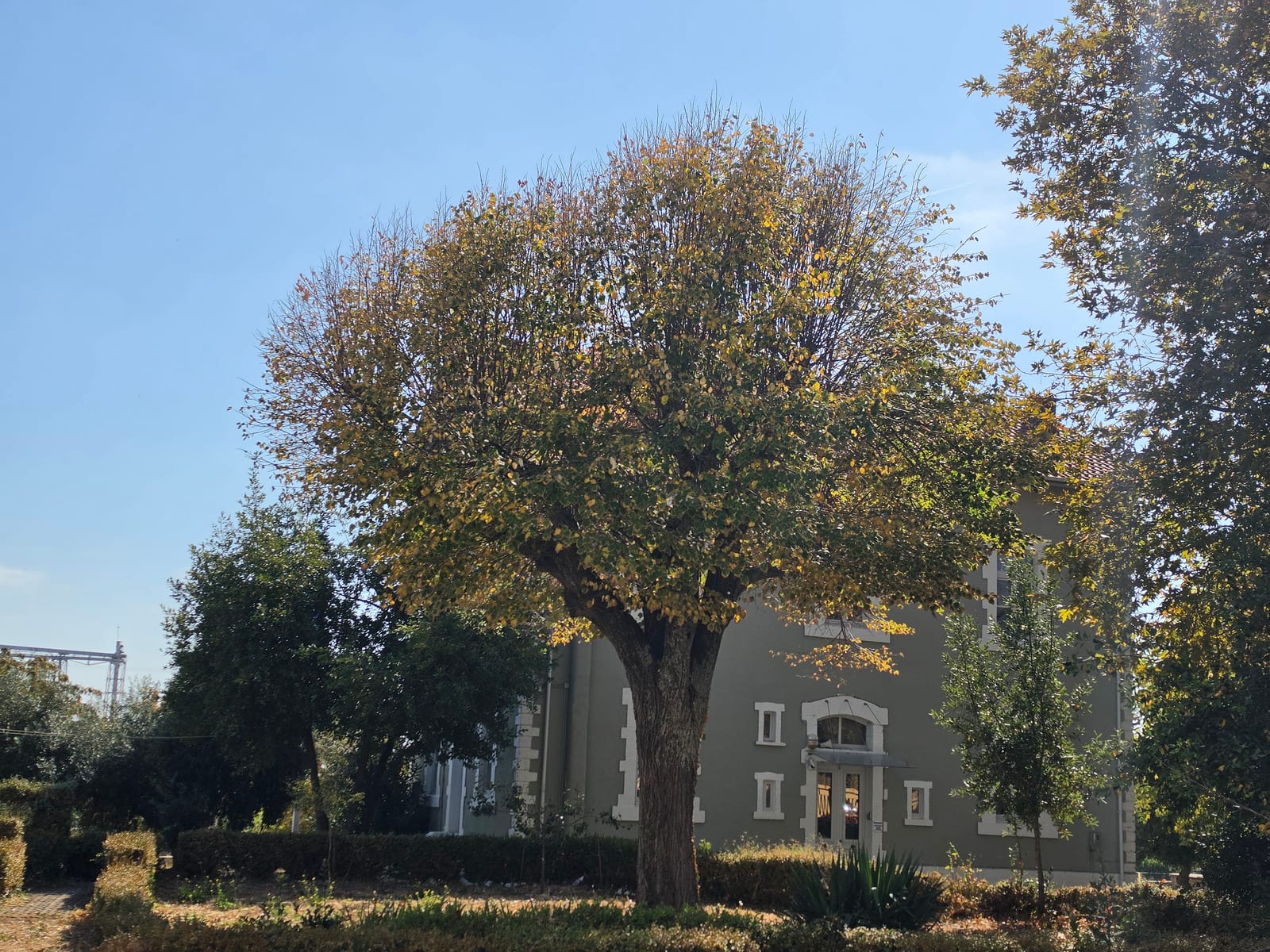
The historic building of the OSE (Hellenic Railways) Offices is part of Alexandroupoli's railway heritage. It is an administration building connected with the organisation and operation of the area's railway services. Its exterior still carries the old sign referring to the OSE Offices and the Operations Inspectorate, a witness to its earlier official use. Its history is tied to the development of the railway in the area from the late 19th century.
0.52 km
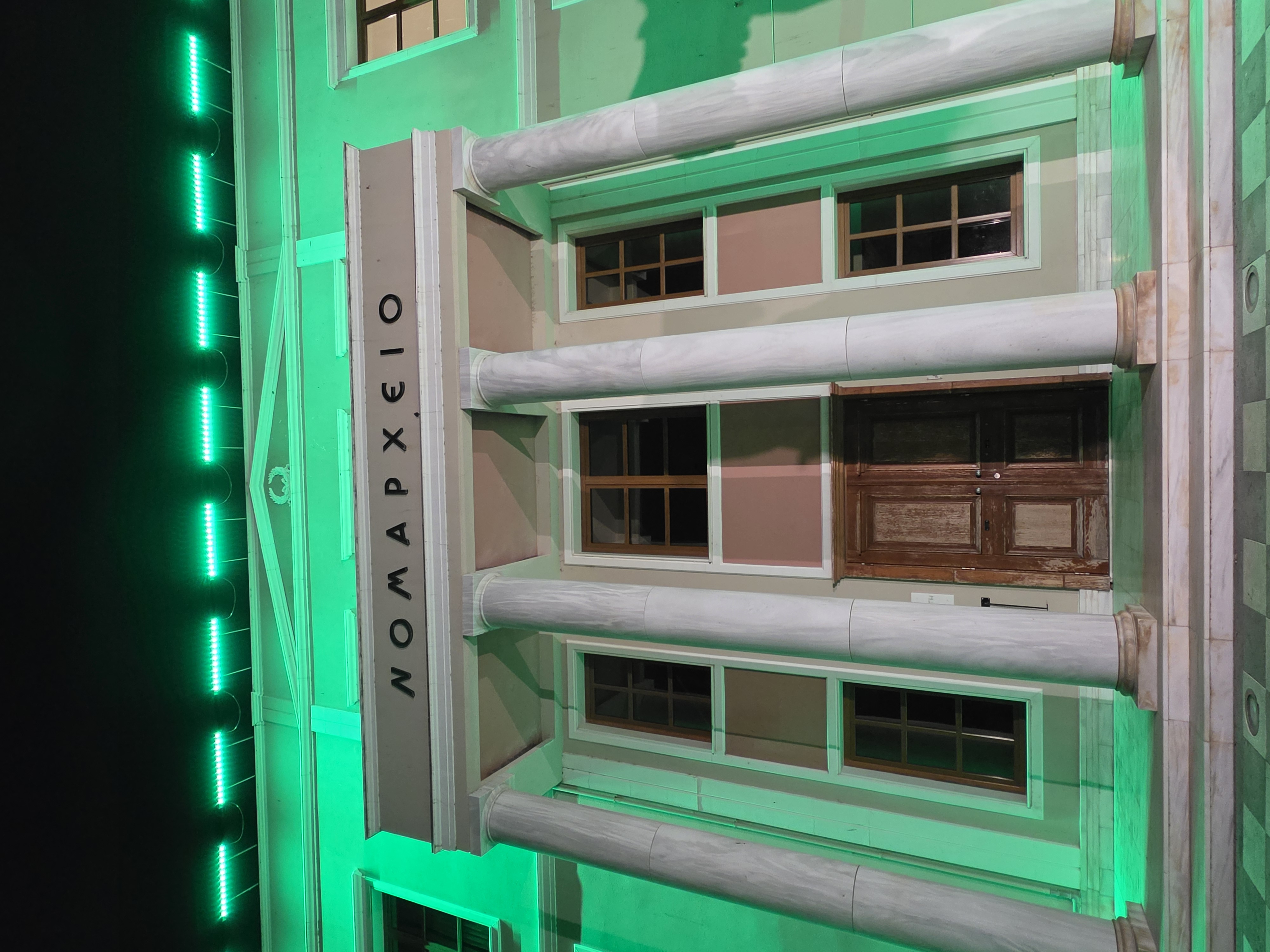
Alexandroupoli Prefecture Building
Alexandroupoli's Prefecture Building, also known as the Evros Administration House, is one of the city's characteristic public buildings and a place of particular historical and cultural significance. Today's building stands on the same site as the historic Administration House, continuing the site's administrative and public presence. The history of the site is closely linked to the physician Alexandros Kritis, one of the people who left a significant mark on Alexandroupoli's history. Alexandros Kritis and the "Villa of Doctor Alexandros Kritis" Alexandros Kritis was a physician who settled in Alexandroupoli and became involved in the city's social and public life. His residence, referred to in historical sources as the "Villa of Doctor Alexandros Kritis", acquired particular importance. Kritis donated his residence to the Greek State so that it could be used for a public purpose. This donation was linked to the creation of the Administration House and is the main reason his name is still preserved in the history of the site today. Today, the memory of Alexandros Kritis is kept especially alive at the Prefecture Building. The hall on the second floor bears the name "Alexandros Kritis Hall", in honour of the great donor, while the space also hosts an excerpt of his will. The building's own historical presentation includes a permanent photo exhibition narrating the evolution of the site, starting from the Villa of Alexandros Kritis, continuing with the old Prefecture, and ending with today's building. The old Prefecture The historic Administration House that followed the donation was a distinctive two-storey wooden building in baroque style. According to historical records, the building had initially been used as the Russian Consulate, and after the city's liberation it was used as the Administration House. For many years it served as an important administrative centre of Alexandroupoli and housed services of the Evros Prefecture. The building was also linked to significant events in the city's modern history. Eleftherios Venizelos spoke to the residents of Alexandroupoli from its balcony during his visit to the city in 1930. The old wooden building no longer survives today. It was demolished and the newer Prefecture building was built on its site. Today's Prefecture Building Today's Prefecture Building stands on the same site as the historic Administration House, at Vasileos Alexandrou 26. The Region of Eastern Macedonia and Thrace officially records it as the Prefecture Building, while documents of the Regional Unit of Evros refer to it separately from the central building of the Regional Unit of Evros at Karaoli & Dimitriou 40. The new building was erected on the site of the old Prefecture and represents the modern continuation of the site's administrative use. The history of the old building has not been lost, as it has been preserved in the new Prefecture Building through photographic and historical material. Of particular interest is the permanent photo exhibition that records the site's journey: from the original Villa of Doctor Alexandros Kritis, to the old Prefecture, and finally to today's building. Marble plaques bearing the names of appointed and elected local government officials have also been placed in the same space. A place of administration but also of culture The Prefecture Building is not exclusively an administrative space. Its halls and spaces have repeatedly been used for painting exhibitions, photographic and visual arts presentations, talks, conferences, lectures, cultural events and other public activities. Notably, in 2025 the Prefecture Building hosted a painting exhibition by the Alexandroupoli Visual Arts Association, while informational and social activities were also held in the same space. The Prefecture Building has also been used for lectures and educational activities. The "Alexandros Kritis" Hall, on the second floor, has repeatedly hosted lectures by the Region's Lifelong Learning Structure, as well as other public events. The building's courtyard has also been used for cultural events, among others within the framework of the Via Egnatia Festival. In the courtyard there is also a faithful replica of the Winged Victory of Samothrace, an element that symbolically connects the building and the city with neighbouring Samothrace and one of the most important works of ancient Greek art. From the Villa to the Administration House and today's Prefecture Building The history of the site can be seen as a journey through three stages: Villa of Doctor Alexandros Kritis → historic Administration House / old Prefecture → today's Prefecture Building. This makes the site particularly interesting for the history of Alexandroupoli. It is not simply a modern public building, but a place that reflects the city's transition from the early period of its development to its modern administrative identity. The presence of Alexandros Kritis, the history of the old Administration House, the visit of Eleftherios Venizelos, the permanent photo exhibition, and the site's present-day use for administrative as well as cultural activities together form a significant part of Alexandroupoli's historical memory. Information Name: Alexandroupoli Prefecture Building. Alternative name: Evros Administration House. Type: Historic site / Public building. Address: Vasileos Alexandrou 26, 681 32 Alexandroupoli. Contact The Prefecture Building hosts different services, so there is no single phone number for all of its functions. Office of the Deputy Regional Governor of the Regional Unit of Evros - Phone: 25513 50452 Directorate of Development of the Regional Unit of Evros - Phone: 25513 50509, Email: anaptixi.evrou@pamth.gov.gr Directorate of Transport & Communications of the Regional Unit of Evros - Phone: 25513 50556, Email: metaforonevrou@pamth.gov.gr Directorate of Rural Economy & Veterinary Affairs of the Regional Unit of Evros - Phone: 25513 57147, Email: papadakis@pamth.gov.gr Official website of the Region of Eastern Macedonia and Thrace: pamth.gov.gr Regional Unit of Evros: pamth.gov.gr/perifereiaki-enotita-evrou
0.24 km
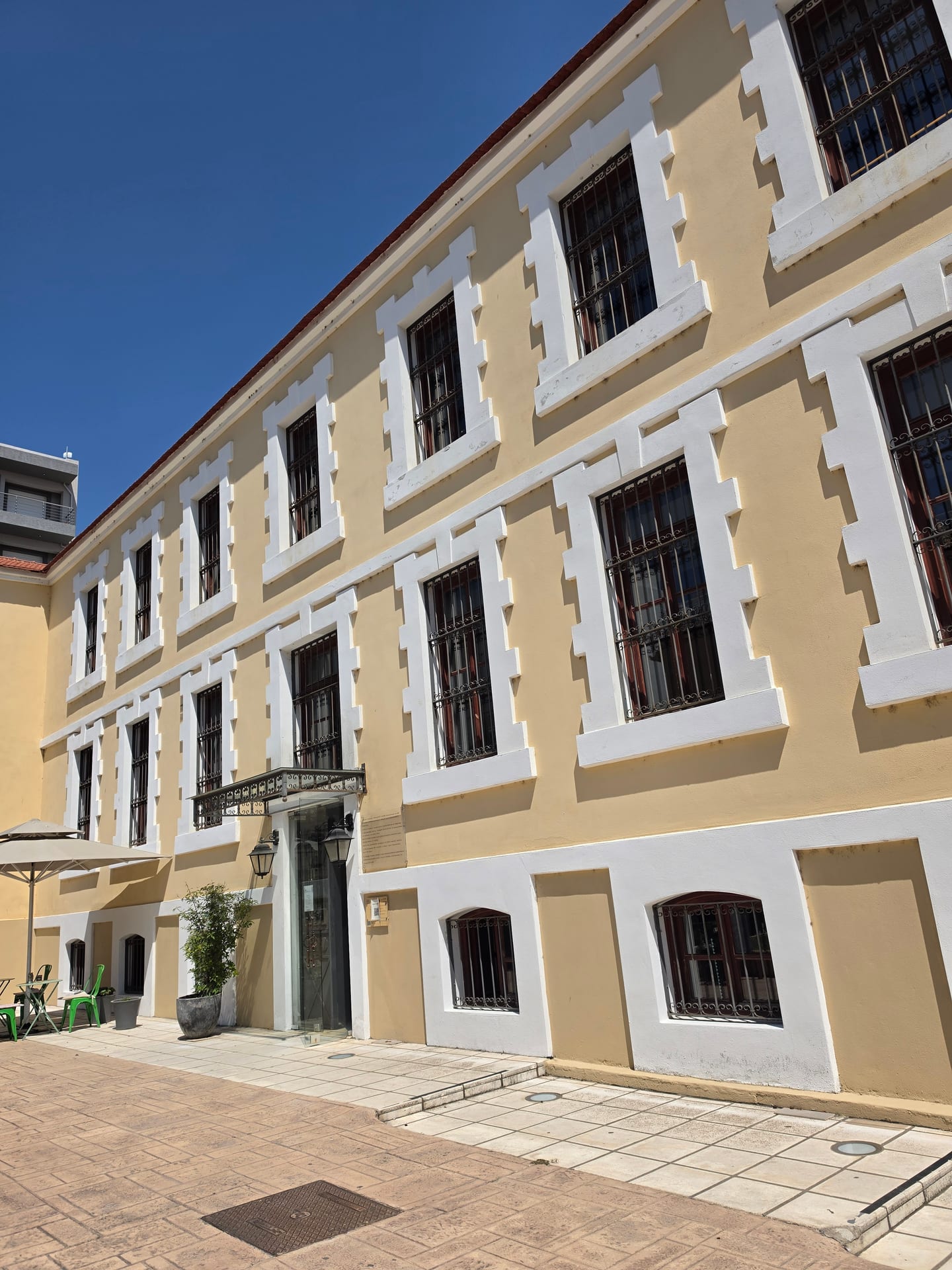
The Tobacco Warehouse (Kapnomagazo)
The building known as "Kapnomagazo" (the Tobacco Warehouse) stands at Ainou 46 and is one of Alexandroupoli's most interesting historic buildings, having gone through many different uses over more than a century. Today it houses the Alexandroupoli Municipal Library. Its history is far more interesting than it looks The building was constructed in the late 19th century, when the city was still called Dedeagach (sources disagree on the exact date, with references ranging between 1890 and 1893). It was not originally built as a tobacco warehouse - its first use was as a school of the Catholic community, known as the Italian school of "Saint Francis". In 1904, a large part of the building was destroyed by fire. Later, after 1922, it was used to house refugee families from Eastern Thrace and Asia Minor. In 1924 the building was bought by the company "Compagnie Générale de Tabac", which renovated and expanded it to serve as a tobacco processing and storage facility. This use is where the name Kapnomagazo comes from. The building also has a particularly dark period in its history: during the Bulgarian occupation of 1941-1944 and later during the Greek Civil War, it was used as a prison. The building was designated a protected historic monument (by a decision around 1996-1997, depending on the source), precisely because it stands as an important record of Alexandroupoli's economic and social history. And today? Since 2016 it has housed the Alexandroupoli Municipal Library. But it is not simply "a library". The building includes reading rooms, a children's library and play area, a screening room, a hall for musical events and book presentations, a multi-purpose attic, spaces for exhibitions and educational activities, as well as a book'n coffee bar in the semi-basement. It continues to be used for book presentations, lectures, exhibitions, and musical and educational events. In 2025, for example, it hosted a conference of the Technical Chamber of Thrace (TEE Thrace). School, fire, refugee housing, tobacco warehouse, prison, protected monument, Municipal Library - a building that changed many lives and uses over more than a century.
0.56 km
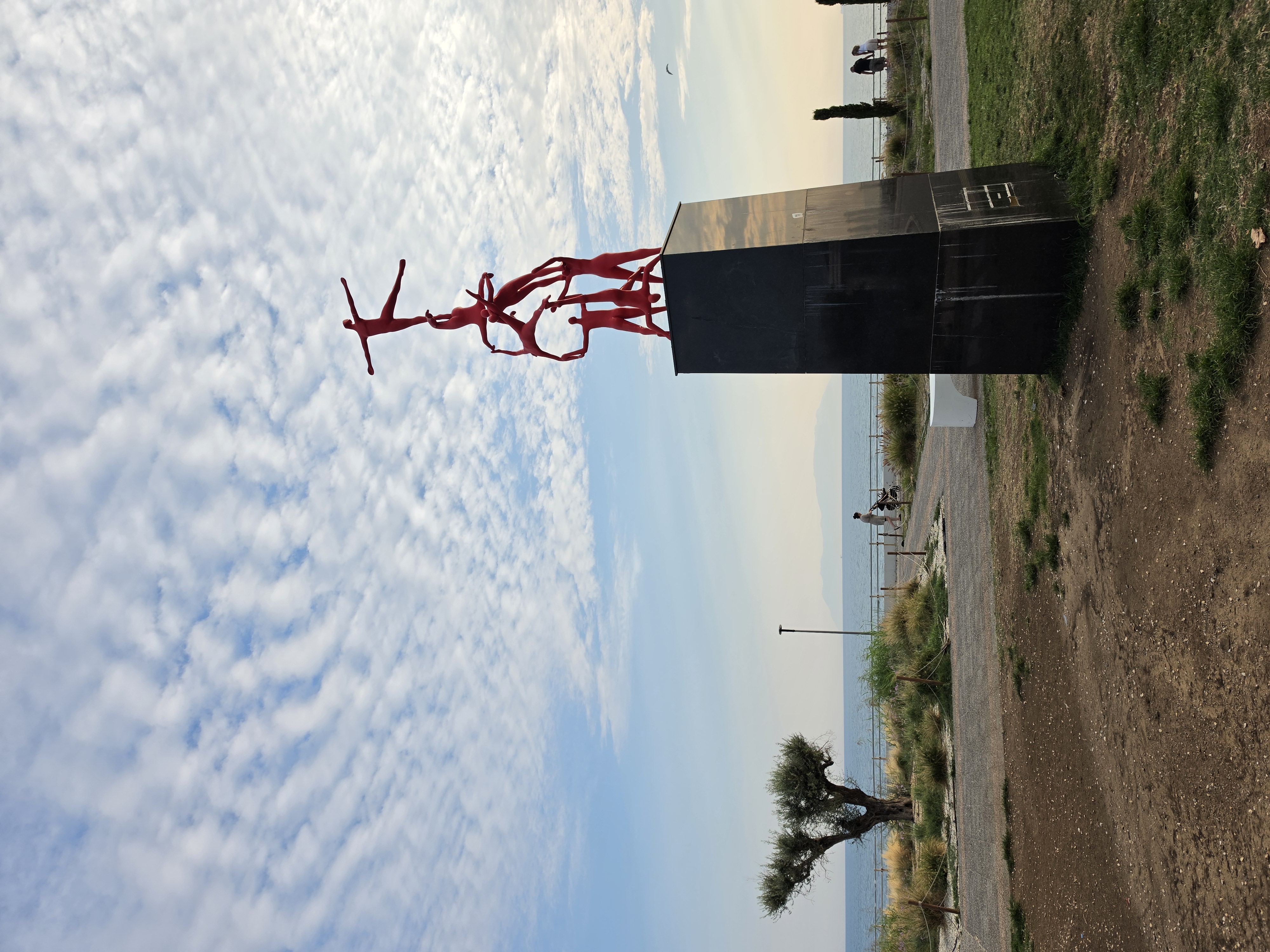
Anatasis Delta - The Red Sculpture
One of the most distinctive and widely photographed modern landmarks of Alexandroupoli's waterfront road. "Anatasis Delta", created by acclaimed sculptor Kostis Georgiou, is a striking group of seven bright-red acrobats balancing on one another atop a black pedestal. Symbolising ascent, dynamism and endless effort, its intense red colour creates a unique contrast with the blue of the sea. It's the ideal spot for photos, especially at sunset, with Samothraki standing out imposingly in the background.
0.4 km
%20scale(8.3333)%22%20fill%3D%22none%22%20stroke%3D%22%230b1f33%22%20stroke-width%3D%221.4%22%20stroke-linecap%3D%22round%22%20stroke-linejoin%3D%22round%22%3E%3Cpath%20d%3D%22M3%2010l9-6%209%206%22%20%2F%3E%3Cpath%20d%3D%22M4%2021h16M5%2021V10M9%2021V10M15%2021V10M19%2021V10%22%20%2F%3E%3C%2Fg%3E%3C%2Fsvg%3E)
Natural History Museum of Alexandroupoli
In the lush Platanotopos Maistrou, about two kilometres east of Alexandroupoli, stands the Natural History Museum of Alexandroupoli, a space dedicated to nature, biodiversity and the distinctive ecosystems of Evros. The museum's location is especially interesting, as it sits within a plane-tree grove where forest, wetland and marine ecosystems meet within a relatively small area. The Eirini stream, a tributary of the Evros, runs through the site and flows out near the port of Maistros. Discover the Natural Heritage of Evros The permanent exhibition presents the area's natural diversity through separate sections on land, wetland and marine ecosystems. Visitors learn about the flora and fauna, the natural landscapes and the characteristic ecosystems of Evros, while the exhibition also covers how human activity connects with and affects the natural environment. The presentation isn't limited to conventional display cases. The museum uses photographic material, audiovisual installations and multimedia to make engaging with the natural environment more experiential. A Museum Within Nature One of its distinctive features is that the building itself is part of the experience. The museum was designed as a modern building integrated into the natural landscape of the Platanotopos. Its architecture is designed so that the accessible ramp-roof offers views over the wider area, connecting the exhibition space with the natural environment it presents. The visit can thus continue outside the museum too, with a walk through the Platanotopos and the natural surroundings of the stream. Platanotopos Maistrou The museum's location is ideal for combining with a short escape to Platanotopos Maistrou, a green space for outdoor recreation very close to the city. The plane trees, the water and the dense vegetation create a landscape quite different from the urban centre, and the area lends itself to walking and relaxing. For this reason, the museum can be part of a wider visit to the Platanotopos rather than necessarily a destination visited in isolation. Educational Character The museum also has a strong educational character. Educational museum programmes and creative workshops have been carried out, making use of both the indoor spaces and the natural surroundings of the museum, aiming to give visitors direct contact with the natural wealth of Evros. A Different Way to Get to Know Evros The Natural History Museum is especially interesting for those who want to learn what lies behind the landscape they see around Alexandroupoli. The forests, the wetlands, the Evros river, the coastal areas and Thrace's rich wildlife are not separate elements, but parts of one complex natural environment. The museum functions as an introduction to this world before exploring it in nature itself. Combines well with: Natural History Museum → Platanotopos Maistrou → a walk in nature and relaxation under the plane trees.
3.91 km
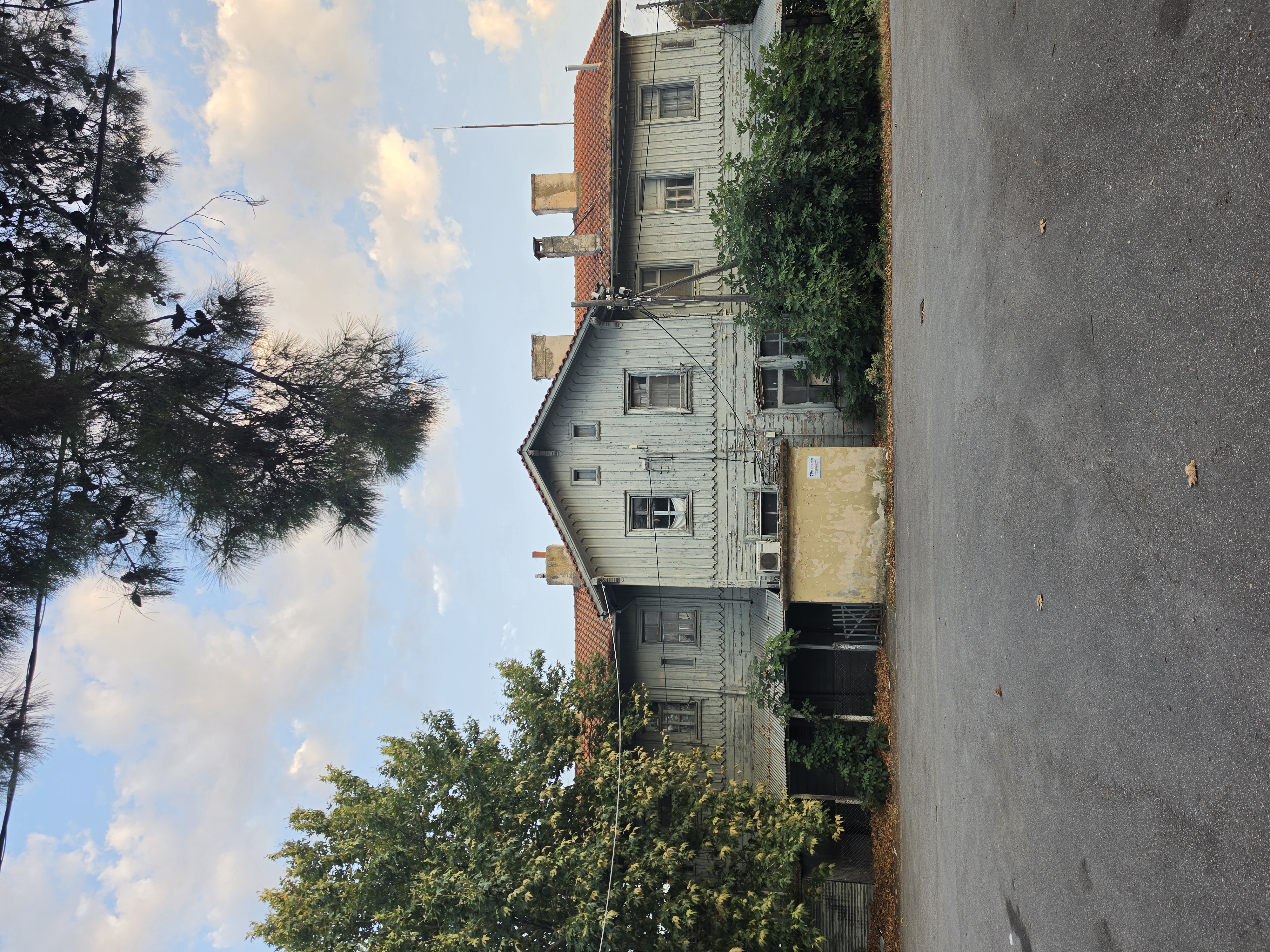
French Railway Station of Alexandroupoli
The Old French Railway Station is one of the most important historic buildings in Alexandroupoli and one of the places most closely tied to the birth and growth of the modern city. It stands in the eastern part of the city, near the port, and is part of Alexandroupoli's old railway complex. Its history is directly linked to the era when the city was known as Dedeagach and was turning from a small seaside settlement into an important transport and trade hub of Thrace. Where the modern city essentially began Construction of the railway line connecting Dedeagach with Pythio and Adrianople began in the early 1870s and was completed in 1874. The connection to the Ottoman Empire's railway network gave a huge boost to the development of Dedeagach. The railway did not simply bring trains to the area. It created the conditions for a new city to grow around the station, the port and trading activity. This is why the French Station is often regarded as the "birthplace landmark" of Alexandroupoli. One of the oldest buildings in Alexandroupoli The station's main building was built in 1874 by the Oriental Railways company, known as the Compagnie des Chemins de fer Orientaux. It was later also linked to the French-Greek Railway Company. It is a distinctive two-storey building with a tiled roof, built of brick masonry with a characteristic wooden exterior cladding. Its architecture places it within a broader tradition of railway buildings of the era, also found at other stations of the old Oriental Railways network. The name "French Station" became established in the city because of the station's later connection to the French-Greek Railway Company and the presence of French engineers and technicians in the history of the railway network. It was not, therefore, a station built from the outset exclusively by a French company. The railway and the port The station's position next to the port was of decisive importance. The railway could connect Dedeagach's port with the hinterland and, through the network, with Adrianople, Constantinople and later Thessaloniki. The station thus served not only passengers but also the transport of goods, reinforcing the city's commercial role. In 1895, the Thessaloniki-Alexandroupoli railway connection was added, creating another important network linking the city with western Thrace and Macedonia. The two different railway lines initially had their own buildings and facilities in the city. An entire historic complex The French Station is not just one building. The historic complex consists of many buildings and auxiliary facilities linked to the operation of the old railway network. The complex's buildings have different forms and construction features, combining stone masonry, brick masonry and wooden cladding. The ensemble is one of the most important surviving examples of the city's early railway architecture. A protected historic ensemble The historic value of the complex has been institutionally recognised. The buildings of the old French Station have been declared protected monuments, as they form an important part of Alexandroupoli's architectural and industrial heritage. Over the years, however, parts of the complex have faced serious problems of neglect and decay. In 2023, one of the complex's old buildings suffered serious damage from a fire. For this reason, the French Station today is not only a historic monument but also a characteristic example of the effort to save and highlight the city's more recent architectural heritage. The "Military Station" is also here The area around the old French Station has another significant railway building worth knowing about: the so-called Military Station (Gare Militaire). The building is linked to the second railway line towards Thessaloniki and stands out for its architecture with bold wooden decorative elements. It is one of the most distinctive buildings of Alexandroupoli's old railway heritage. Why it's worth a visit The French Station is not a sight that necessarily impresses with its size. Its significance lies mainly in the history it represents. Here one can better understand why Alexandroupoli was created and developed in this particular spot: railway, port and international trade connections created the conditions for the new city's growth. It is therefore one of the best places to get to know the Alexandroupoli of the Dedeagach era, before it took on its present-day form. A living piece of Alexandroupoli's history From the first trains of the Ottoman period to the modern era, the French Station is one of the most significant traces of the era when the railway changed the area forever. Together with the Lighthouse, the port, the old railway buildings and the historic buildings of the centre, it is part of the historic route that explains how a small seaside spot in Thrace evolved into today's Alexandroupoli.
1.66 km
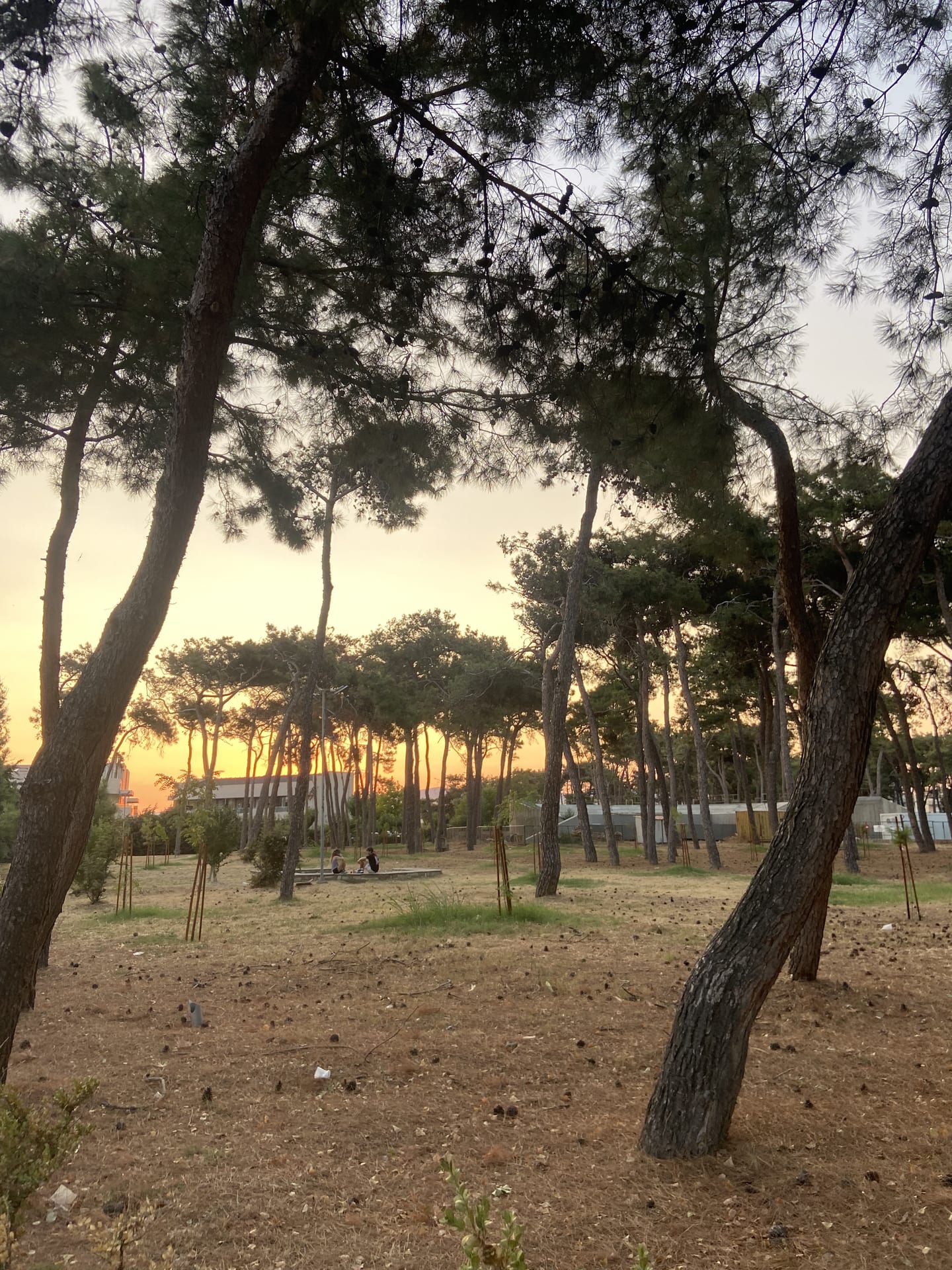
Proskopon Park of Alexandroupoli
One of Alexandroupoli's most beautiful green spaces, ideal for a walk and coffee in the shade of the pines. Proskopon Park is one of the city's most beloved green spaces and a pleasant spot for a walk, relaxation and coffee under the trees. It is a short distance from the centre and a good choice when you want to step away from the city's bustle for a while without leaving it. A Green Space Within the City The park stands out for its dense vegetation, and especially for its tall pines, which provide shade and make the space pleasant even in the hot summer months. It's one of the places Alexandroupoli's residents go for a walk, some rest, or a coffee in a cooler, quieter setting. Oxygono Inside the park operates Oxygono, a popular dining and coffee spot that has become synonymous with the Proskopon Park experience. Especially in summer, the tables under the trees offer a different experience from the city's seafront cafés. It's a good choice for an afternoon or evening coffee, especially when you want some coolness and greenery. More Than a Park Proskopon Park has been linked for years to Alexandroupoli's social and cultural life. The space periodically hosts events, activities and gatherings, while its large size and natural setting make it one of the most important outdoor recreation spots near the centre. Its location is also especially convenient. It can easily be combined with a walk to the seafront avenue and the Lighthouse, creating a route that passes through greenery, the city, and finally the sea. When It's Worth It Most Summer is perhaps the best season to get to know the park. On hot days, the shade of the pines offers a pleasant alternative to the beach, while in the afternoon hours the park takes on a particularly beautiful atmosphere. For a relaxed stop: coffee at Oxygono under the pines. For a walk: strolling through the park and then heading towards the seafront and the Lighthouse. For families: the open space and greenery offer a calmer spot for some rest within the city. One of the Places Worth Getting to Know Proskopon Park isn't a sight in the classic sense. But it is a distinctive piece of everyday Alexandroupoli, and one of the places where you can see how residents enjoy their city.
1.12 km
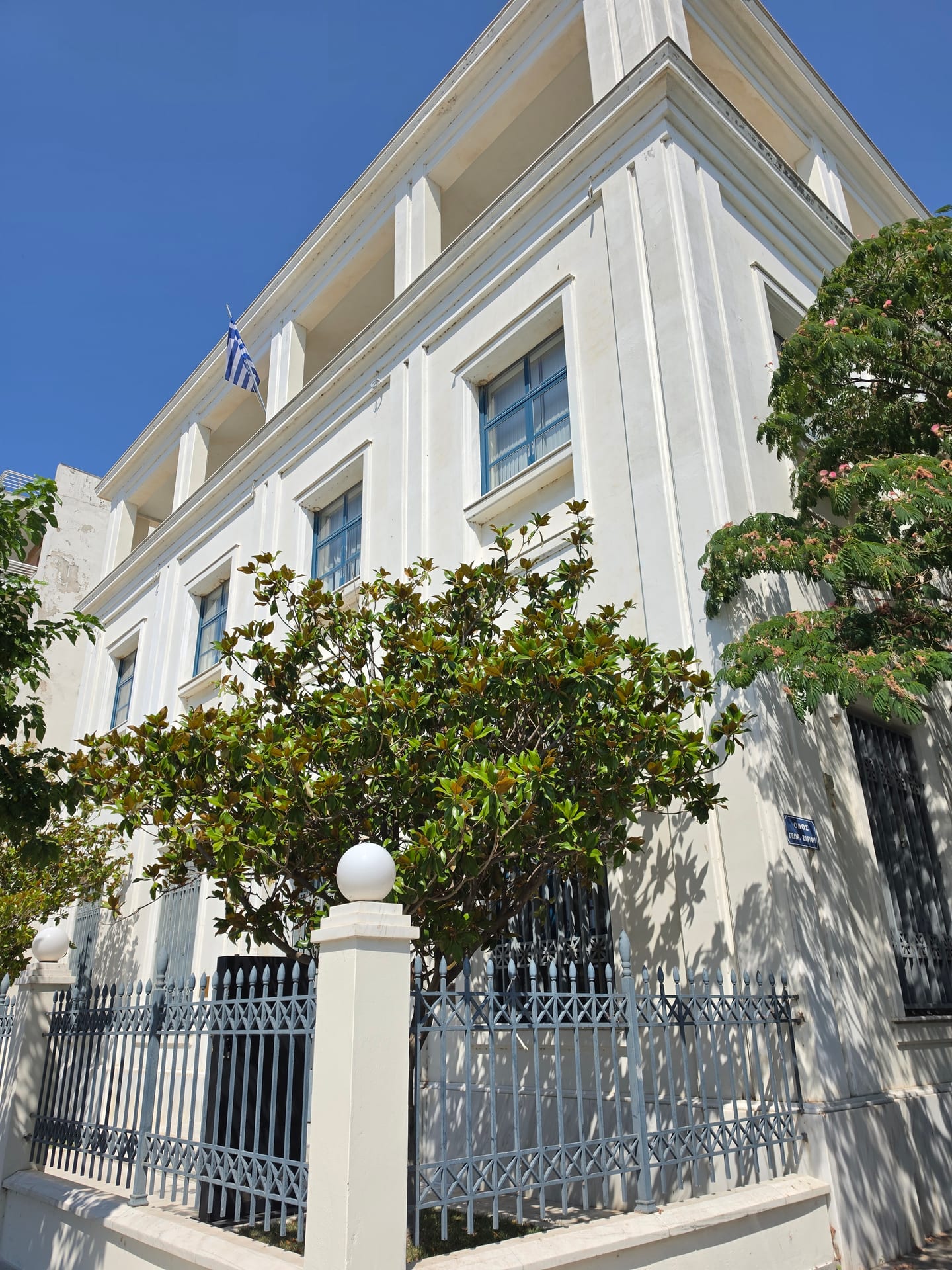
Former Bank of Greece Branch
One of the distinctive modern buildings of Alexandroupoli's seafront is the former Bank of Greece branch, an imposing three-storey building with a basement, totalling about 1,012 sqm. The building was constructed in 2000, replacing an older leased premises that had housed the Alexandroupoli branch of the Bank of Greece. The design was assigned to architect Konstantinos Theodorakis, under the supervision of Nikos Sapountzis from the Bank's Technical Department. The building has a strict, cubic form, with classical references in the treatment of its façades. Its architecture differs noticeably from Alexandroupoli's older neoclassical buildings, but it is a distinctive example of the city's more recent architecture. From the Bank of Greece to the Municipality of Alexandroupoli For several decades the building was the central operating point of the Bank of Greece branch in Alexandroupoli. The Bank's presence in the city carried particular significance for the area's economic life, and the building became linked to Alexandroupoli's modern economic history. In 2024 the property passed into the ownership of the Municipality of Alexandroupoli. The purchase was completed by contract in September 2024, for a price of 1,340,000 euros, funded from the Municipality's own resources. The transfer gave the building a new outlook, as the Municipality can now use it as a space serving cultural, educational and development activities. A New Use as a Cultural Space After being acquired by the Municipality, the former bank building began to take on a new cultural identity, hosting exhibitions, events, presentations and other activities. This new use is of particular interest to the city, as a building designed for a strictly economic and administrative role is gradually being transformed into a public space for culture and creation. A Different Kind of Architectural Landmark Unlike buildings such as the old Post Office or the Leontarideios School, which are linked to the historic architecture of Dedeagach and the early 20th century, the former Bank of Greece branch represents Alexandroupoli's more recent architectural history. Its position on the seafront, its cubic mass and its restrained form make it easily recognisable when walking through the area. It isn't necessarily a sight visited solely for its exterior appearance. But it holds greater interest when included as part of a walk along the seafront, together with the historic buildings, the port and the city's other points of cultural interest. From the City's Economic to Its Cultural Life The building's story is interesting precisely because it sits at a transitional point: it began as a bank branch and today is taking on a new public role. For a visitor to Alexandroupoli it is thus a small but distinctive piece of the city's more recent history, and an example of how buildings created for specific functions can take on new life.
0.37 km
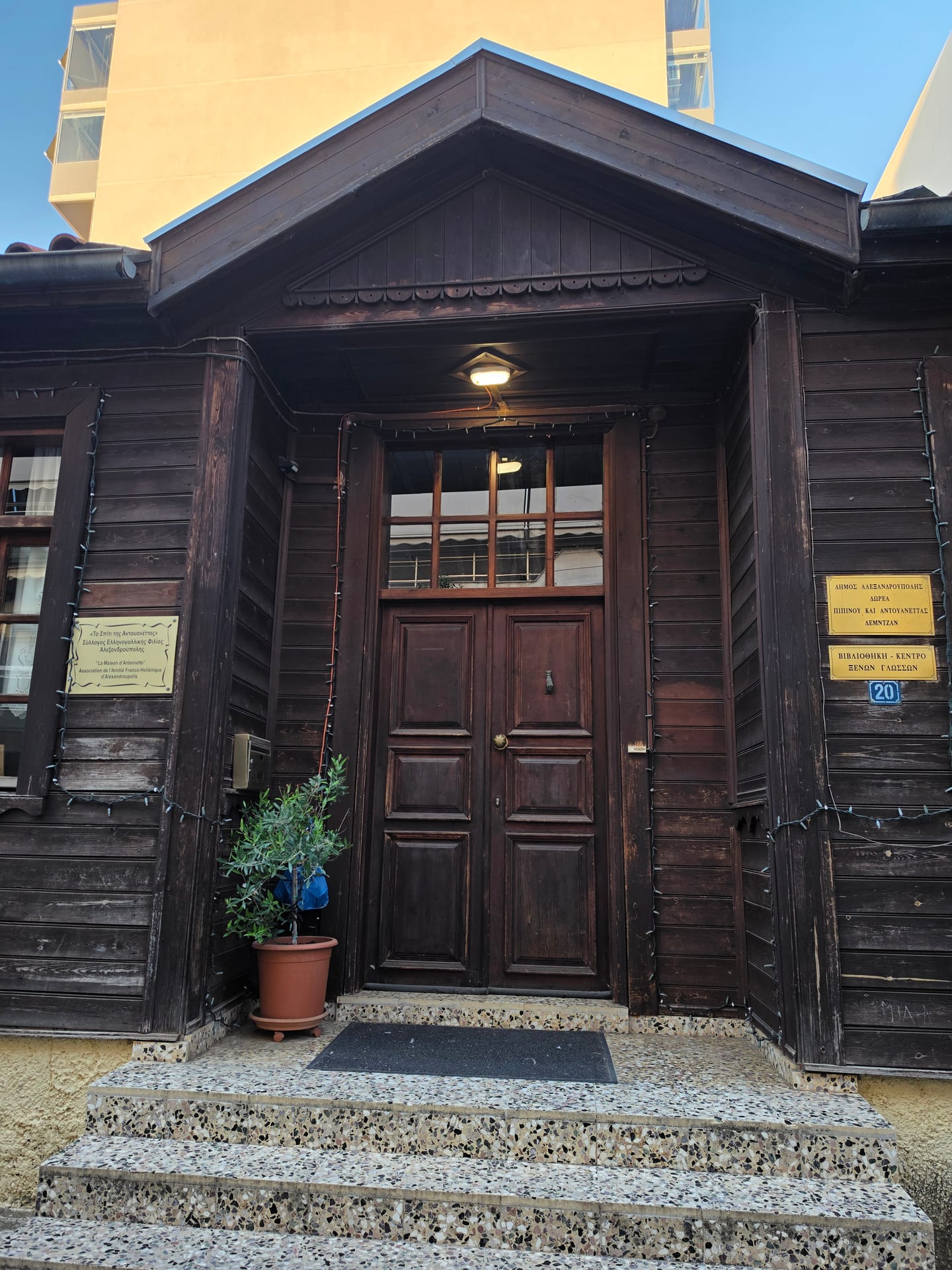
The House of Antoinette
One of Alexandroupoli's distinctive historic houses is home to the Greek-French Friendship Association "La Maison d'Antoinette", a space dedicated to the French language, French culture, and bringing the two cultures together. The house belonged to Antoinette Demtzian (Demtsan), one of Alexandroupoli's most notable French language teachers. In her will she bequeathed her residence to the Municipality of Alexandroupoli, wishing it to be used for foreign language learning and as a library. Antoinette Demtzian Antoinette Demtzian lived in Alexandroupoli and was especially associated with teaching French. The Association's own sources describe her as the city's first, and especially beloved, French teacher. Her residence is therefore more than just an old building. It is linked to a specific figure in local history and to the city's educational and cultural life. After her death, the Municipality of Alexandroupoli accepted the bequest, and the house took on the role she had envisioned in her will. The current address is Tsimiski 20, though older documents refer to it as Tsimiski 14, due to later renumbering. For Antoinette Demtsian's full biography and her connection to the city's other great benefactors, see the feature Antoinette Demtsian: the first French teacher . The Greek-French Friendship Association The Greek-French Friendship Association "La Maison d'Antoinette" was founded on 9 June 2002 and has been headquartered in Antoinette's residence ever since. Its goal is to promote Greek-French friendship and spread the French language and culture in Alexandroupoli and the wider Evros region. The house thus functions as a small cultural and educational hub within the city. What Happens Today The Association organises activities throughout the year for children, young people and adults. Its activities include creative workshops on French language and culture, educational programmes for children, classes and introductory activities for French, seminars and workshops, book presentations, events for the Francophonie, French cinema, theatrical and cultural activities, and events around French gastronomy and tradition, such as the Galette des Rois and the Beaujolais Nouveau festival. These activities continue today. For example, in 2026 the space hosted educational workshops for children, and the Association also took part in Alexandroupoli's French School Festival. A Historic House With Living Use The interest of "La Maison d'Antoinette" lies precisely in the combination of history and contemporary cultural activity. It isn't a building preserved merely as a memory of another era. The residence of a significant educator of the city continues to be used for the purpose she envisioned: language, education, culture and communication between people. The building itself is also cited in records of Alexandroupoli's architectural heritage as a residence of historic and architectural value. A Different Kind of Alexandroupoli Sight Visitors don't go there for a classic museum exhibition, but to get to know a historic house linked to a figure from the city, which continues to be an active cultural space. It is also centrally located and can easily be included in a walk covering the historic buildings and sights of central Alexandroupoli.
0.8 km
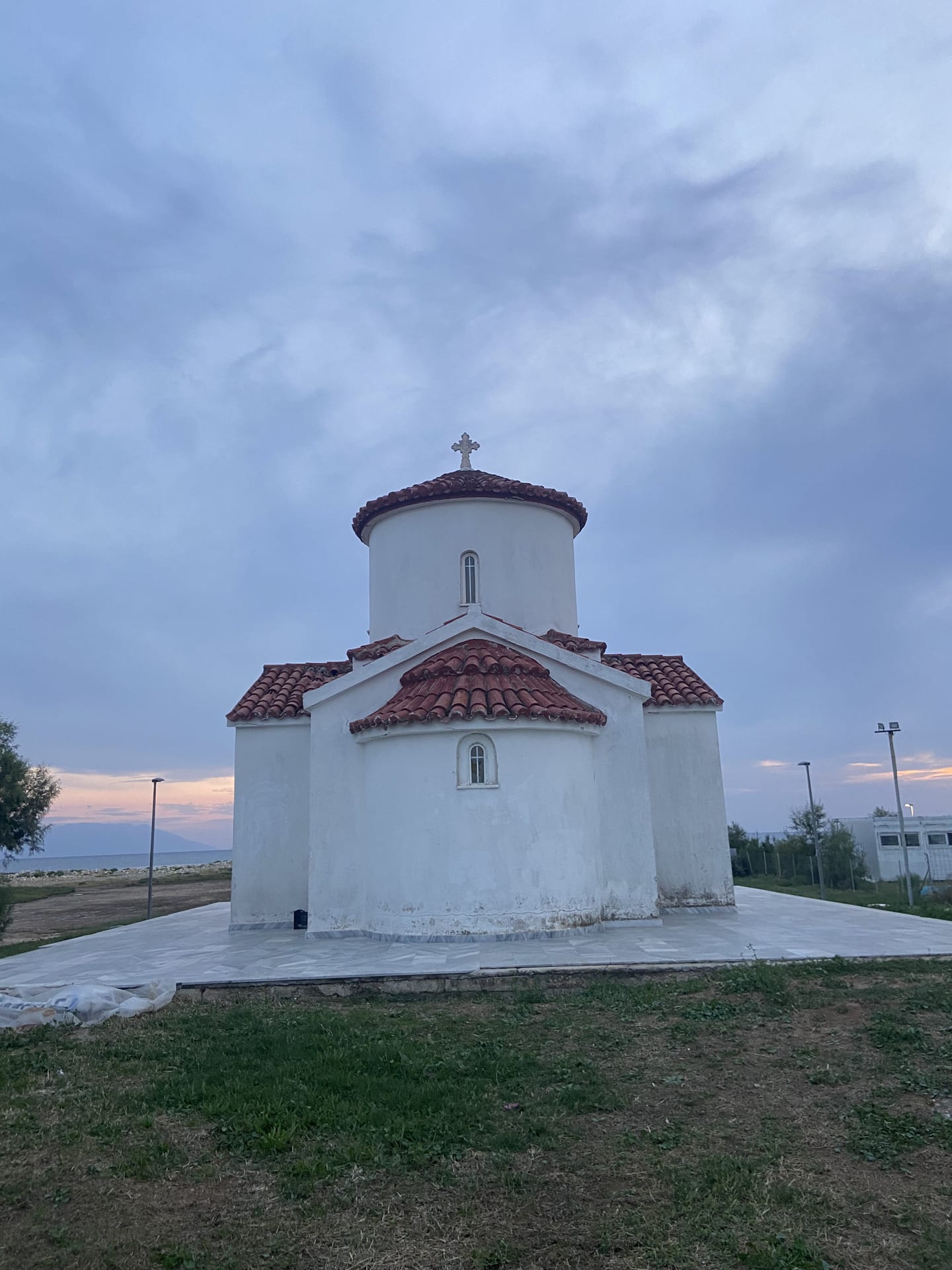
Saint Euplus
The chapel of Saint Euplus stands at the edge of Alexandroupoli's port, right next to the sea. It is a small but particularly distinctive chapel, directly linked to the maritime tradition of Thrace and the historical memory of Ainos in Eastern Thrace. Today's chapel was built in 1997-1998, on the initiative of the Hellenic Museum of Ainos of Alexandroupoli and in cooperation with the Municipality of Alexandroupoli. It is an identical replica of the historic chapel of Saint Euplus that stood at the port of Ainos, in Eastern Thrace. The choice of Saint Euplus is not accidental. Ainos was an important maritime centre and Saint Euplus was considered the patron saint of sailors. The old church stood at the edge of the port of Ainos and was symbolically linked to the departure of ships. The Greek phrase "ef plou" essentially means "safe voyage", "good sailing". Thus, creating a corresponding chapel in Alexandroupoli carries this maritime tradition from the old to the new homeland of the people of Ainos. Saint Euplus Saint Euplus was a deacon and martyr of the Church, who lived in Catania, Sicily, during the era of Emperor Diocletian. His memory is honoured on 11 August. His feast day at the Alexandroupoli chapel is a special moment every summer. A festive Vespers, Divine Liturgy and other religious events take place at the chapel. The feast also holds particular significance for the descendants of the people of Ainos who settled in Alexandroupoli after the population exchange. Indeed, during the 2025 celebration a memorial service was also held for the Ainiot ancestors, directly linking the saint's feast day with the memory of the old homeland. The connection with Ainos The relationship of Saint Euplus with Alexandroupoli therefore runs much deeper than the presence of a small church on the seafront. Many residents of Alexandroupoli have roots in Ainos, as families from Ainos settled in the area after the population exchange. Rebuilding the chapel at Alexandroupoli's port was a way of keeping alive the memory of the old homeland and its maritime tradition. Ainos was a significant maritime power and was also linked to the Greek Revolution of 1821. Shipowners and sailors from Ainos took part in the Struggle, contributing a large number of ships. Thus, the small chapel at the edge of the port today serves as a symbol of maritime tradition, refugee memory, and Alexandroupoli's historical relationship with Ainos. A distinctive spot on the seafront Its location is particularly beautiful, standing at the edge of the port zone, right next to the sea, and it is one of the small spots worth seeking out while walking along the city's seafront. In 2026 it was also used as an event location for Alexandroupoli Maritime Week, while the Municipality has recorded the chapel as a venue for cultural and traditional events.
0.7 km
Alexandroupoli Fish Market
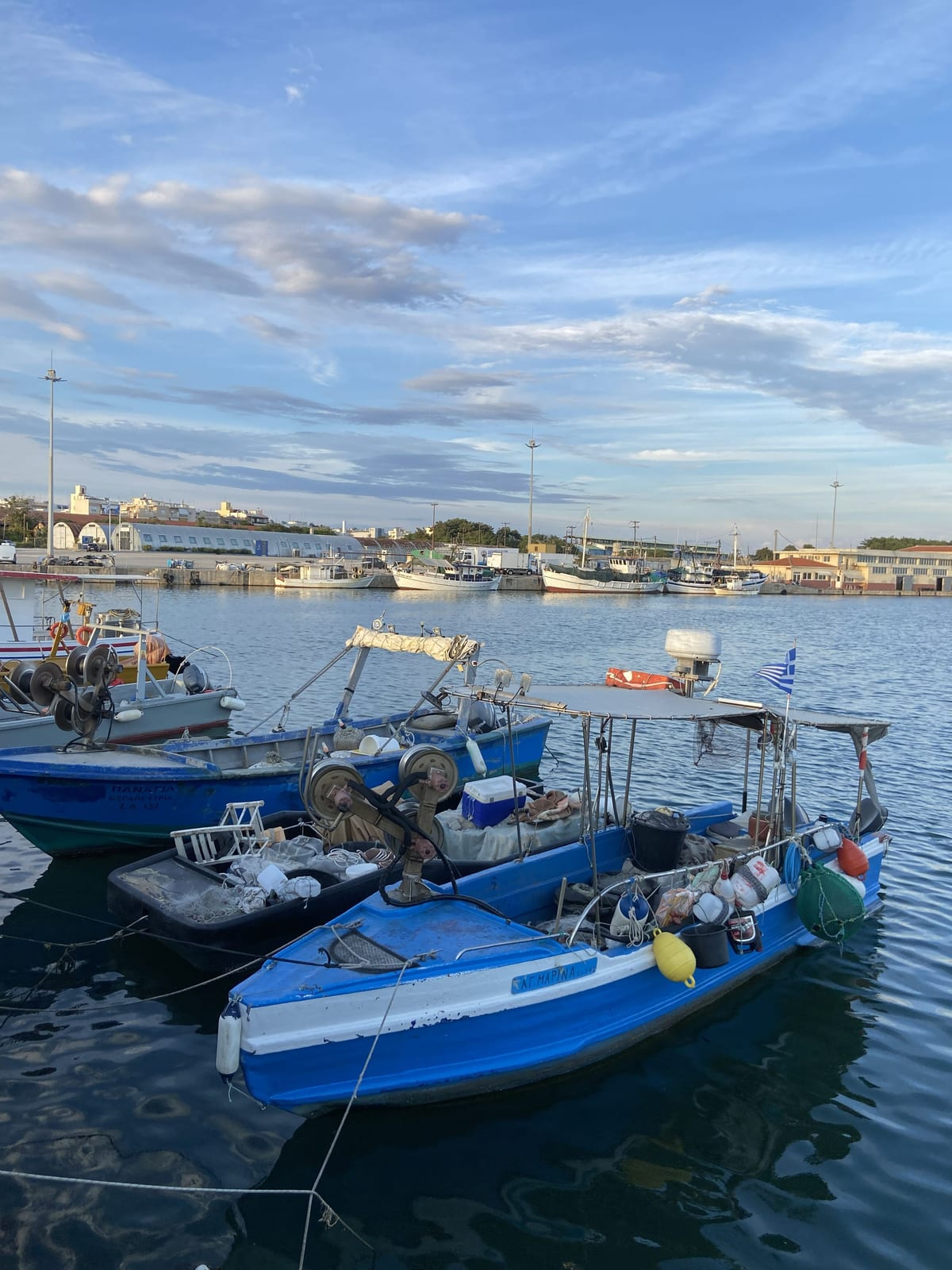
At the port of Alexandroupoli, next to where the fishing boats moor, stands the Alexandroupoli Fish Market (Ichthyoskala), one of the places that most directly connects the city to its fishing tradition. The facility serves fishermen and fish merchants from the wider area and is part of the city's port and fishing activity. From Fishing to the Market Fishing has been part of Alexandroupoli's history since the city's earliest years. The fish market was created to organise the gathering, trading and distribution of the catch arriving from the area's fishing boats. Its operation is therefore directly linked to fishermen, fishing boats and fish merchants, forming a space where fishing output becomes commercial activity. The Alexandroupoli Port Authority notes that the fish market's service building lies north of the seafront quay of the fishing boat marina, and serves fishermen and fish merchants of the wider area. A Different Side of the City The fish market is not a conventional sight, nor a touristy fish market designed for visitors. It is a space of professional fishing activity. This is exactly what makes it interesting. It shows a side of Alexandroupoli that visitors often don't see when they stick to the seafront, the cafés and the restaurants. Here lies a piece of the city's living economic and maritime life: fishing boats, fishermen, unloading the catch, and the commercial trading of fish. The Fish Market Today Alexandroupoli's fish market remains an official facility in the fish-market network of the Organisation of Central Markets and Fisheries (OKAA). OKAA lists the facility at the Port of Alexandroupoli and provides its contact details. However, the area's fishing activity has changed significantly compared to the past. An ERT3 report had already recorded, back in 2017, the decline in fishing output and the efforts of professionals to keep the activity alive. The same source recalls that fishing was among Alexandroupoli's earliest and most important activities. Can a Tourist Visit It? An important clarification is worth making here: this isn't a place where visitors can simply walk in and buy fish as at a municipal market. The fish market is a professional facility, and its operation concerns fishing production and wholesale trade. For visitors, it therefore makes more sense as a point of interest for getting to know the city's fishing side and seeing the fishing harbour area, without access to the working areas or a specific visiting schedule. A Piece of Authentic Alexandroupoli It isn't a monument or an impressive building. It is a place that shows how the city actually works, and where part of its relationship with the sea comes from. It can even be combined with a walk around the port area, where visitors can see up close the seafront zone, the fishing boats and the port's overall activity.
1.18 km
Cappadocian Folklore Museum
At the Cappadocian Hearth (Kappadokiki Estia), at Mitropoulou 1, the Folklore Museum of the Cappadocian Association of Evros operates. It is a small but especially interesting space that keeps alive the memory and cultural heritage of the Cappadocian refugees who settled in the area after being uprooted. The museum opened in 2008 and is housed in a basement space of about 150 sqm. The exhibition is designed in a reconstructive way, based on testimonies from people who lived in Cappadocia as well as historical records, so that visitors get a picture not just of objects but of life in Cappadocian communities. A Small Journey to Cappadocia The exhibition is distinctive because it isn't limited to display cases of objects. It creates reconstructions of spaces and everyday activities, transporting visitors into the atmosphere of a Cappadocian village. Among other things, it presents reconstructions of houses, interiors, courtyard gates and courtyards, as well as tools and objects linked to people's daily work. Refugee Heirlooms Of particular value are the objects that refugees brought with them from Cappadocia and that were preserved by later generations. The collection includes traditional costumes, quilts, rugs, furniture, jewellery, photographs, books in Karamanlidika script, and everyday objects. There are also church heirlooms, such as pectoral icons and Metropolitan bishops' crosses. A special place in the exhibition is held by a small chapel with icons saved during the uprooting from Cappadocia and carried by refugee families. These heirlooms carry not only folkloric value, but also stand as testimonies to the history of people forced to abandon their ancestral homes. Cappadocian Heritage in Evros The presence of Cappadocians in Evros is part of the wider history of refugee settlement that followed the forced population movements of the early 20th century. The museum thus functions as a space preserving a community's collective memory, presenting elements of Cappadocia's life, faith, family, work and customs. For a visitor to Alexandroupoli it is interesting precisely because it presents a different facet of the city's history: the refugee communities and traditions that were carried to Thrace and became part of local society. A Small Museum With Personal Stories Its size shouldn't give the impression that it is merely a small collection. The reconstructive presentation, and above all the families' personal objects, make the visit more experiential and human. It is a museum especially worthwhile for anyone interested in refugee history, folklore, Cappadocian tradition, and the history of the communities that settled in Evros.
1.75 km
The Two Iron Trees
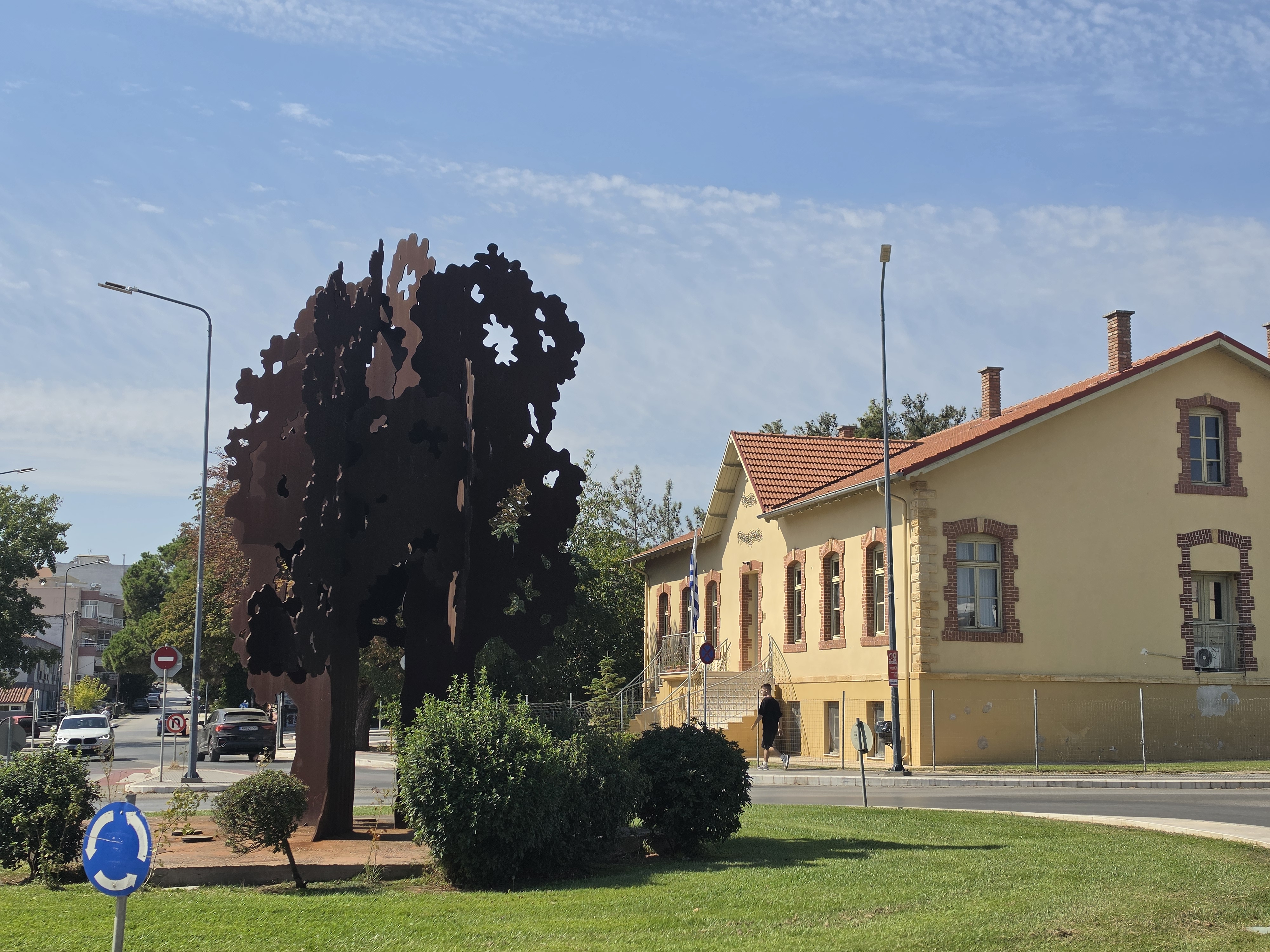
Alexandroupoli has been searching for a tree to explain its name for more than 150 years. The real tree was never preserved — but two iron ones have been, at the city's northern entrance. The Rusted Oak (2010) The metal oak sculpture was installed by the Municipality in May 2010, at the Old Hospital junction. The choice of tree was meant to symbolise the city's historic name, "Dedeağaç" (Turkish: dede = grandfather/dervish, ağaç = tree) — according to local tradition, a wise dervish, or a grandfather with a hut under an oak near today's Prefecture building. It also nods to the ancient "Dryos para Serreion", one of the fortified towns of the Samothracian Peraia mentioned by Herodotus. The work carries no artist's signature, and from day one it sparked fierce debate: many consider it tasteless — a fake, rusty tree in a city that badly needs real greenery, especially after the devastating 2023 Evros wildfires. For others it has become a landmark — "let's meet at the rusted oak". The Smart Solar Tree (2026) Sixteen years after the oak, in April 2026 the city gained a new, high-tech "relative" on Agiou Dimitriou street: a Smart Solar Tree that harvests energy through photovoltaic "leaves", provides street lighting at night, and doubles as a charging point for passers-by's phones and tablets. It was installed as part of the "Urban Regeneration of Northern Alexandroupoli and Expansion of the Cycling Network" project (funded under the "Antonis Tritsis" programme), which also includes new smart pedestrian crossings, over 120 magnolia trees and 180 trees with automated irrigation, modern LED lighting and upgraded bus stops along Agiou Dimitriou and Herodotou streets. If the 2010 oak was nostalgia, the 2026 solar tree is sustainable urban art that combines aesthetics with environmental awareness. Nearby Near the rusted oak are the Old Hospital, the Tax Office and the 3rd Junior High School "Domna Visvizi". Near the solar tree is Agiou Dimitriou square and the new magnolias.
1.1 km
Zarifios Pedagogical Academy
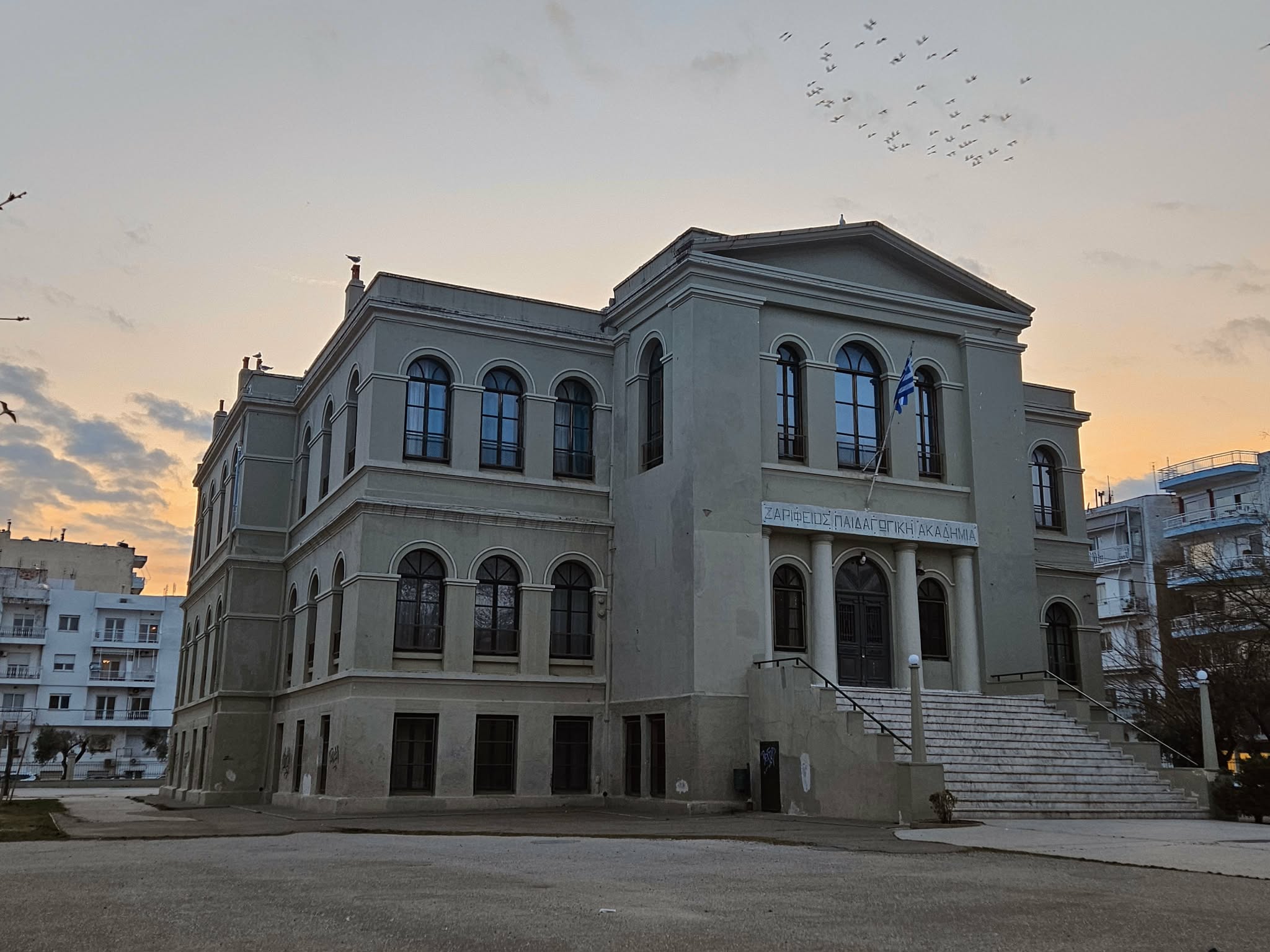
One of Alexandroupoli's most distinctive historic buildings stands on the western side of Independence Park. The Zarifeios Pedagogical Academy is a significant part of the educational and intellectual history not only of the city but of Thrace as a whole. The historic building today houses the 1st Experimental Primary School of Alexandroupoli. A Building With a History Older Than the Academy The building's history is a little older than the Zarifeios Pedagogical Academy itself. Construction had already begun during the Ottoman period, likely for a different use - it is not fully documented whether it was intended as a naval, military or other type of school. After the area's incorporation into Greece, construction continued in order to house the Alexandroupoli Teachers' College. The building was completed around 1930, and the Teachers' College moved there during the 1930-1931 school year. Its first director was the noted educator Theodoros Kastanos, who played a decisive role in completing and launching the new educational institution. The Founding of the Zarifeios Pedagogical Academy In 1934 the Teachers' College was dissolved and replaced by the two-year Pedagogical Academy of Alexandroupoli, for training teachers. The Academy was named Zarifeios in honour of the great Constantinopolitan benefactor Georgios Zarifis , whose bequest funded the educational effort. Georgios Zarifis had dedicated significant resources to Greek education and was closely associated with the Zarifeia Teachers' Colleges of Philippoupolis (Plovdiv). After their closure, part of that funding was redirected to the educational effort in Alexandroupoli. An Educational Centre for All of Thrace The Academy's significance quickly outgrew Alexandroupoli. For many decades it was a major centre for training teachers for Thrace and, more broadly, northern Greece. Generations of students passed through its halls and went on to work as teachers in schools across Thrace and other parts of Greece. The Academy was thus one of the key institutions through which Alexandroupoli gained a stronger intellectual and educational role in the region. Physical education also holds a special place in its history. A recent 2026 academic study, based on archival material, specifically examines the teaching of gymnastics at the Zarifeios during 1934-1982, along with the gymnastics displays and competitions held as part of training future teachers. From the Academy to Today's School The Pedagogical Academy remained in the historic building until its educational activity was transferred to the facilities of Democritus University of Thrace. Today the same historic building continues to be used for educational purposes, housing the 1st Experimental Primary School of Alexandroupoli, with STEM activities, skills workshops, and national and European educational programmes. The building is thus not merely a preserved monument of the past, but remains a living school, with an educational function that continues to this day. The Building and Independence Park It's worth seeing as part of the wider urban landscape too. The large neoclassical building stands on the western side of Independence Park, forming one of the city's most distinctive architectural ensembles. Its position within the park, its imposing façade and its historical use make it an easily recognisable landmark when touring Alexandroupoli. In its grounds also stands a marble bust of Georgios Zarifis, the work of sculptor Nikos Perantinos. A Living Monument of the City The Zarifeios Pedagogical Academy is one of those Alexandroupoli buildings that is especially interesting precisely because its history hasn't stopped. From the Teachers' College of the 1930s, to the Pedagogical Academy that trained generations of teachers, and on to today's 1st Experimental Primary School, the same building links more than nine decades of the city's educational life. For visitors, it's worth combining with a walk through Independence Park and the other historic buildings of central Alexandroupoli.
0.36 km
Courthouse of Alexandroupoli
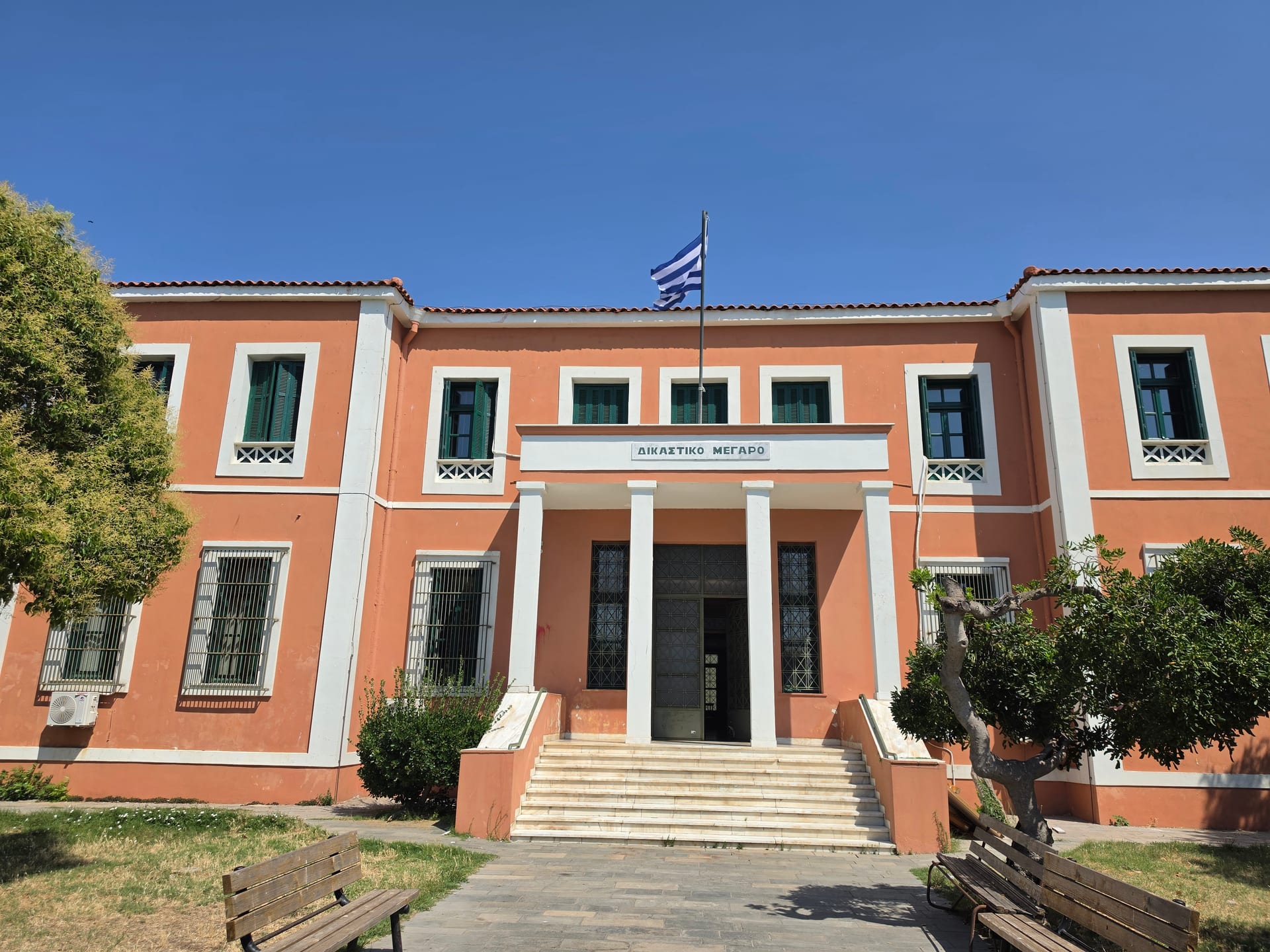
In Alexandroupoli's seafront zone stands the historic Court House, one of the distinctive buildings that preserve the image of the older city. The building stands out for its neoclassical form, symmetrical façade and tall columns, and today still houses judicial services. A Building With Over a Century of History The building's current form is not entirely from the same period. The ground floor was built in the 1910s, while the first floor was added in 1958. The building's present appearance is thus the result of different construction phases. There is also an important detail worth noting: the Court House was not the first building used for the city's judicial function. After Thrace's incorporation into Greece, the courts were initially housed in the old Ottoman courthouse, opposite the Academy, on the site of today's Magistrate's Court and near today's Independence Park. The need for a new court building had already become clear by the late 1920s, as the old Ottoman building had serious problems. Alexandroupoli's Judicial History The organised judicial presence in the city is directly linked to Thrace's incorporation into the Greek state. The 1920 legislative framework provided for courts to operate in the annexed areas, and in 1923 the Court of First Instance of Evros was established, seated in Alexandroupoli, along with the corresponding Magistrate's Courts of the region. The Court House is therefore part of the city's institutional history, not just an old building on the seafront. One of the Seafront's Distinctive Buildings Architecturally, the building belongs to Alexandroupoli's historic building stock. The symmetrical composition, columns and decorative elements of its façade give it a distinctive neoclassical appearance. The building itself has been recognised as one of the city's important architectural and historic buildings. Despite its age, it continues to be used for the administration of justice. The Alexandroupoli Bar Association is also headquartered at the Court House. A Building Worth Noticing on a Walk For visitors, it isn't a sight in the sense of a museum or a place visited from the inside. Its value lies mainly in its architectural and historical presence. It sits along the seafront route and can be part of a historic walk together with other distinctive buildings of old Alexandroupoli, such as the Historic Post Office, the Zarifeios Pedagogical Academy, the Leontarideios Urban School, the old National Bank building, and other buildings of the historic city.
0.28 km
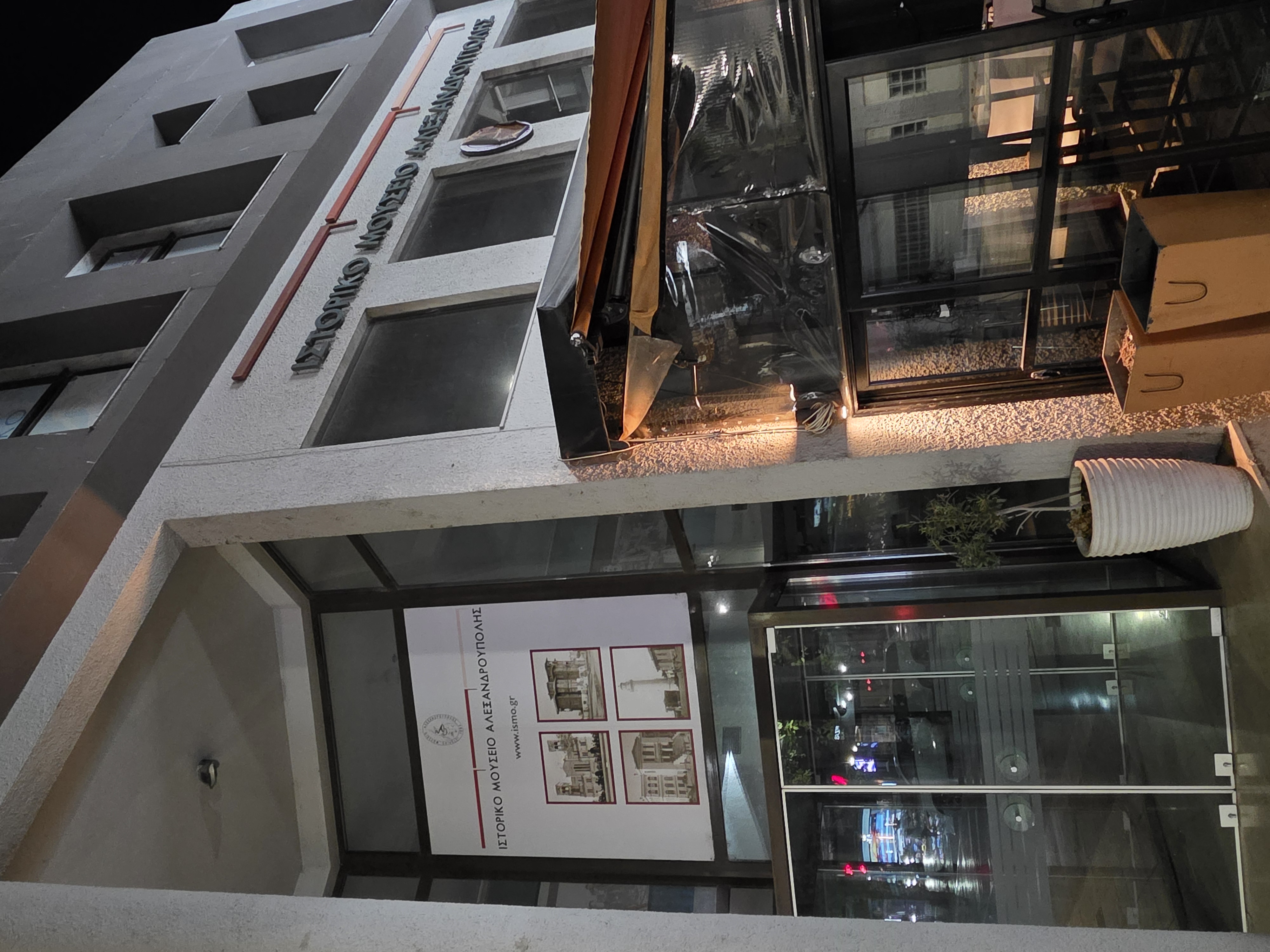
Alexandroupoli Historical Museum
In the heart of the city, opposite the Town Hall, the Historical Museum of Alexandroupoli is a space of memory and knowledge dedicated to the history of Alexandroupoli and the wider region. Through photographs, objects, archival material, reconstructions and modern audiovisual media, visitors can follow the city's journey from its founding to the present day. The museum opened its permanent exhibition on the history of Alexandroupoli in June 2011, while a second permanent exhibition, dedicated to the collection of folklorist Eleni Filippidi, was completed in 2015. The History of Alexandroupoli The main permanent exhibition presents the history of the city and the region through different thematic sections. Visitors learn about the area's archaeological heritage, the founding and growth of Alexandroupoli, the era of Dedeagach, and the decisive role played by the railway and the port in the city's creation and economic development. The exhibition continues with Alexandroupoli's urban and architectural character, its economic and political trajectory, its intellectual and social life, and the different population groups that helped shape the city. The museum thus does not simply present a series of old objects, but narrates how Alexandroupoli itself was created and evolved. From Dedeagach to Modern Alexandroupoli Of particular interest to visitors is the city's history before and during the early years of the Greek period. The exhibition helps convey how a relatively new settlement grew into a major port and railway hub of Thrace. The railway, the port, commercial activity and the multicultural composition of the population were key elements of the city's development, and are presented through records and visual material. The Eleni Filippidi Collection A significant part of the museum is the permanent exhibition drawn from the collection of folklorist Eleni Filippidi, a figure with a significant presence in Alexandroupoli's cultural life. The exhibition is dedicated to the Sarakatsani of Thrace, and in particular to the life of Sarakatsani women and their nomadic way of life. It presents traditional costumes, everyday objects, reconstructions and works of art. Of particular note is the collection of "panaoules", the distinctive Sarakatsani women's aprons, which carried not only a practical use but also a special symbolic character. A Museum That Stays Active The Historical Museum is not limited to its permanent exhibitions. It holds archival material and a library, and functions as a space for culture, research and education. Its premises host talks, conferences and workshops, book presentations, literary events and temporary exhibitions, while also organising educational programmes and excursions of historical and cultural interest. The museum thus carries out activity that goes beyond a simple visit to its collections, and stands as an active cultural institution of Alexandroupoli. A Good Place to Start Getting to Know the City For a first-time visitor to Alexandroupoli, the Historical Museum is especially useful as a starting point for understanding the city before exploring it. After the visit, many of the places one encounters on a walk through the city, from the railway and the port to the old buildings and the different neighbourhoods, gain more historical context.
0.16 km
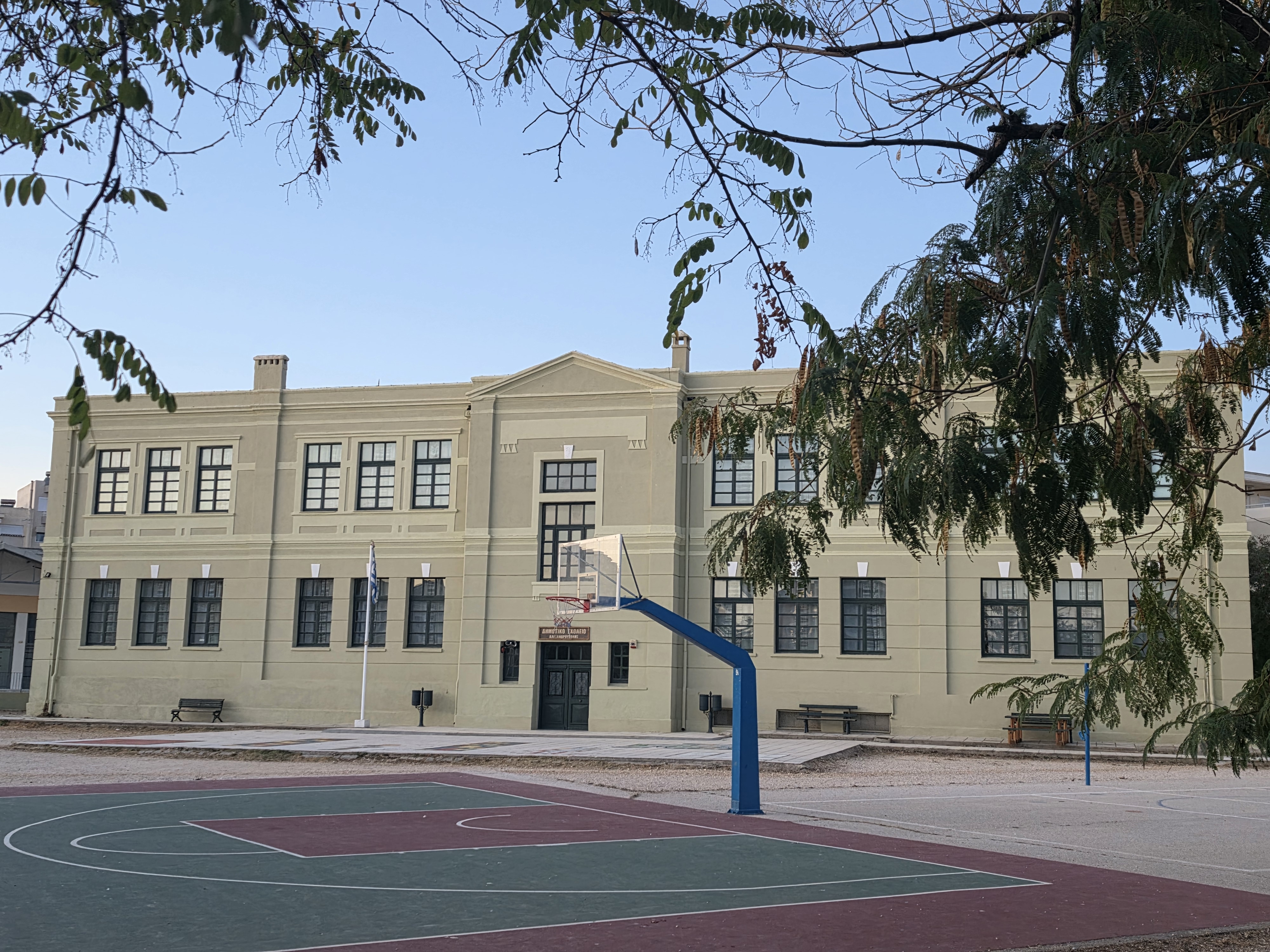
1st Primary School of Alexandroupoli: The "School of Necessity" that Became History
Where: 28is Oktovriou 25 (City centre, just 2 minutes from the port) Status: Listed historic building / Currently houses the 1st Experimental Primary School In the heart of Alexandroupoli, just metres from the sea, stands one of the very few surviving public buildings from the 1920-1940 period. The 1st Primary School (which today shares its premises with the 8th Primary School) is not merely a place of education, but a living monument to the city's modern history, inseparably linked to the arrival and integration of the refugee Greek population. From Fishing Village to Refugee Capital To understand the building's significance, we need to look at the city at the moment of its birth. Until 1871, the settlement was a humble fishing village named Dedeagach. The arrival of the railway changed things, but the real demographic explosion came after 14 May 1920, with the liberation and integration of the city into the Greek state. Immediately afterwards, thousands of refugees arrived in waves from Asia Minor and Eastern Thrace. The new Greek administration faced an enormous challenge: housing, caring for and educating these people. As part of this titanic effort, the state began building the first schools. The 1st Primary School is the oldest of them, opening its doors to students in 1928. The Architecture of Survival Unlike other cities, where schools of the period followed an imposing neoclassical style meant to inspire awe, the 1st Primary School was built with a different philosophy. It is a plain, two-storey, stone building with a simple tiled roof. It has no ornate pediments or classical-style columns. It is a "school of necessity", built quickly and practically to shelter and educate the refugee children who had just arrived in their new homeland. It is precisely in this architectural humility that its immense historical value lies. It stands as a symbol of survival and the will to rebuild. Today, it belongs to the same select list of the city's protected historic sites, alongside the Old Hospital and the Municipal Garden, making it one of the few architectural imprints of the interwar period to survive intact. Historical Timeline (1920 - Today) 1920-1940 (The Refugee Years): The building is designed and operates as the first major hub of basic education for refugee children. It becomes the centre of social life for the new neighbourhood. 1941-1944 (Bulgarian Occupation): The school's darkest period. The occupying forces impose the Bulgarisation of the area, seize public buildings, and Greek-language education operates under enormous difficulty, often in secret or not at all. 1950-Today (From Reconstruction to Innovation): After the war, the building is repaired and continues its role without interruption. Today, it not only preserves its historical prestige but houses the 1st Experimental Primary School of Alexandroupoli, linking the story of a school of necessity with the cutting edge of modern educational innovation.
0 km
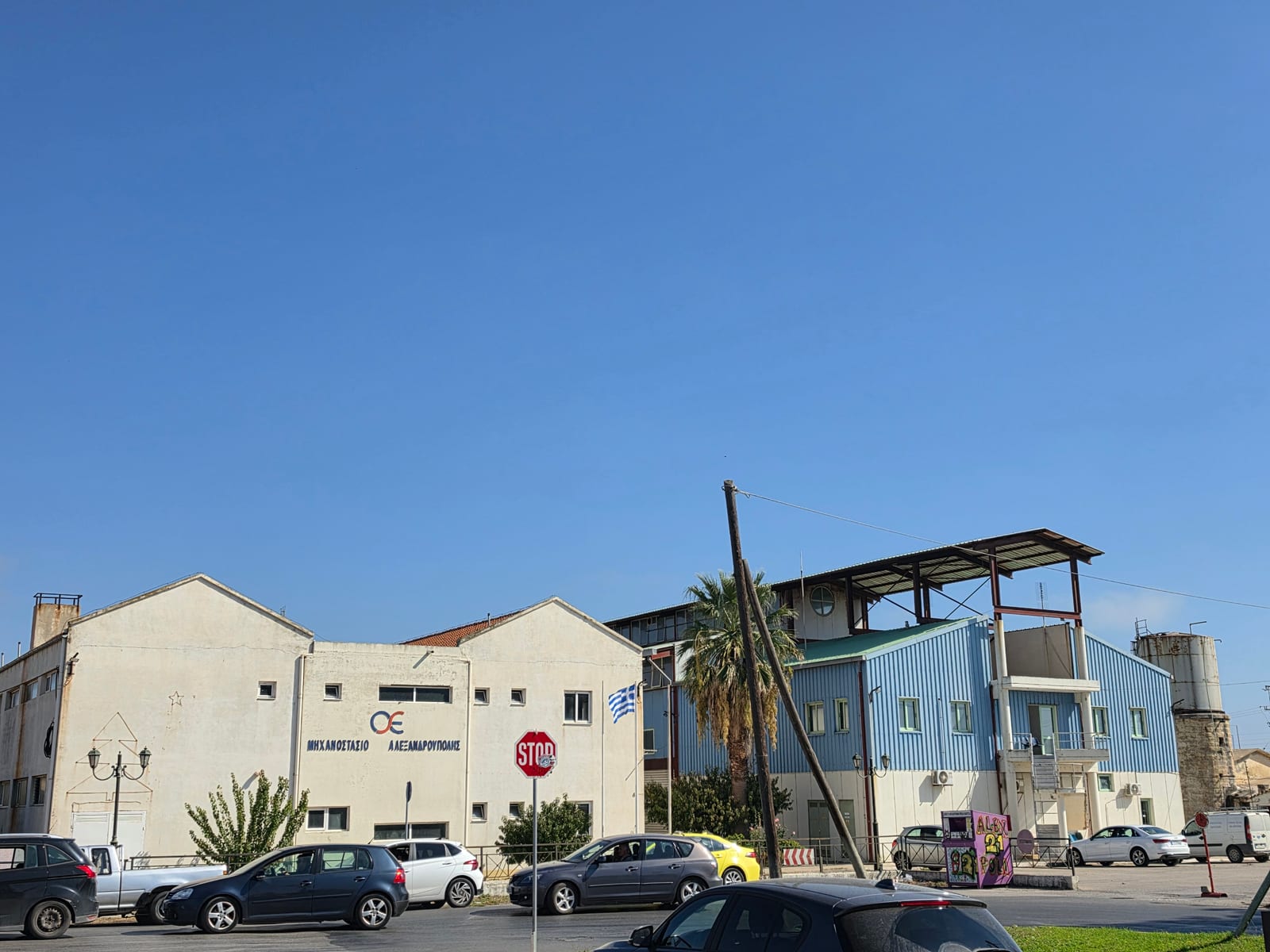
OSE Locomotive Depot of Alexandroupoli
The OSE (Hellenic Railways) Locomotive Depot stands in Alexandroupoli's historic railway complex, in the area of the old French Station. It is part of the technical facilities that supported the running of the railway, with spaces for the maintenance and servicing of locomotives. Together with the neighbouring buildings and railway infrastructure, it is tied to the industrial and transport history of the city.
1.09 km

Panagia tou Evrou (Makri)
A church in Makri, one of the religious landmarks of the wider Alexandroupoli area, a worthwhile stop for those exploring Evros' small churches.
19.49 km
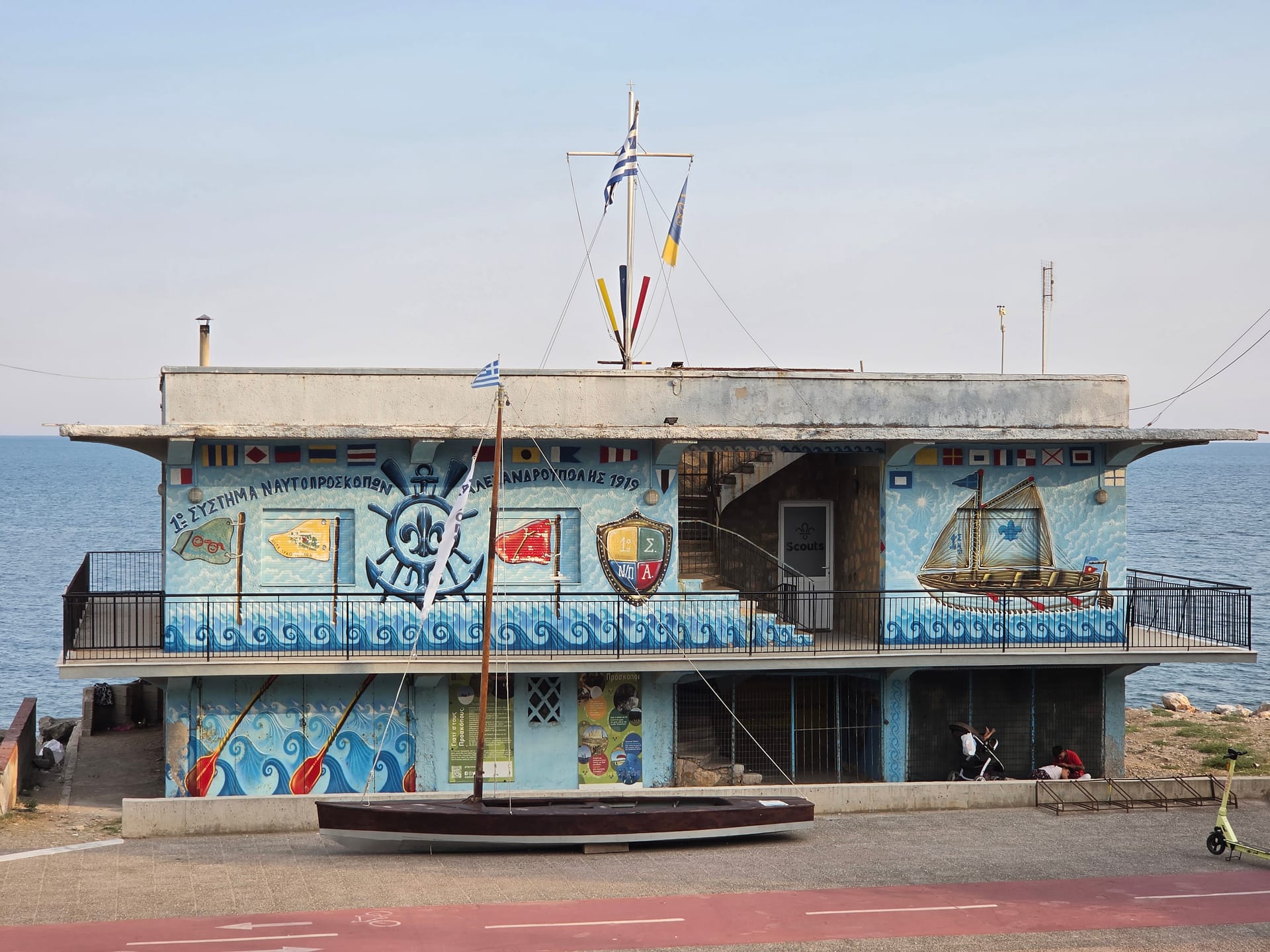
Alexandroupoli Sea Scouts Building
The Sea Scouts Building stands on Alexandroupoli's seafront, below the Courthouse and above the boat shed (Neosoikos), and is a facility directly linked to the city's maritime and scouting tradition. The 1st Sea Scout Group of Alexandroupoli is based there. The building The building was constructed in 1967. In a record of the facilities in the port's land zone, it is listed as "Sea Scouts Building serving the area's Sea Scouts", with a ground floor of 158.38 sq.m. and a first floor of 180.65 sq.m. History and connection to scouting Its history is linked to the development of sea scouting in Alexandroupoli and the city's relationship with the sea. Indeed, a historical reference in the local press notes that the former Evros Scout Commissioner Christos Gerontopoulos contributed to the construction of the Sea Scouts' boat shed building on the city's seafront. Today The Sea Scouts still use the facility. The 1st Sea Scout Group of Alexandroupoli officially lists its seat as the seafront, below the courthouse, and publishes 25510 31634 as its contact phone number. The building is not simply an office space. It serves as a reference point for the Sea Scouts' activities and for preserving the city's maritime tradition. Notably, during Alexandroupoli Maritime Week 2026, the Scouts presented activities featuring nautical models, photographs, scouting memorabilia and large constructions, highlighting the connection between scouting and the sea.
0.34 km
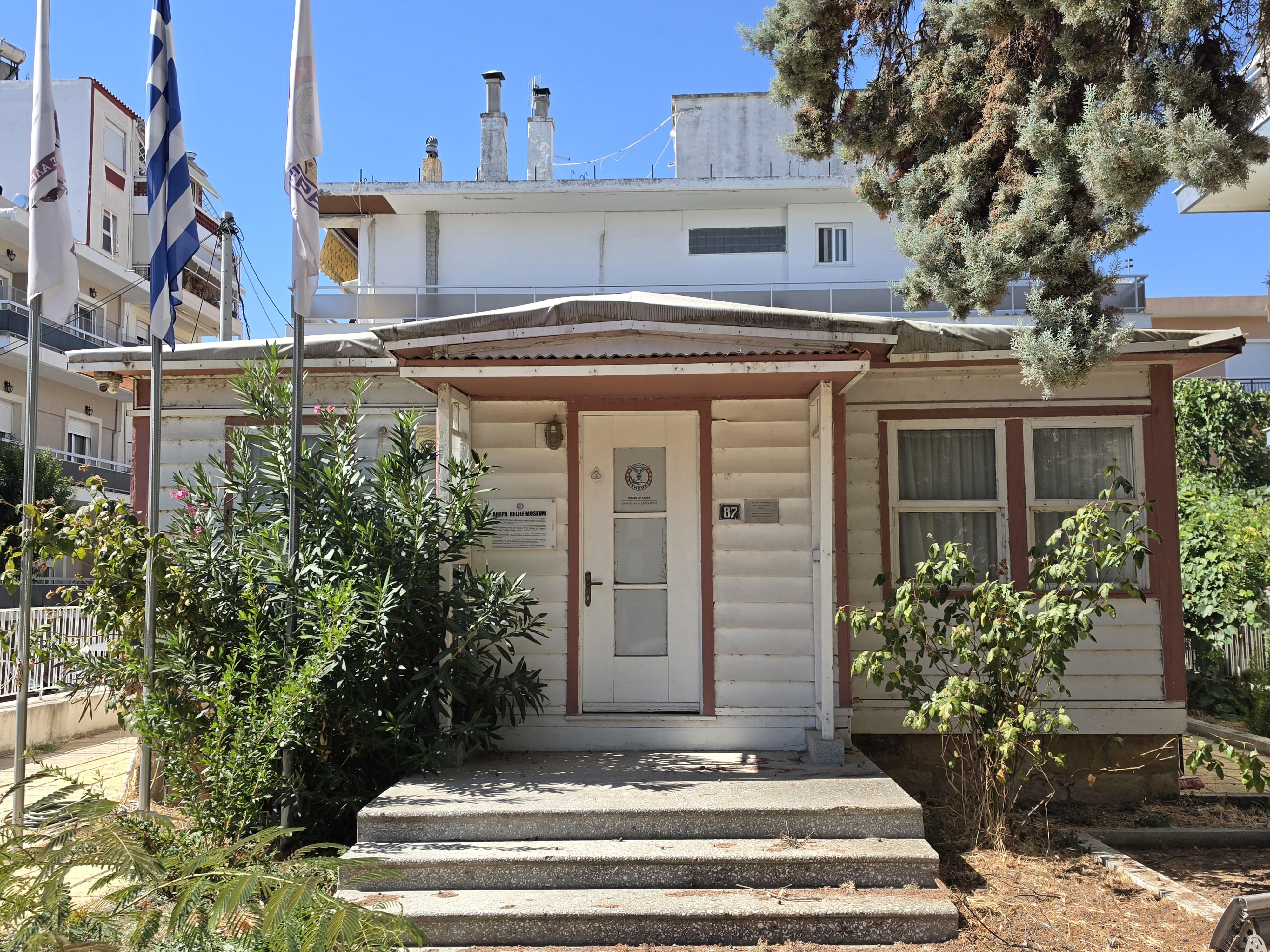
AHEPA Relief Museum
The AHEPA Relief Museum is dedicated to the history and philanthropic work of AHEPA in Greece. It is housed in the historic former P.I.K.P.A. building of Alexandroupoli, which was restored and repurposed as a museum. The collection includes exhibits, photographs, documents and other archival material presenting AHEPA's presence and activity, as well as its humanitarian and social contribution to Greece, particularly in the Alexandroupoli area. History of the building The building was completed in 1946, part of post-war humanitarian relief efforts connected to the Greek War Relief Fund, through which support for Greece was organised after World War II, with AHEPA's participation. For many decades it operated as a P.I.K.P.A. facility, providing primary healthcare services, including vaccinations and care for children and infants. Its use as a healthcare facility ended in 1998. After efforts to save and restore the building, it was granted to AHEPA and converted into a museum. The AHEPA Relief Museum opened in April 2022 and continues to gather and present historical material about AHEPA and its contribution to the region. Visiting The museum operates under AHEPA Hellas and Chapter HJ-21 "Dimokritos" of Alexandroupoli. No fixed visiting hours have been published for 2026. For a visit or guided tour, prior contact with AHEPA HJ-21 "Dimokritos" Alexandroupoli is recommended.
0.5 km
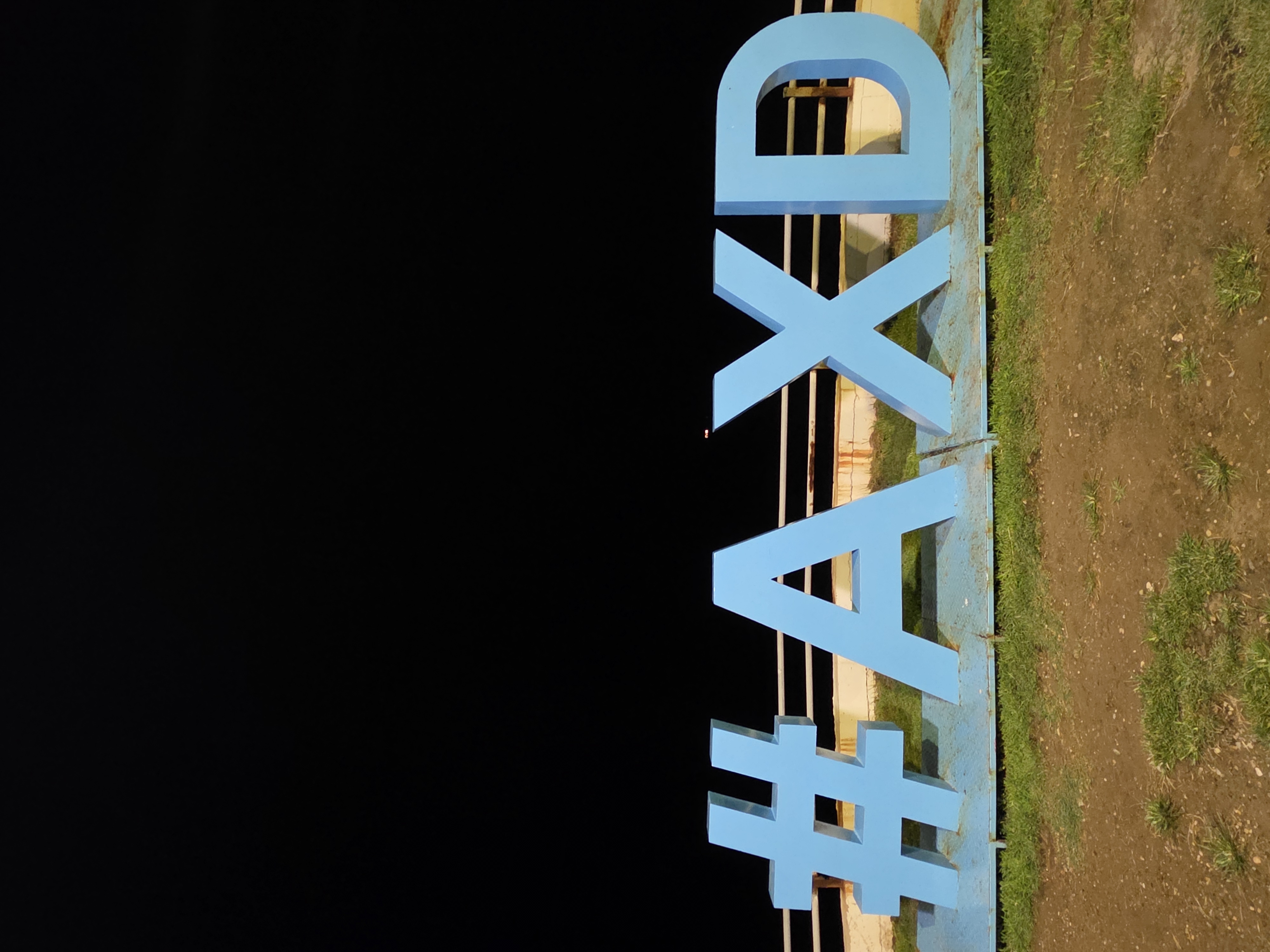
AXD Logo - Alexandroupoli Landmark
A metal structure spelling out the letters "AXD", Alexandroupoli's international airport code. It serves as an urban landmark and outdoor photo spot on the city's seafront, near the Municipal Stadium and the redevelopment area, with views of the sea and Samothraki.
0.8 km
Archaeological Museum
The Archaeological Museum of Alexandroupoli is the city's main museum for the archaeological history of Evros and wider Thrace. Its collections present the region's course from prehistoric times through to the Roman era, through archaeological finds from different parts of Evros. From Prehistory to Roman Times A visit to the museum helps visitors understand the region's archaeological continuity, long before the founding of modern Alexandroupoli. The exhibits are linked to important archaeological sites and settlements of Evros, presenting aspects of the daily life, economy, religion, art and burial customs of the people who lived in Thrace. Of particular interest are the finds from ancient Zone, one of the region's most important archaeological sites, as well as objects from other Evros locations. A Museum for the History of Thrace The museum has particular value because it doesn't simply present isolated archaeological objects. The finds are placed within Thrace's historical and geographical context, helping visitors understand the evolution of the societies that lived in the region. For a visitor to Alexandroupoli, it is therefore a good starting point before an excursion to archaeological sites in the wider area, such as Zone, Mesimvria and Traianoupoli. The Building The museum is housed in a modern building at Leoforos Makris 44, a short distance from the centre of Alexandroupoli. It isn't a historic building, but a purpose-built museum space hosting the region's archaeological collections. Is It Worth Visiting? Yes, especially if you want to get to know the region's ancient history and not just modern Alexandroupoli. It is also one of the sights that can serve as an introduction to the archaeological sites of Evros.
1.77 km
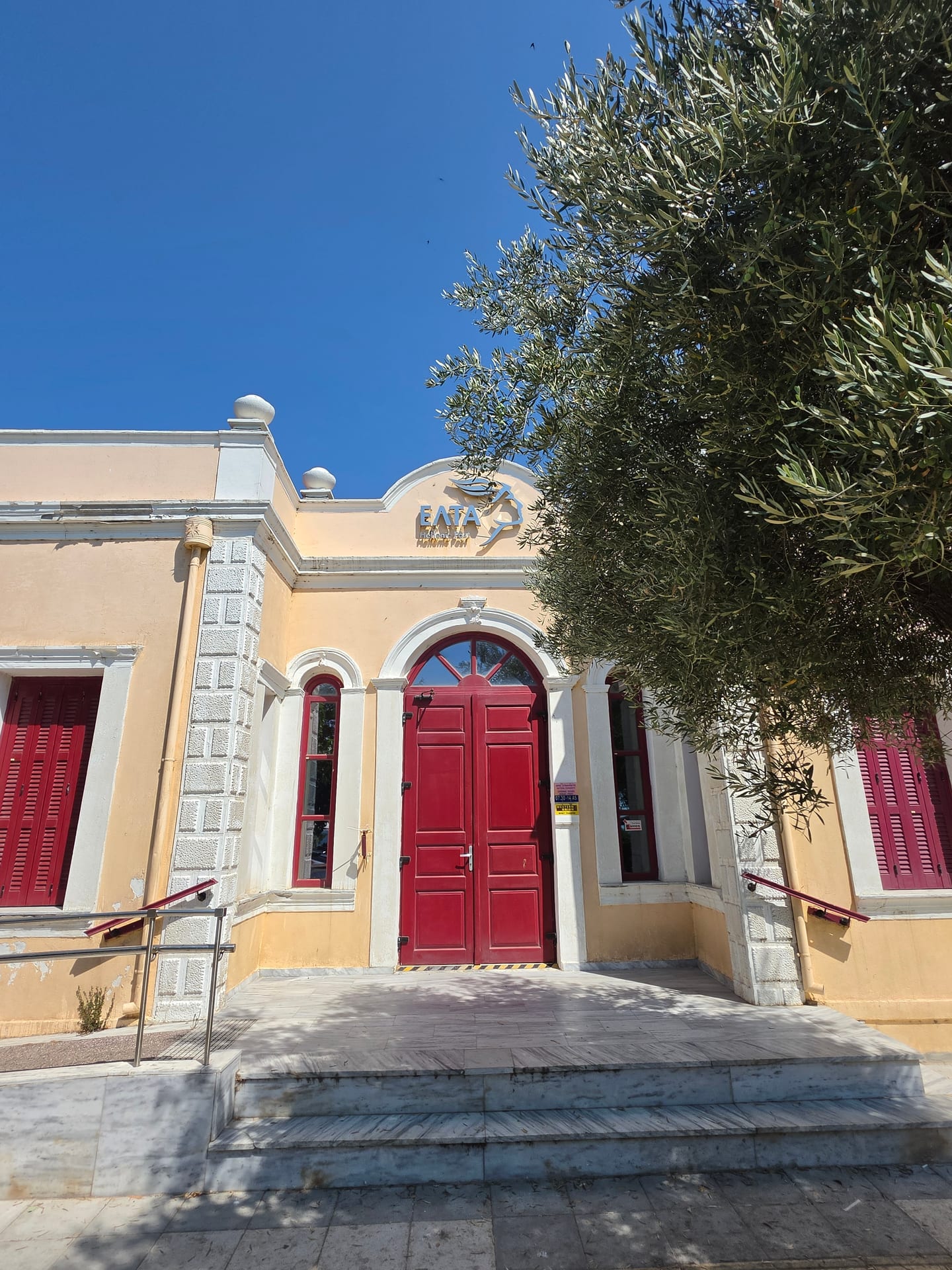
Historic Post Office Building of Alexandroupoli
One of Alexandroupoli's important historic buildings is the old Post Office, at the junction of Megalou Alexandrou and Nikiforou Foka streets, very close to the seafront. It is an early 20th-century building, linked for decades to the operation of the city's postal services, and stands today as one of the listed buildings of historic Alexandroupoli. One of the City's Oldest Buildings The building was built with rendered masonry, a raised ground floor and a distinctive central entrance reached by an external staircase. The façade is symmetrically arranged, with rectangular corner stones, a tiled roof and a perimeter parapet as distinctive features. Its architecture belongs to the city's historic building stock from the period when Dedeagach was developing into an important administrative, commercial and transport centre of Thrace. A Building With an Important Historical Path The building's history isn't limited to its function as a post office. During the period of the Inter-Allied Administration of Thrace, the building was used as the city's administrative headquarters. This is also linked to a particularly significant event in Alexandroupoli's modern history: photographic records exist from May 1920, when the French flag was lowered and the Greek flag raised, shortly before Greek troops entered the city and it was incorporated into the Greek state. The building is thus not only an example of Alexandroupoli's architectural heritage, but also a witness to a critical period in the city's history. A Listed Monument The building's shell has been designated a listed monument, by a ministerial decision published in 2013, with special terms and restrictions for its protection. The protection concerns its architectural and historical value, and places the Post Office among the buildings that keep living elements of old Alexandroupoli alive. Worth Noticing on a Walk The building sits in a spot that can easily be included in a historic walk through central Alexandroupoli. A short distance away are several other important buildings and monuments of the city, such as the Metropolis, the Leontarideios Urban School, the Court House, the Zarifeios Pedagogical Academy and other buildings linked to the city's history and architecture. For visitors it is more a historic building worth observing on a walk than a sight visited from the inside, unless a specific access opportunity exists.
0.15 km
Saint John the Theologian (Astochori)
A church in the village of Astochori, another point of the religious heritage of the countryside around Alexandroupoli.
13.72 km
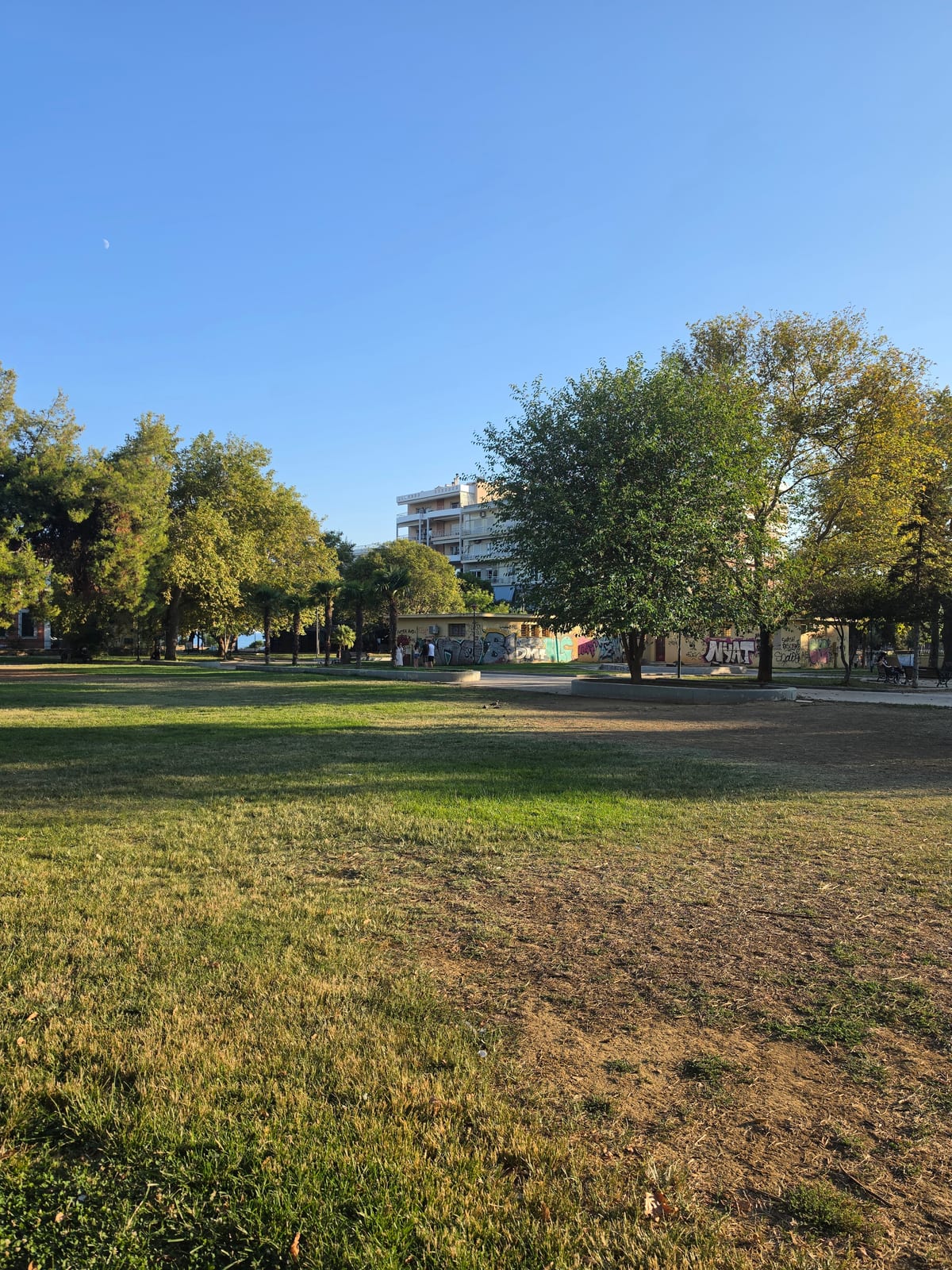
National Independence Park
National Independence Park is one of the public spaces in Alexandroupoli that combine historical memory with the everyday life of the city. The park holds monuments dedicated to the National Resistance and to the fallen Russian soldiers, as well as the statue of Victory. The monuments tie the park to the city's history and to its commemorative events. In the same neighbourhood stands the historic Zarifeios Pedagogical Academy , a characteristic educational building of Alexandroupoli, built in 1923. Today the park also has a strongly youthful character. In the evening hours especially, many school pupils gather there, choosing it as a place to meet and spend time together. So the park is not only a point of historical reference but also part of the city's social life today.
0.3 km
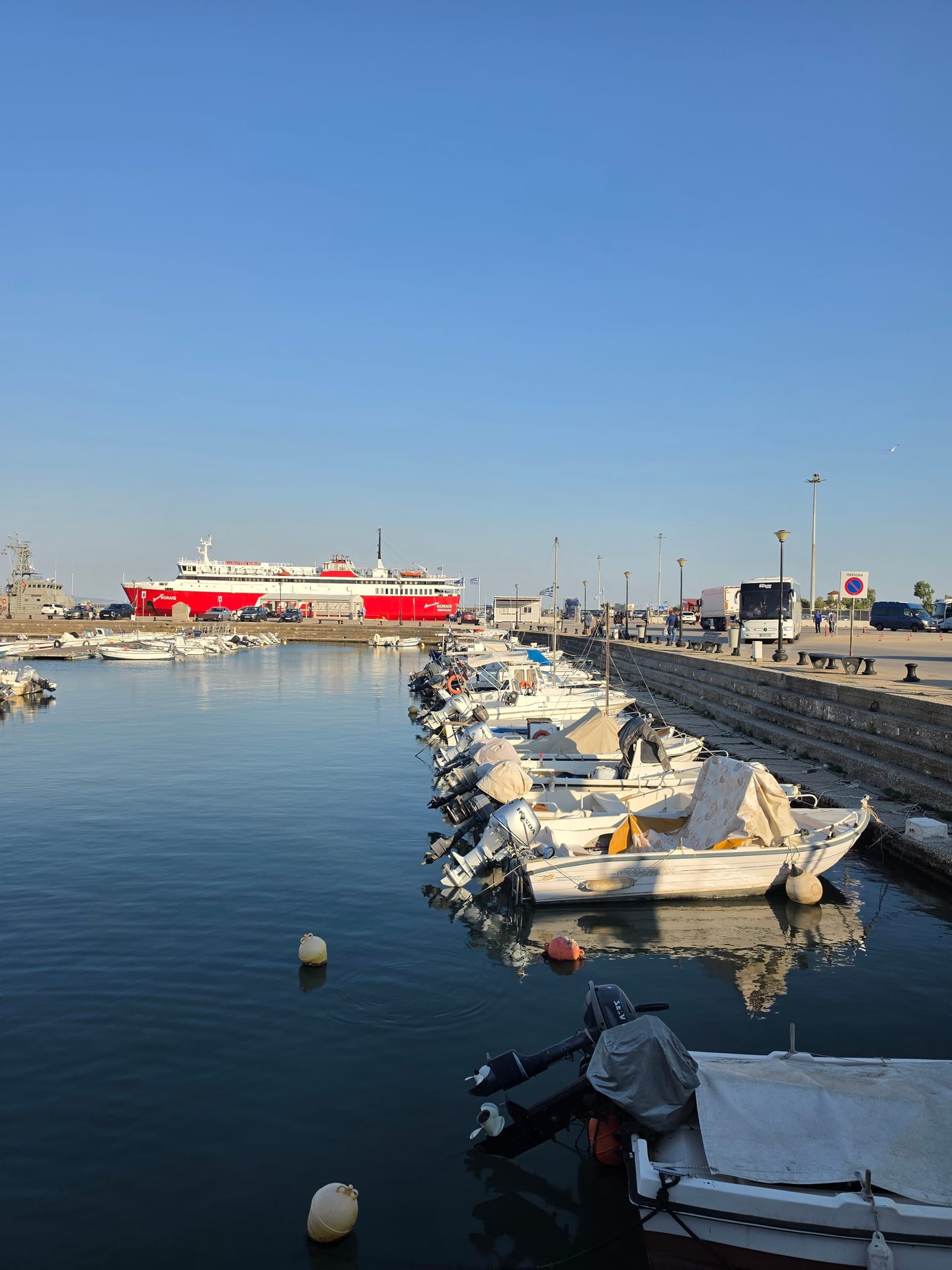
Port of Alexandroupoli
The port of Alexandroupoli is the city's gateway to the Thracian Sea - ferries to Samothraki depart from here, along with seasonal routes to other destinations, while the redeveloped pier has become one of the city's favourite places for a walk. What Visitors Will See The renovated Port Warehouses: The old stone warehouses from the late 19th century, which once served the railway, have been fully rebuilt and are now a modern architectural showpiece of the pier, housing cultural and dining venues. The Anchor Monument: A large, historic ship's anchor placed at the port as a symbol of Alexandroupoli's maritime heritage. The traditional fishing pier: On the eastern side, moored caiques, fishing boats and local fishermen laying out their nets. The passenger pier and ferries: Where the larger scheduled ferries dock, offering the classic scene of a busy maritime hub. Unobstructed views of the open sea: From the end of the pier, a panoramic view of the Thracian Sea, with the mountain of Samothraki clearly visible on the horizon. What Visitors Will Find Cultural and exhibition spaces: Inside the redeveloped warehouses, multi-purpose venues host temporary art, photography exhibitions and cultural talks. Restaurants and cafés on the water: Modern dining spots inside the warehouses, serving food, coffee or drinks with a view of the moored boats. A place to walk the pier: A clean, paved area, ideal for a walk literally out into the sea, away from traffic. Gateway to Samothraki: Ticket offices and boarding facilities for travellers departing for the island.
0.51 km
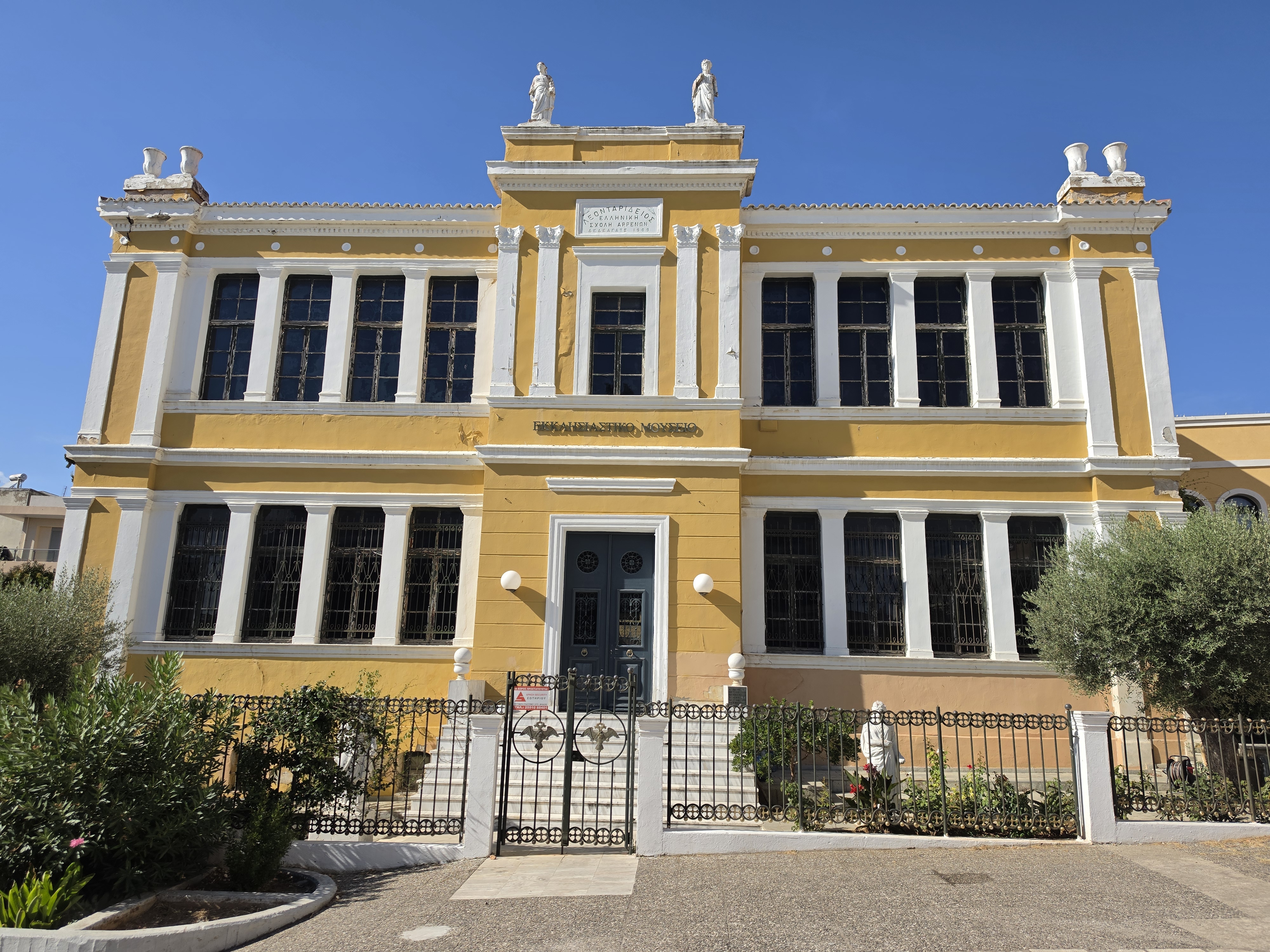
Ecclesiastical Museum of Alexandroupoli
In the heart of Alexandroupoli, on the Metropolis square, stands the Ecclesiastical Museum of the Holy Metropolis of Alexandroupoli, one of the most important places to learn about the ecclesiastical and refugee history of Thrace. Since 1982 the museum has been housed in the Leontarideios School, a historic neoclassical building next to the Metropolitan Church of Agios Nikolaos, which has been designated a listed monument. The museum was founded in 1976, and its collection comprises more than 400 items of ecclesiastical art, gathered mainly from churches and monasteries of the ecclesiastical province of Alexandroupoli. Icons and Ecclesiastical Art At the core of the collection are portable icons, representing different categories and iconographic types of the Orthodox tradition. There are icons of Christ, the Virgin Mary and saints, iconostasis icons, pilgrimage icons, as well as post-Byzantine works. Most of the works date to the 18th and 19th centuries, with some older pieces reaching back to the 15th century. Of particular interest are the dedicatory inscriptions that preserve the names of painters, donors and sponsors, offering valuable information on the history and artistic output of the region. More Than Icons The collection is not limited to icons. It includes sacred vessels, priestly vestments, woodcarvings, liturgical books and early printed books, as well as other objects linked to the region's religious life and ecclesiastical tradition of Thrace. The exhibition is organised across eight rooms, each presenting a different facet of ecclesiastical art and heritage. Of special value are also the heirlooms brought by refugees from Eastern Thrace and other parts of wider Thrace, preserving not only the ecclesiastical but also the personal history of the communities that settled in the Alexandroupoli area. The Leontarideios School The building housing the museum is itself worth noting. The Leontarideios School is an important part of the city's history and has been a listed monument since 1978. The museum moved in in 1982 and reopened in 2000, following conservation work on the building and its exhibits and a new museological presentation. Combine Your Visit A visit to the Ecclesiastical Museum can easily be combined with the Metropolitan Church of Agios Nikolaos, right next door. The church was founded in 1892 and inaugurated in 1901, and is one of Alexandroupoli's most important historical and religious monuments. The church also houses the important carved wooden icon of Panagia Trifotissa, brought to Alexandroupoli by refugees from Ainos and dating to the late 13th century. A visit to the Metropolis square can thus become a small cultural walk combining the Metropolitan Church of Agios Nikolaos, the Ecclesiastical Museum, and the history of Thrace's refugee communities. Why It's Worth Visiting The Ecclesiastical Museum is particularly interesting for those who want to learn about the history of Thrace through objects preserved from churches, monasteries and refugee families. The icons, vestments, liturgical objects and early printed books are not merely works of art, but testimonies to the religious life and historical journey of the region's communities.
0.79 km
