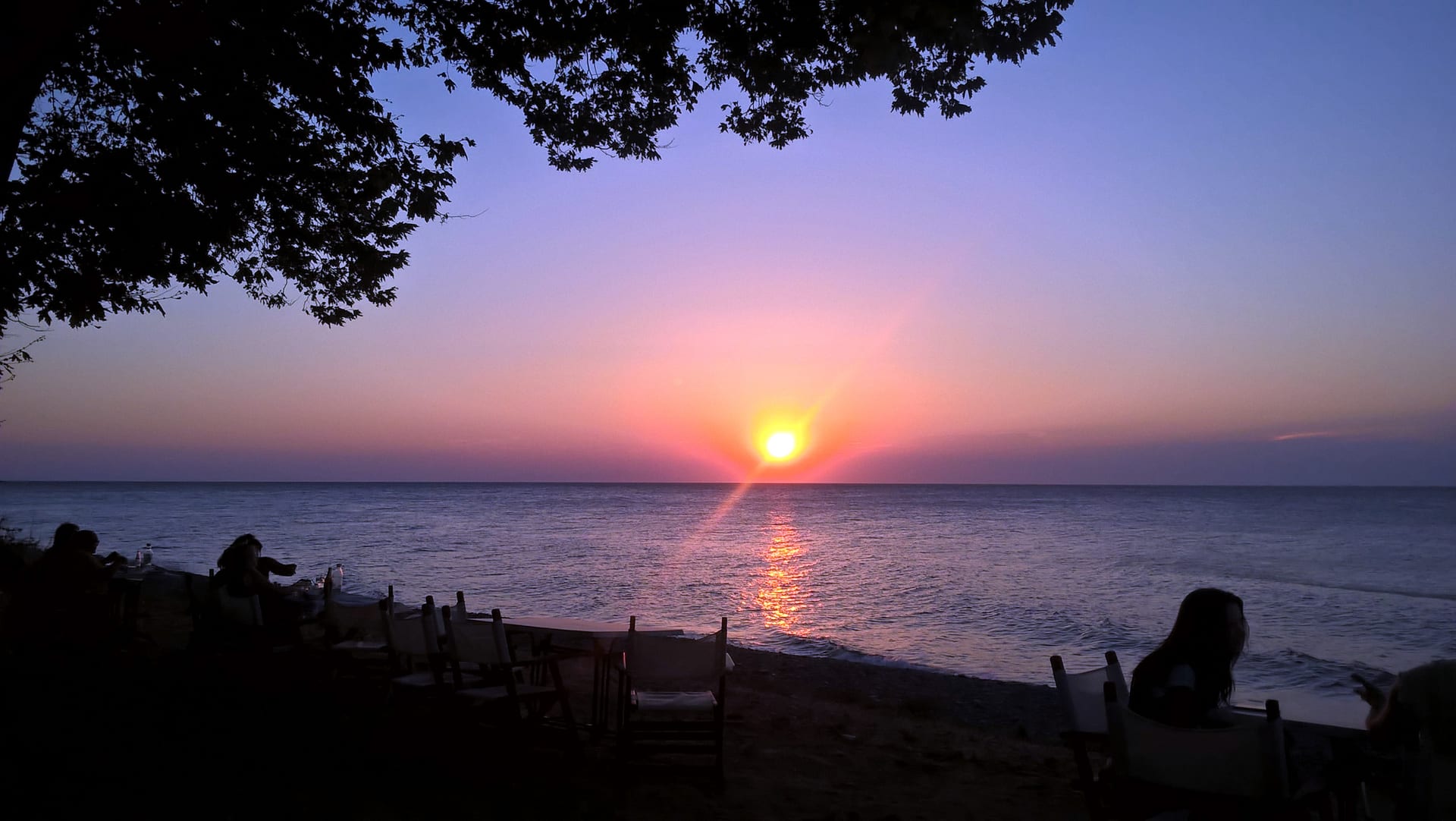
Marsyas, CC BY-SA 3.0
Samothraki: The Island of the Great Gods
About
An oval-shaped island of 178 square kilometres at the edge of the northeastern Aegean, Samothraki became world-famous thanks to the Winged Victory statue that today graces the first hall of the Louvre - though it would be more accurate to say it became famous "again", since in antiquity its fame spread across the known world because of the Kaverian Mysteries performed at its sanctuary and kept strictly secret, as initiates were bound by fearsome oaths of silence. According to Herodotus, the first inhabitants were Pelasgians, who brought the cult of the Kaveiroi from their original homeland, Arcadia; around 700 BCE Greek settlers arrived from Samos, which is why Homer calls the island "Thracian Samos" and, in the Iliad, places Poseidon there watching the Trojan War from the mountain's summit. The island grew rapidly, extending its dominance across the northern Aegean and gaining effective control of the Hellespont straits.
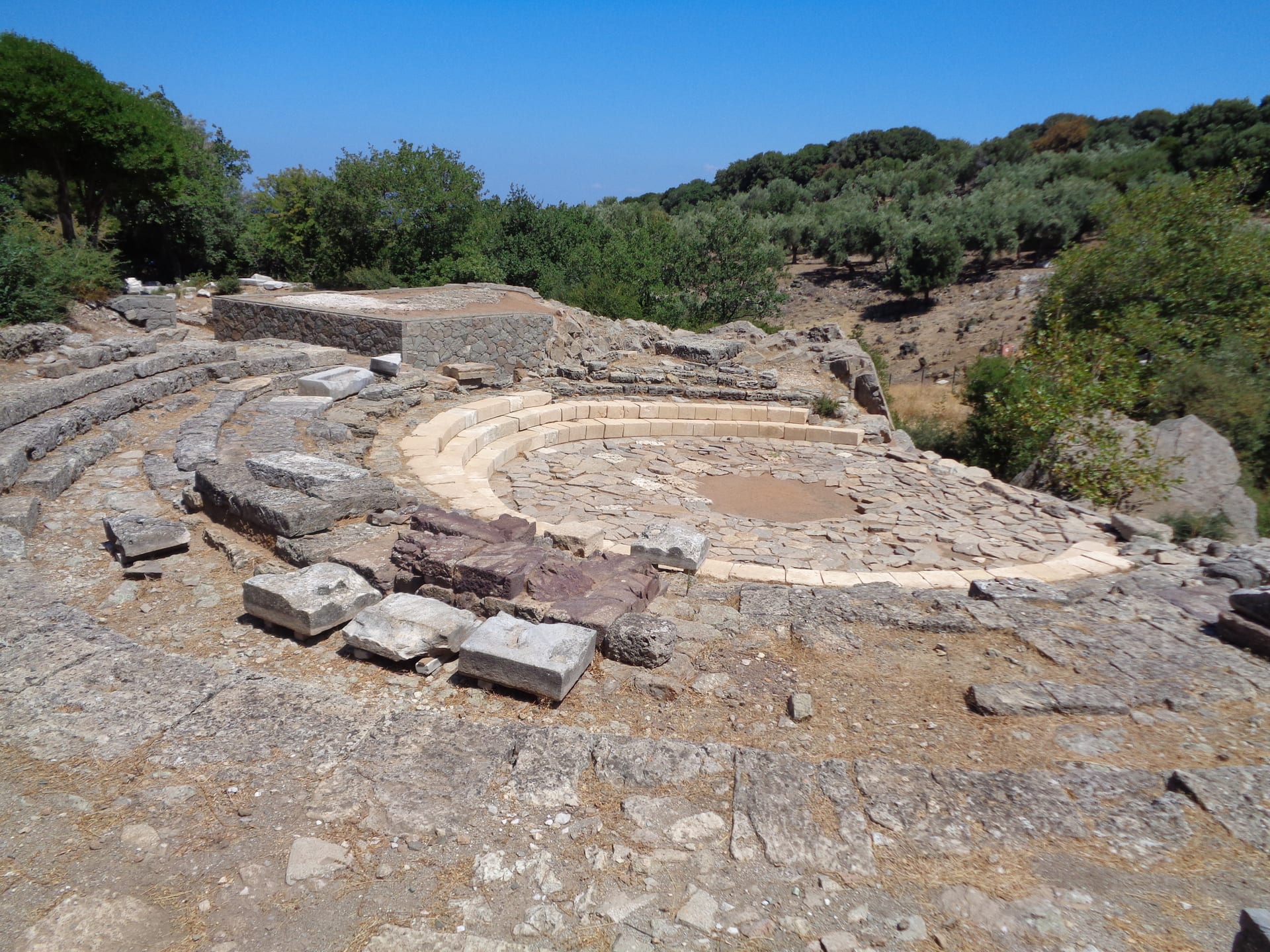
The Sanctuary of the Great Gods lies at Palaiopolis, six kilometres north of the port, in a setting of inexhaustible beauty comparable only to Delphi - with the Arsinoeion (one of antiquity's largest circular buildings, a gift from Queen Arsinoe, wife of Lysimachus II), the Stoa, the Ptolemaion, the ancient theatre and the fountain where the Winged Victory once stood, before Frenchman Charles Champoiseau discovered it in 1863 and took it to Paris. The Palaiopolis Museum, among the richest in Northern Greece for finds, holds a replica of the statue and treasures from decades of excavation. The area is home to the Xenia guesthouse, the newer "Kastro" inn, and several rooms to let for those who want to stay close to the sanctuary.
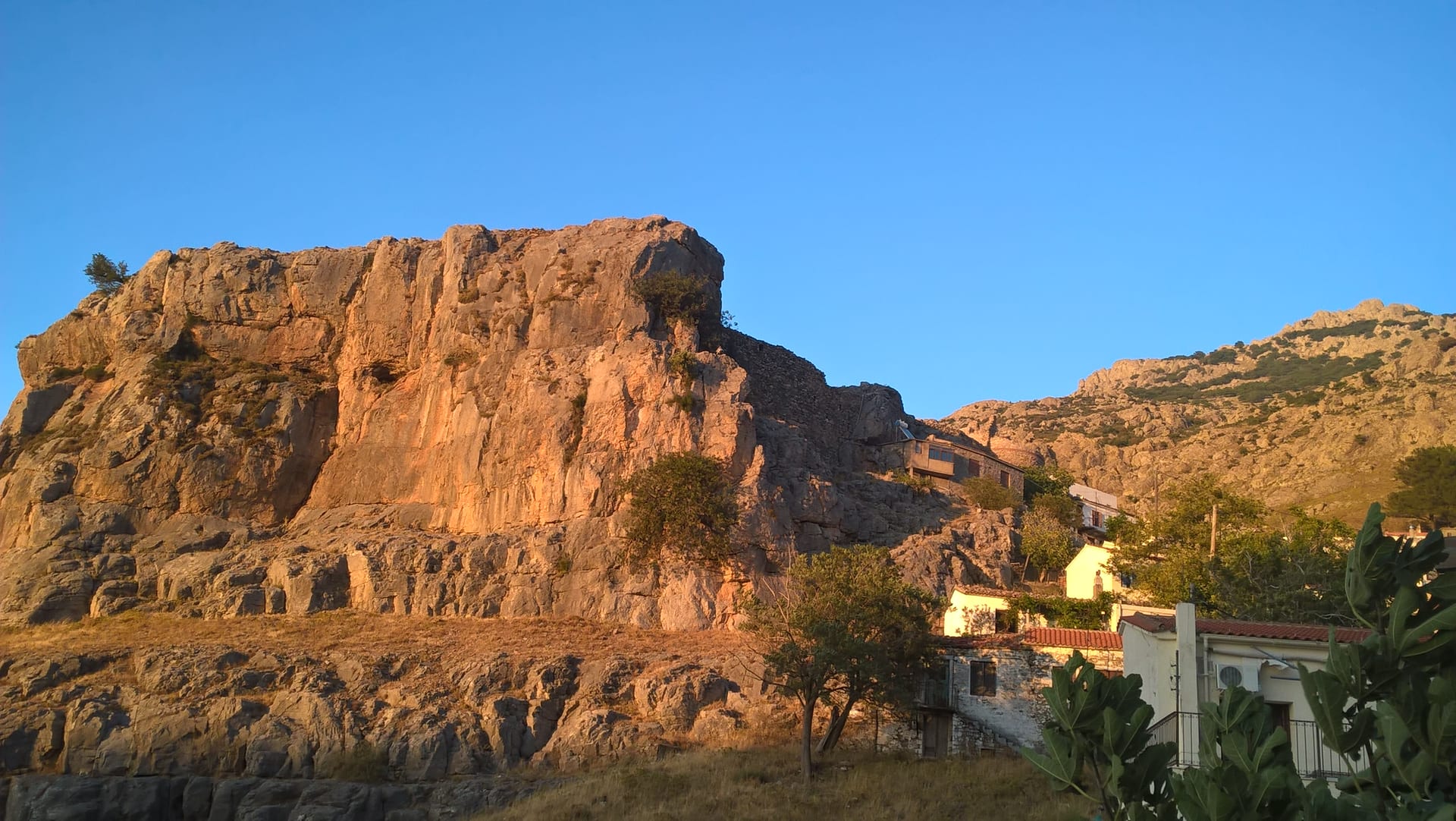
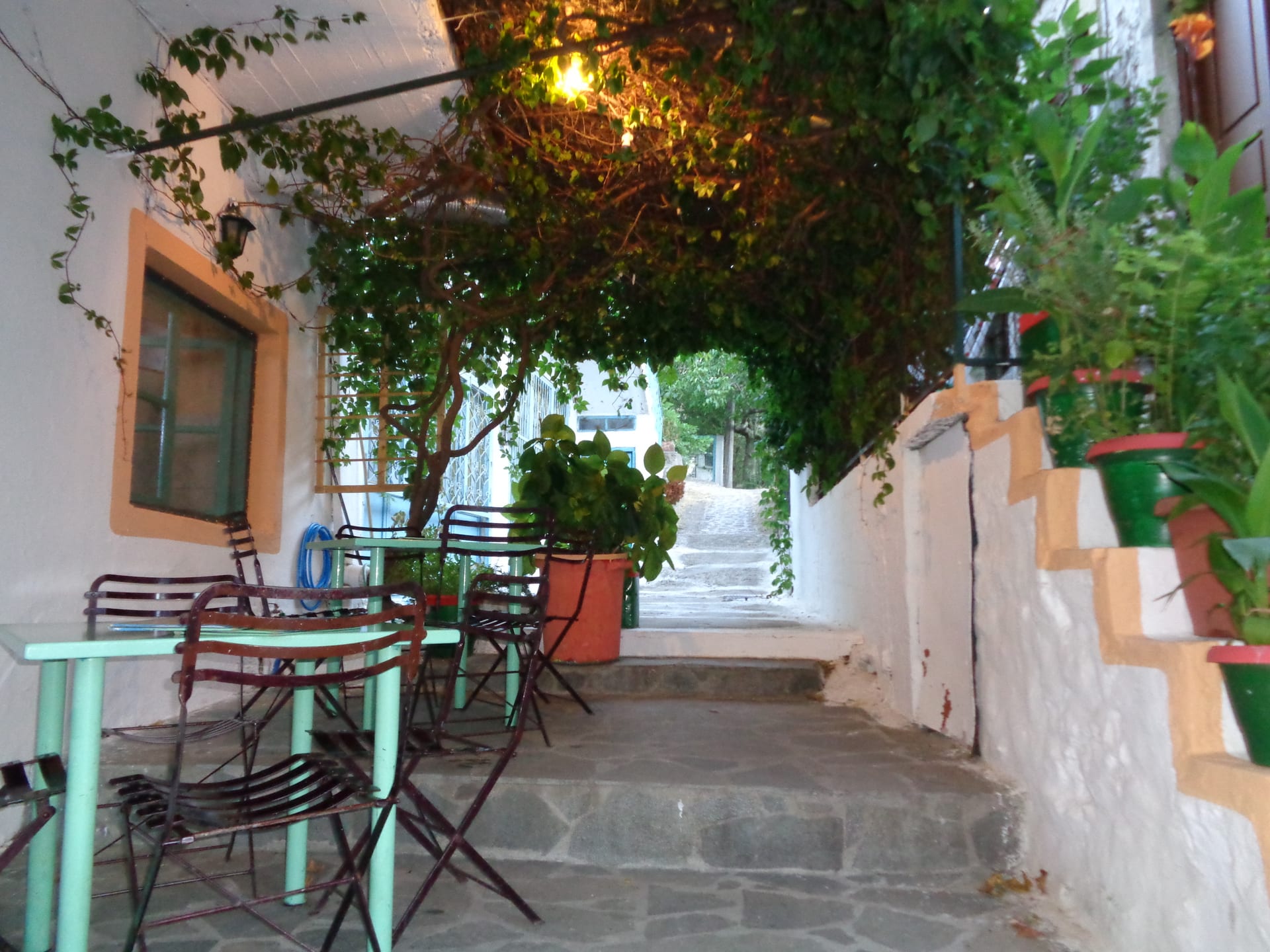
Kamariotissa is the island's port and commercial centre, with two large hotels, many rooms to let of every category, restaurants, fish taverns, cafés, pubs, venues with lively nightlife and whatever else a visitor might need. Five kilometres inland, tucked behind hilltops in the foothills of Mount Saos, Chora unfolds amphitheatrically across an arched slope - the island's traditional capital, with cobbled lanes, the imposing Church of the Dormition of the Virgin (built in 1875) holding the relics of Samothraki's five holy martyrs, a folklore museum in a restored building, the town hall, a castle and traditional rooms to let.
Heading north from Kamariotissa, past Palaiopolis, lies Kariotes first, a settlement with several rooms to let and taverns, and a few kilometres further, 13 km from Kamariotissa, Therma. Lush vegetation of plane trees, chestnuts, strawberry trees and myrtles thrives there, fed by streams cascading down the slopes of Saos to form waterfalls and small lakes, alongside renowned sulphur hot springs with modern group and individual bathing facilities, a hotel, an inn and many rooms to let of every category with picturesque taverns.
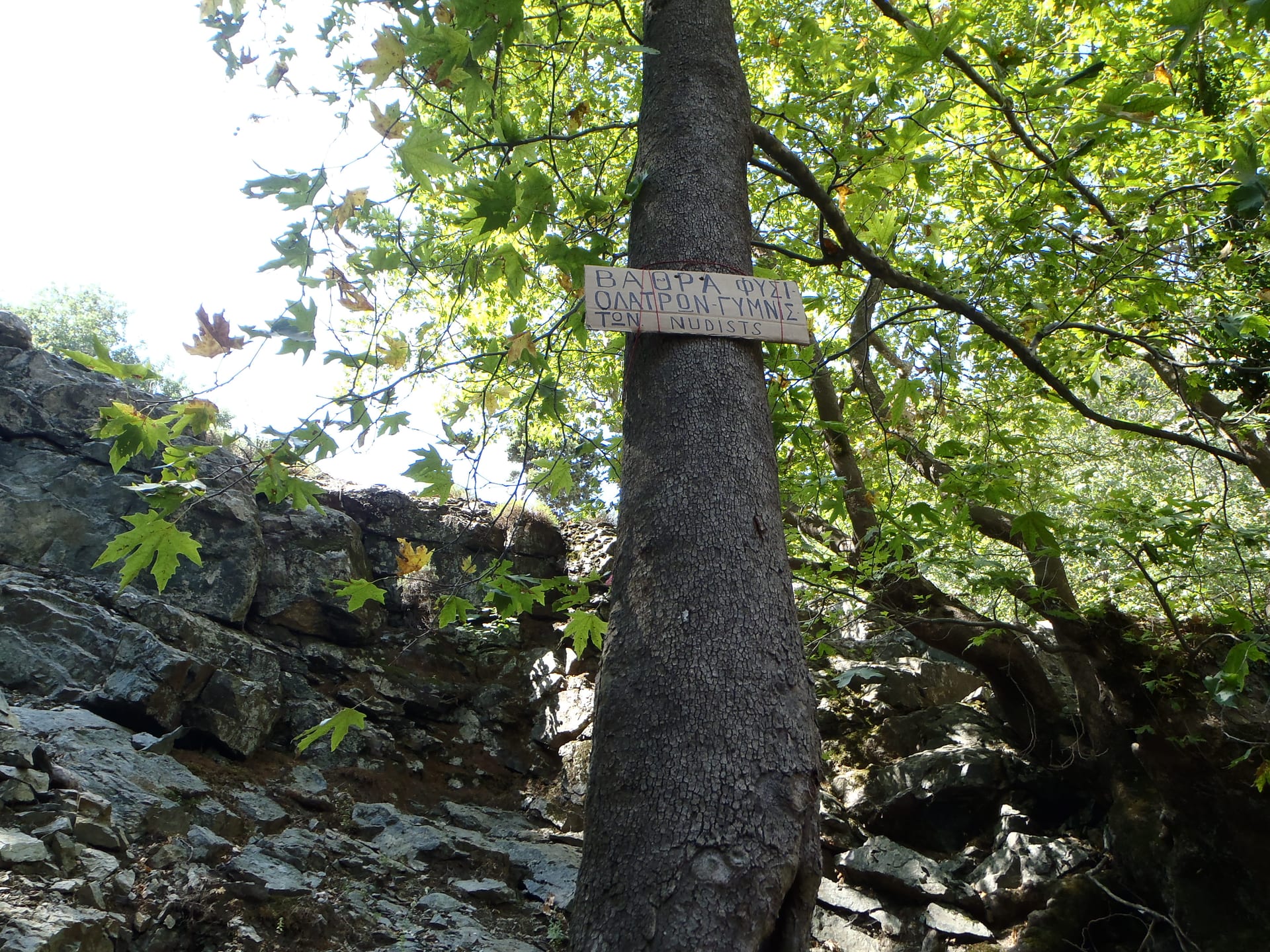
Continuing north from Therma, two municipal campsites appear - one free, amid untamed natural vegetation, the other more organised with full amenities - and then the Fonias stream, at whose mouth stands one of the three Gateluzzi castles. Climbing the gorge along the stream, beneath centuries-old plane trees, leads to the island's largest lake (Vathres) with its striking waterfall; the path continues higher into a valley of crystal-clear natural pools carved into the rock - some like small bathtubs, others larger with small waterfalls and sandy bottoms, scenes recalling exotic islands that remain hidden to most visitors. Further east spreads the wild, grey beauty of Kipoi, with the mountain's bulk looming above and the open sea stretching ahead.
In southern Samothraki, from Kamariotissa - the island's transport hub - the road first passes Alonia, a farming village, then, through endless olive groves, reaches Lakoma, a fishing refuge with a modern olive press. Two kilometres above lies Profitis Ilias, a picturesque pastoral village with many grill houses where visitors enjoy the celebrated Samothraki goat and marvel at spectacular sunsets. Further south still, beneath the Church of Panagia Kremniotissa - built imposingly on a rock and famed for its miraculous icon - lies Pachia Ammos. It is a popular beach but also a landmark for experienced spearfishers: dozens of colourful fish species, a shipwreck and large underwater caves create scenes reminiscent of a Jacques Cousteau documentary.
However many times one visits Samothraki, it is hard to claim to truly know it. Beyond the well-known Vathres of Therma, the castle of Chora and the shores of Kipoi and Pachia Ammos, the island of the Great Gods holds a wilder, more imposing beauty - of unknown pools, hidden waterfalls, a many-shaped seabed and the sheer slopes of Saos - that belongs only to those who dare to seek it out.
Photos
You Might Also Like
Discover more suggestions from the same category.
 ΠΡΟΤΕΙΝΟΜΕΝΟNEW
Parking, Buses & Getting Around: The Practical Guide to Alexandroupoli
Alexandroupoli is an easy city to walk - the centre, the seafront and the lighthouse are usually just a few minutes' walk from each other. In the summer months, though, when visitor numbers rise sharply, knowing where to park and how the buses work makes a real difference. This guide gathers what is officially known today, without guesswork. Where can I park in Alexandroupoli? The centre and seafront have a handful of organised parking areas, a controlled on-street parking system covering parts of the centre, and a few private garages. There is no single public digital directory of every spot; here is what could be confirmed from official sources and local press: Parking Area / address Type Price Distance from the lighthouse / seafront Alexandroupoli Port Parking Vas. Alexandrou 20 (port) Public, paid No published price Right by the lighthouse Controlled parking (centre) Parts of the centre Public, paid for non-residents No published price A few minutes from the lighthouse Central Parking (Gaitatzis Stavros) Venizelou 38 Private No published price A few minutes from the lighthouse Karakyrgios Panagiotis Parking Mavromichali 18 Private No published price A few minutes from the lighthouse New municipal parking (under development) GAIAOSE plot, near the centre Municipal, will be paid Not announced yet Near the centre None of the prices above are published online (the port car park has changed operator in recent years) - always check the on-site sign or call ahead (Central Parking: 25510 29548, the Municipality of Alexandroupoli for the controlled centre zone). Free parking options Beyond the controlled and private spaces above, on-street parking in most neighbourhoods and in parts outside the tight centre remains free. As a general rule: the further you look from the lighthouse and the central seafront, the easier it is to find a free spot, especially on streets a few minutes' walk from the centre. Free parking isn't officially mapped online, so the best indicator is the absence of a controlled-parking sign or meter. Since the centre is easy to walk, it's often worth leaving the car on a free spot just outside it and covering the last few minutes on foot. Private parking for extra peace of mind Especially in July and August, when demand for spots in the centre rises, an organised private car park (see the table above) can save time and hassle compared with hunting for a free street spot. It's worth calling ahead to check availability and current price, since none of these lots publish an official price list online. Alexandroupoli urban buses The Alexandroupoli urban bus network (Αστικό ΚΤΕΛ) runs 15 numbered lines covering the city, the nearby beaches and the municipality's villages, reachable on 25510 28844 (offices at Leof. Dimokratias 166), with a mobile app showing live bus positions. Line Areas / destinations 1 LIDL, Nea Chili, Hospital 2 Maistros, Jumbo 3 LIDL, Nea Chili, Makri 4 Tax office, OAED, Palagia 5 Jumbo, Praktiker, LIDL, Apalos, Airport, Antheia, Aristino, Loutra, Pefka 6 Aetochori, Doriskos, Nipsa 7 Makri, Agia Paraskevi, Mesimvria 8 Avantas (direct) 9 Jumbo, Maistros, Amfitriti 10 Avantas, Aisymi 11 Agia Paraskevi (terminus) 12 Dikella 14 New Cemetery 15 Airport (via Praktiker, LIDL) For the most popular destinations: take line 7 for Makri and Agia Paraskevi , lines 1 or 3 for Nea Chili , line 12 for Dikella , line 7 for Mesimvria , line 5 for Loutra , and lines 5 or 15 for the airport . Always confirm the return time via the app or on 25510 28844 before you set off, as schedules shift seasonally. What does the bus cost? Fares below are valid from 09/03/2026, per the official Alexandroupoli urban bus website: Zone Full fare Reduced fare Monthly card Zone A €1.30 €0.80 €50 Zone B €1.80 €1.00 €60 Zone C €2.30 €1.20 €75 Hospital €1.80 €0.80 €60 Municipal transit - - €15 Student card - - €45 (all zones) / €32 (university lines) There are also 10+1 ticket bundles per zone (e.g. Zone A: €13, Zone B: €18, Zone C: €23, Municipal 20+4: €8) and matching reduced bundles. Cards are issued and renewed Monday to Friday, 06:00-14:00, at the offices on Leof. Dimokratias 166. Tips for visitors Don't try to find a spot right next to the lighthouse during peak summer hours - pick one a few minutes further out instead. The centre of Alexandroupoli is easy to walk, so you don't need a spot right in front of your destination. For a long stay, an organised private car park is usually a safer bet than hunting for a free street spot. For beaches like Makri and Dikella, check the return schedule before you leave, especially for the afternoon trip back. In the summer months, arriving earlier at the beach or the centre gets you more parking choices.
 ΠΡΟΤΕΙΝΟΜΕΝΟNEW
How the city got its name
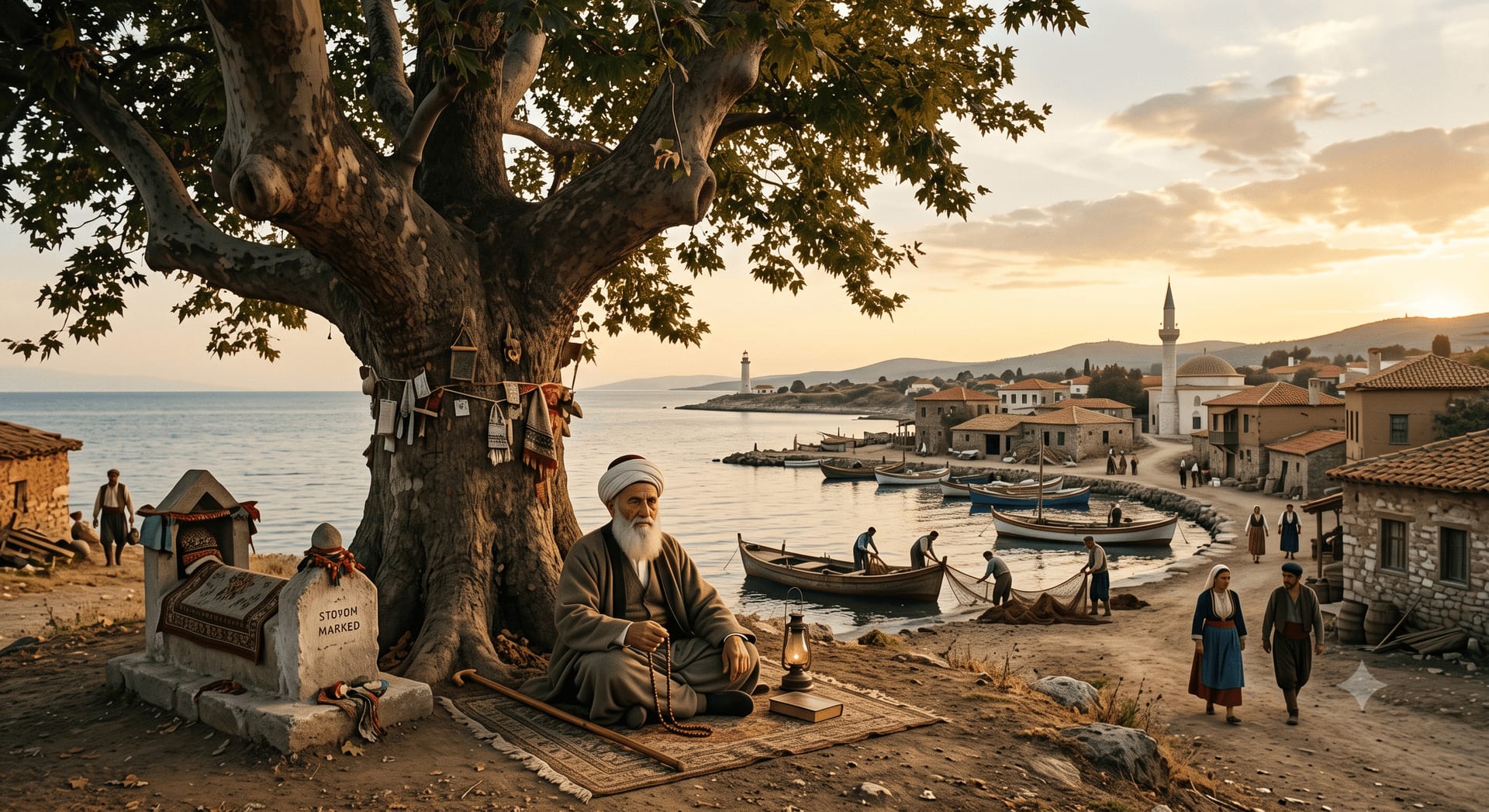
Modern Alexandroupoli was founded in the mid-19th century as a small coastal settlement by fishermen who came mainly from Ainos and the surrounding villages. During the Ottoman period, it became known as Dedeagatch, a name associated with an old local tradition. The name “Dedeagatch” comes from the Turkish words dede (“elder” or “grandfather”) and ağaç (“tree”), and is commonly translated as “grandfather tree”. According to local tradition, an elderly dervish lived for many years beneath a large tree and was buried beside it. The tree became a landmark for the area and gave its name to the settlement. Following the city's liberation on 14 May 1920, it was decided to replace the Ottoman name with “Neapoli”, meaning “new city”. On 8 July 1920, the young King Alexander I of Greece visited the city and arrived at its port. His visit was an important event for the newly liberated city. The mayor at the time, Emmanouil Altinalmazis, announced to the king the Municipal Council's decision to name the city after him, in honour of his visit. The name “Alexandroupoli”, meaning “city of Alexander”, was gradually established in honour of King Alexander I. The new name was formally established through the administrative process in the autumn of 1921, definitively replacing “Dedeagatch”.
 ΠΡΟΤΕΙΝΟΜΕΝΟNEW
The Lighthouse: history and visits
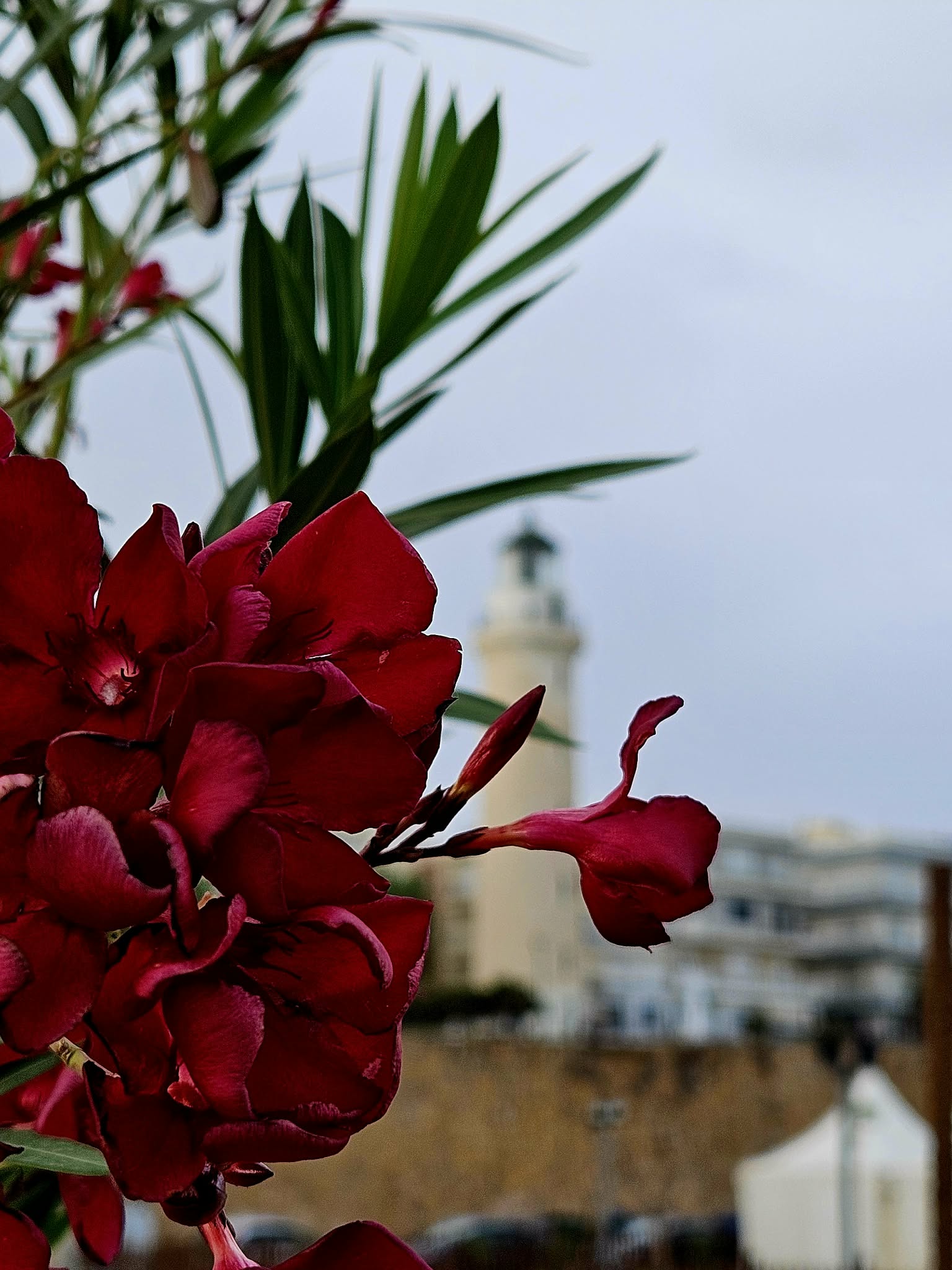
The Alexandroupoli Lighthouse was built by the French Company of Lighthouses and Beacons of the Mediterranean, under contract with the Ottoman government of the time, and was inaugurated on 1 June 1880. Its purpose was to aid navigation in the Hellespont area. It has operated continuously ever since. It stands on the western side of the harbour, is 18 metres tall with 98 internal steps - one of the tallest lighthouses in Greece. In recent years it has occasionally opened to the public for special events and city festivities, without a fixed visiting schedule - it's worth following the Municipality's announcements for open days.
 ΠΡΟΤΕΙΝΟΜΕΝΟNEW
The History of Alexandroupoli
In the southeastern corner of Western Thrace, human settlement is attested as early as the Neolithic period (4500-3000 BCE). Little evidence survives from the Bronze Age, but in the Early Iron Age (1050-650 BCE) Thracian tribes settled the area - among them the Cicones, the people Odysseus and his companions clashed with on their way back from Troy, raiding their city, Ismaros. Roman itineraries from the 4th century and the writings of Herodotus identify the site with the ancient city of Sale, about 11 km west of Traianoupolis. In the Byzantine period the area played an important role as a border with Constantinople and was guarded by strong military installations; in the centuries that followed, up to the 19th, it appears to have been largely abandoned and overgrown with forest. The modern city began as a small fishing settlement founded in the 19th century by fishermen from Ainos, Makri and Maroneia, who named it Dede-Agach. Several stories explain the name - two of the most common trace it either to a Turkish holy man (dede) buried under an ancient oak (agach), or simply to the many oak trees along the shore. The turning point came in 1871, when the Ottoman Empire decided to route the railway through the town; within a few years Greek, Armenian, Turkish, Levantine, Jewish and Bulgarian merchants and craftsmen arrived, building a new multicultural trading city and a hub for all of Thrace's goods. By 1912 eight foreign consulates operated there. In 1878, under the Treaty of San Stefano, Dede-Agach came under Russian military administration for about a year, during the Russo-Turkish War of 1877-78, while remaining part of the Ottoman Empire (as the seat of the Sanjak of Dedeagac, within the Adrianople Vilayet) until the Balkan Wars. For decades it was popularly believed that Russian engineers of that era had drawn up the city's wide street grid running perpendicular to the seafront; recent research based on contemporary Constantinople newspapers, however, suggests this is more likely a myth, since Dede-Agach was then a small settlement with no pressing need for town planning and the Russian military presence was brief. The plan appears to have actually taken shape around 1885, through cooperation between the Ottoman administration and the Oriental Railways company, and remains essentially unchanged today. The city's development continued with public works, churches, schools and a hospital; in 1897 it welcomed the Orient Express, and in 1905 Ion Dragoumis was appointed vice-consul there. In 1912, during the Balkan Wars, Bulgarian troops occupied the city, formalised by the 1913 Treaty of Bucharest; many Greeks left rather than watch monuments and archives destroyed. After the First World War and the Treaty of Neuilly (1919), the area was temporarily governed by an Inter-Allied Administration under Harisios Vamvakas, an associate of Eleftherios Venizelos, until 14 May 1920: the 9th Serres Division, under Epaminondas Zymvrakakis, liberated the city - the French flag was lowered, the Greek flag raised, and the city handed over by police director K. Daniil. It was first named Neapoli, a name that did not last: local authorities renamed it Alexandroupoli in honour of King Alexander, who passed through the area on his way to liberate Adrianople. Shortly after, the city gave shelter to refugees from Smyrna. The Treaty of Lausanne (1923) finally ratified the Treaty of Neuilly, ceding Western Thrace to Greece (in exchange for Eastern Thrace going to Turkey). A period of renaissance followed, led by intellectual figures such as Theodoros Kastanos, Athanasios Spanos and Achilleas Samothrakis, interrupted again by the Second World War and a new Bulgarian occupation. Liberation came under the first Deputy Governor-General, Alexandros Papathanasis, and the city found its rhythm again, developing steadily ever since. Alexandroupoli is now the administrative centre of Evros, with 59,723 residents in the city and 71,751 across the municipality (2021 census), home to the Medical School of the Democritus University of Thrace, with an active port, an airport, and a multicultural heritage still visible in its architecture and stories. In recent years its port has emerged as a strategic energy and logistics hub: since October 2024 a floating LNG terminal (FSRU) has been operating commercially just offshore, the first of its kind in Greece, strengthening the energy security of Southeastern Europe; the port remains in state ownership and has also gained added importance as a transit point for allied military forces.
 NEW
NEWGeorgios Zarifis: the national benefactor behind the Zarifeios Academy
Georgios Ioannou Zarifis (1807-1884) was the wealthiest Greek banker of Galata in the 19th century and one of the greatest national benefactors. The word "zarifiliki" in Constantinople came to mean nobility and generosity. Biography - From Odessa to Galata Son of Ioannis Zarifis, a wine merchant from the Bosphorus, and Tarsou Kaplanoglou. He was born in 1807 at Megas Revmatos on the Bosphorus (Arnavutkoy), at the Zarifis family's summer house on the island of Aloni near Proikonisos. In 1821, aged 15, he fled with his parents to Odessa because of the persecutions in Constantinople, was placed under the Tsar's protection, and studied at the Richelieu Lyceum. In 1830 he came to Greece, and under Kapodistrias was appointed secretary of Karytaina. At 25, disillusioned by the misery of provincial life, he took his family and returned to Constantinople. There he was employed at the house of Stefanos Zafeiropoulos. Within 2 years the firm became "Zafeiropoulos & Zarifis," with connections in Constantinople, Marseille, London, and Odessa. He married his partner's daughter, Eleni Zafeiropoulou, and kept his Greek citizenship despite the Sultan's offers of high office in exchange for becoming a "rayah." He founded his own commercial bank, which took on Ottoman debt. Together with other Greek bankers, he was a leading figure in imposing the first International Financial Control on the Ottoman Empire in 1881, on behalf of Greek and foreign creditors. He became immensely wealthy. He was a banker and financial advisor to Sultan Abdul Hamid II. He died on 28 March 1884 in Constantinople. His wife Eleni tried to save the Didaskaleia. His work was continued until 1922 by his son Leonidas Zarifis (1840-1923), and afterwards by his grandson Konstantinos Zarifis (1891-1979). The great vision: teachers for Thrace For Zarifis, education was Hellenism's weapon of survival. For 40 years he gave away huge sums: 1865, Bursa: He sees that no Greek there speaks Greek. He offers to build 2 schools, for boys and for girls, and promises a Gymnasium if, within 5 years, the children speak Greek. 1875, Plovdiv: He founds the Zarifeia Didaskaleia for boys and girls, a higher institute of learning. The goal: graduate teachers would return to the villages of Thrace and Macedonia. He funded their upkeep with 1,000 gold pounds a year. They operated until 1906. Others: the Great School of the Nation at Phanar (rebuilt entirely with his donation), the Constantinople Philological Society, the "Love One Another" brotherhood that sent teachers to the villages, the Filergos Society (1866-77) which gave tools to needy craftsmen, the Zarifeio wing of the Balukli Hospital, and the girls' school of Triglia. Zarifis also funded Georgios Vizyinos from 1875 to 1884 for his studies in Gottingen, Leipzig, Berlin, Paris, and London. From Plovdiv to Alexandroupoli After the Zarifeia closed in 1906, and given the political developments in Bulgaria, the bequest had to continue elsewhere. 1923: The first Didaskaleio was founded in Alexandroupoli, because Karagats, where the original Didaskaleio of Epivates had been relocated for 11 months, remained in Turkey under the Treaty of Lausanne. Its director was the educator Theodoros Kastanos, who fought hard to complete today's neoclassical building. 1934: The Didaskaleio was abolished and became a two-year Pedagogical Academy, one of the first 6 in Greece. Its first director was Evangelos Papanoutsos (1934-36), and its last was Nikolaos Raptis (1976-78). 15 June 1936: Inauguration of the Zarifeios Pedagogical Academy , attended by Zarifis' grandson and King George II. The grandson donated a piano and funds for musical instruments and furniture. The connection was not merely honorary. After the closure, an annual sum of 25,000 gold French francs was transferred to Alexandroupoli. The memory today The building is one of the most important neoclassical buildings in Alexandroupoli. Since 1983 the Academy has been the Pedagogical Department of the Democritus University of Thrace, at Nea Chili. Today it houses the 1st Experimental Primary School of Alexandroupoli - Zarifeios . In the garden, at the National Independence Park, stands the marble bust of Zarifis, a work by Nikos Perantinos. It is perhaps the only monument in Greece bearing the Zarifis name - a family that invested not in roads and statues, but in teachers. And this idea, from Plovdiv in 1875 to Alexandroupoli in 1934, remained the same: to create people who would pass on knowledge.
NEW14 May: The Liberation of the city
A brief historical overview from the Balkan Wars to its final incorporation into Greece. On 8 November 1912, during the First Balkan War, Dedeagatch was captured by Bulgarian forces. On 11 July 1913, during the Second Balkan War, it was temporarily liberated by Greek forces (with significant support from the Greek navy and the battleship Averof under Admiral Pavlos Kountouriotis). Under the Treaty of Bucharest (10 August 1913), the city and the rest of Western Thrace were awarded to Bulgaria. After World War I and the Treaty of Neuilly (1919), Western Thrace came under temporary Inter-Allied (mainly French) administration. Final liberation took place on 14 May 1920. Greek troops (primarily the Xanthi Division under Konstantinos Mazarakis-Ainian, which landed by sea, in coordination with the 9th Serres Division under Epameinondas Zymvrakakis) entered the city. The French flag was lowered and the Greek flag was raised. It was initially renamed Neapolis and shortly afterwards Alexandroupoli, in honour of King Alexander I who visited the city. 14 May is celebrated every year in Alexandroupoli as a local public holiday known as “Eleftheria” (Liberation Day).
%20scale(8.3333)%22%20fill%3D%22none%22%20stroke%3D%22%237c5fb0%22%20stroke-width%3D%221.4%22%20stroke-linecap%3D%22round%22%20stroke-linejoin%3D%22round%22%3E%3Cpath%20d%3D%22M3%2010l9-6%209%206%22%20%2F%3E%3Cpath%20d%3D%22M4%2021h16M5%2021V10M9%2021V10M15%2021V10M19%2021V10%22%20%2F%3E%3C%2Fg%3E%3C%2Fsvg%3E) NEW
NEW1821 in Thrace: the band of Ortakioi and the Holocaust of Samothraki
Alexandroupoli did not exist in 1821 - it was still sea. But Thrace rose up. It could not revolt the way the Morea did - it lay next to Constantinople, with a strong Turkish army, and without mountains for guerrilla warfare. So the revolution took other forms: members of the Filiki Etaireia, men of the Sacred Band, and two events that marked our region - the band of men from Ortakioi and Mandritsa who left to join Ypsilantis, and the Holocaust of Samothraki on 1 September 1821. Preparation: Thrace before 1821 Thrace had already prepared itself intellectually. From the 15th century, the communities ran schools and libraries in Adrianople, Plovdiv, Ainos, Didymoteicho, Ganochoria, Silivri, and Sozopol. A pioneer of this awakening was the Adrianopolitan archimandrite Theoklitos Polyeidis, with his "Oracles of Agathangelos" (1750), which foretold liberation and had an enormous impact at the court of Catherine II in St Petersburg. The Filiki Etaireia was founded in 1814 in Odessa by Xanthos, Skoufas, and Tsakalof. The historian Ioannis Filimon records 700 members, of whom 31 were Thracians, and comments: "if the Greek merchants of the West and the North conceived the revolution of 1821, and the Greeks of Odessa gave birth to it, the Greeks of Thrace nursed it." The fourth member of the Filiki Etaireia, alongside the three founders, was the Plovdiv merchant Antonis Komizopoulos. His house survives today in Plovdiv as an ethnographic museum. A major role was also played by Grigorios Maraslis, of the "Red House" of Odessa, which housed the Foundation for Hellenic Culture. In Adrianople, the members met at the house of Amiras, near the metropolis. The most prominent were Sotiris Kokias, Dimitrios Chatzistanou, and Dimitrios Letzoglou. The band of Ortakioi and Mandritsa (1821) The most immediate event for the Evros region. In 1821 the bishop of Litiki, Sofronios, a member of the Filiki Etaireia - the bishopric of Litiki lay in Thrace, seated at Ortakioi in Northern Thrace - formed a revolutionary band from the men of Mandritsa and Ortakioi, that is, the Greek inhabitants of Ortakioi and Mandritsa. They crossed Turkish-occupied Bulgaria, joined the forces of Alexandros Ypsilantis, and took part in the revolution in Moldo-Wallachia. Fighting alongside them were: Thanasis Karabelias, or Belias , from Kornofolia in Evros - he had formed a guerrilla band at Soufli, was initiated into the Filiki Etaireia in 1818, and followed Ypsilantis. He was captured crossing the Rhodope and hanged in Adrianople (according to another oral tradition he survived and fought in southern Greece, and was immortalised in folk songs). Kara-Giannis, or Giannis Karafylidis , from Sidion (Sahinkioi of Malgara) - he was killed and buried in Odessa. According to oral tradition, together they led 1,500 men from Thrace to Moldo-Wallachia. Georgios Giannakoudis from Kornofolia - he fought in Moldo-Wallachia and southern Greece and returned unharmed. Thrace and the Sacred Band - Dragatsani Many young Thracians studying at the universities of central Europe and at the Princely Academies of Bucharest and Iasi joined the ranks of the Sacred Band and fell at Dragatsani. Those who survived were cared for in Odessa by members of the Filiki Etaireia, or fled south - like the Xenokratis brothers from Samakovo; Konstantinos founded schools in Vizye and Messolonghi (the Xenokrateio Girls' School) and turned his house in Bucharest into a hospital for Greeks. The Holocaust of Samothraki - 1 September 1821 The island of Samothraki rose up in August 1821, led by locally initiated members of the Filiki Etaireia with help from the men of Psara. On 1 September 1821 a Turkish fleet under Kapudan Pasha Nasuhzade Ali Pasha / Kara Ali landed. It killed the greater part of the male population, took the women and children as slaves, and burned the houses. The massacre became a symbol of Turkish brutality - it was depicted in the painting by François Auguste Vinson, held at the Louvre Museum. According to a report by the Elders of Samothraki to the Iviron Monastery (1809), the main town had 350 families. Of the 15,000 inhabitants, 25 families survived. 700 men were slaughtered, and 1,500 were sold as slaves in the markets of the East. It was the beginning of the Turks' inhuman actions in the Aegean - Chios followed in 1822, Kasos on 27 May 1824, and Psara in June 1824. On 6 April 1836 the Five New Martyrs of Samothraki and Makri were martyred - a link to Makri, near Alexandroupoli. What happened in Thrace afterwards The revolution was easily suppressed, because of the flat terrain and the proximity to Constantinople. The Metropolitan of Maroneia, Konstantios, who blessed the weapons at the Protaton of Karyes in May 1821 alongside Emmanouil Papas and set off with 5,900 fighters in Chalkidiki, most probably fell at the battle of Rentina. Emmanouil Papas breathed his last aboard the ship of the Ainos captain Chatzi-Antonis Visvizis. But Thrace carried on: many Thracians served in the regular army, and in the first irregular cavalry under Nikitas Stamatelopoulos (Thracian and Bulgarian grooms who had escaped from Tripolitsa) - and above all, the captain Domna Visvizi from Ainos. Memory today The Samothraki Holocaust Monument, and Vinson's painting at the Louvre The educational project "The destruction of Samothraki in 1821" - 3rd Gymnasium of Samothraki, 27/05/2024 The documentary "The Five New Martyrs of Samothraki & Makri" - with interviews of Metropolitan Anthimos of Alexandroupoli For Alexandroupoli, 1821 is not the history of a city but the history of a region - the land of the Kikones , which became the Samothracian Peraia, which became the Sanjak of Dedeagats , which became Alexandroupoli in 1920.
NEWAlexandros Kritis: the physician who donated his villa for Alexandroupoli's Administration House
Alexandros Kritis was a doctor based in Alexandroupoli during the first decades of the 20th century. He was not the city's most famous doctor - at the time, that name was Achilleas Samothrakis - but he was the most generous. His name endured not for a medical achievement, but for an act that shaped the map of public administration in Evros: he donated his villa to the Greek State to become the Prefecture building. The Villa of Dr. Alexandros Kritis In the early 1900s Alexandroupoli was still Dedeagats, and was being built up with neoclassical villas belonging to merchants, consuls, and doctors. Among them was Villa Kritis, one of the very few mansions still standing today in the city centre, on Vas. Alexandrou Street 26, where today stands the former Prefecture , now the building of the Regional Unit of Evros. It was a typical example of the era's urban architecture: two storeys with a garden, high ceilings, wooden floors, symmetrical facade - similar to the other surviving residences of the first French teacher, Antoinette Demtsian, and the Post Office where the handover of the city was signed in 1920. In the sources it is always referred to as "Villa of Dr. Alexandros Kritis" - not a mere house, but a landmark. The donation to the Greek State Kritis, having no heirs to keep the property, decided to donate it to the Greek State for public benefit. The act was crucial: after the liberation in 1920, the new Greek state had nowhere to house its services. The Prefecture office, the Nomarchy, the Court were all looking for a roof. With Kritis' donation, the state acquired a ready-made public building in the city centre, without expropriations. The villa was converted first into the Prefecture office and later into the Prefecture of Evros , until its abolition in 2010 under the Kallikratis reform. Today it houses services of the Regional Unit of Evros. Without this gesture, the public space on Vas. Alexandrou would most likely have been built differently, or would have remained private. His memory in today's Prefecture building His memory has not faded: The Alexandros Kritis Hall: The 2nd floor of the building bears his name, on a commemorative plaque. The will: On the same floor, an excerpt from his will is on display, in which he explicitly states the donation for public purpose. The photo exhibition: The permanent photographic history exhibition of the Prefecture begins with Villa Kritis, and shows its transformation from residence to public building, with archival photographs from the 1920s-30s. It is one of the few buildings in Alexandroupoli whose history is told through the building itself. A donor, not just a name For Alexandros Kritis, we do not have a full biography. Neither his birthplace nor his birth/death dates are documented with certainty in open sources. The references describe him as a doctor based in Alexandroupoli, like Samothrakis, Alexandridis, and Kastanos - a generation of professionals who arrived after 1920 to organise the new Greek city. What is beyond dispute is the act itself: in a city being built from scratch, a private doctor gave his own home to become the administrative centre of the prefecture. And a hundred years later, when you walk into the Prefecture for a certificate, you are still walking into his villa.
 NEW
NEWKonstantinos Mazarakis-Ainian (1869-1949): the liberator of Alexandroupoli
The general who landed at the port of Dedeagats on 14 May 1920 and took over the city. A hero of the Macedonian Struggle, known as Kapetan Akritas. Biography He was born in 1869 in Nafplio (or Kythnos), the son of a military doctor and a poet. He entered the Evelpidon Military Academy in 1890. In 1897 he fought at Domokos, and from 1904-08 in the Macedonian Struggle - working at the Consulate of Thessaloniki under the alias Dimos Stergiakis, and as leader of the guerrilla band Kapetan Akritas around Mount Vermio, Naousa, and Lake Giannitsa. He coordinated activity across central and western Macedonia. In the Balkan Wars of 1912-13 he led Scout units, in 1916 he took part in the National Defence Movement in Thessaloniki, and in 1918 he headed a military mission to Sofia, contributing to Western Thrace being awarded to Greece. In 1919 he founded the Division of Xanthi (the 13th, 14th, and 15th Regiments). In May 1920 he took part in the occupation of Western Thrace. He died on 19 May 1949 in Athens. The liberation "At dawn on 14 May 1920, the first units of the Division of Xanthi sailed into the port of Alexandroupoli, aboard the troopship Mykali. The landing and the occupation of the city began immediately."
NEWAchilleas Samothrakis (1876-1944): the doctor who named the city Neapoli
Achilleas Samothrakis was the most learned man of early Alexandroupoli. A doctor, district medical officer, school doctor, historian, and lexicographer. Chairman of every toponym committee. He was the one who proposed renaming Dedeagats to Neapoli on 14 May 1920, before it became Alexandroupoli . Biography He was born in 1876 in Ainos, Eastern Thrace. He studied at the Zarifeia Didaskaleia in Plovdiv, served as a teacher in Ainos and Dedeagats, and then studied Medicine in Athens, earning his doctorate in 1906. He spent 15 years as a doctor in Zagazig, Egypt. In 1920 he was summoned by the High Commissioner of Thrace, Ant. Sachtouris, and organised the 150-bed Civil Hospital of Adrianople. After 7 months he settled permanently in Alexandroupoli as a doctor, district medical officer, and school doctor. For 20 years he taught Hygiene at the Gymnasium and at the Pedagogical Academy. He became Regional Sanitary Inspector and the first president of the Evros Medical Association. He was a Venizelist. In 1940, pursued by the Bulgarians, he fled to Athens, where he died on 31 May 1944 of liver cancer, without living to see Alexandroupoli free again. His work His most important work: the "Dictionary, geographical and historical, of Thrace," in the 28th volume of "Thrakika." Polydoros Papachristodoulou called him "the Stephanus of Byzantium of Thrace." He also wrote "History of Thrace 1939," "History of Medicine," and "Hippocrates." His famous library is today housed, unused, at the 1st Gymnasium of Alexandroupoli. His sister Despina was a teacher at the 3rd Primary School.
NEWTheodoros Kastanos (1886-1932): the teacher who brought the Zarifeios to Alexandroupoli
The greatest educator to pass through Thrace. Founder of the Work School movement in Greece. He was the one who moved the Didaskaleio from Karagats to Alexandroupoli and founded the Zarifeios . Biography He was born on 1 December 1886 in Vrontados, Chios. He taught in Parparia and Viki on Chios until 1912, then volunteered in the Balkan Wars. On a scholarship he went to Germany: in 1913 he studied at the University of Jena under W. Rein, and from 1915-18 in Berlin - Pedagogy, Philosophy, Experimental Psychology. He earned his doctorate with "Die Bildung der Volksschullehrer in Griechenland" in 1920. There he encountered the New Education movement. In 1920 he became director of the Didaskaleio for Girls in Thessaloniki - introducing educational excursions and a school garden. In 1921 he became the first male director of the Archigeneios Educational Institutions in Epivates, Eastern Thrace. In 1922, with the evacuation of Eastern Thrace, he issued certificates to the students and transferred the institution to Karagats (old Orestiada), where it merged with the Zappeio Girls' School. He taught there for 11 months. Under the Treaty of Lausanne, Karagats was given to the Turks - through his own efforts, he transferred everything to Alexandroupoli in 1923. He founded the Didaskaleio, which in 1934 would become the Pedagogical Academy . He was its first director. He persuaded displaced young women to continue their studies, founded a boarding house in the wooden building on Vas. Georgiou street, and organised the "Syntrofia" for teacher training. In 1926 he was transferred to Kastoria after a clash with the regime, in 1927 to Karpenisi, and in 1929 to Florina. He died on 12 February 1932 in Florina, aged 44. His saying: "The purpose of school is not the wise child, but the happy child." Books: "The Work School" (1929). Memory: the 4th Gymnasium of Alexandroupoli, "Theodoros Kastanos."
 NEW
NEWAntoinette Demtsian: the first French teacher and the wooden house that saved the memory of Dedeagats
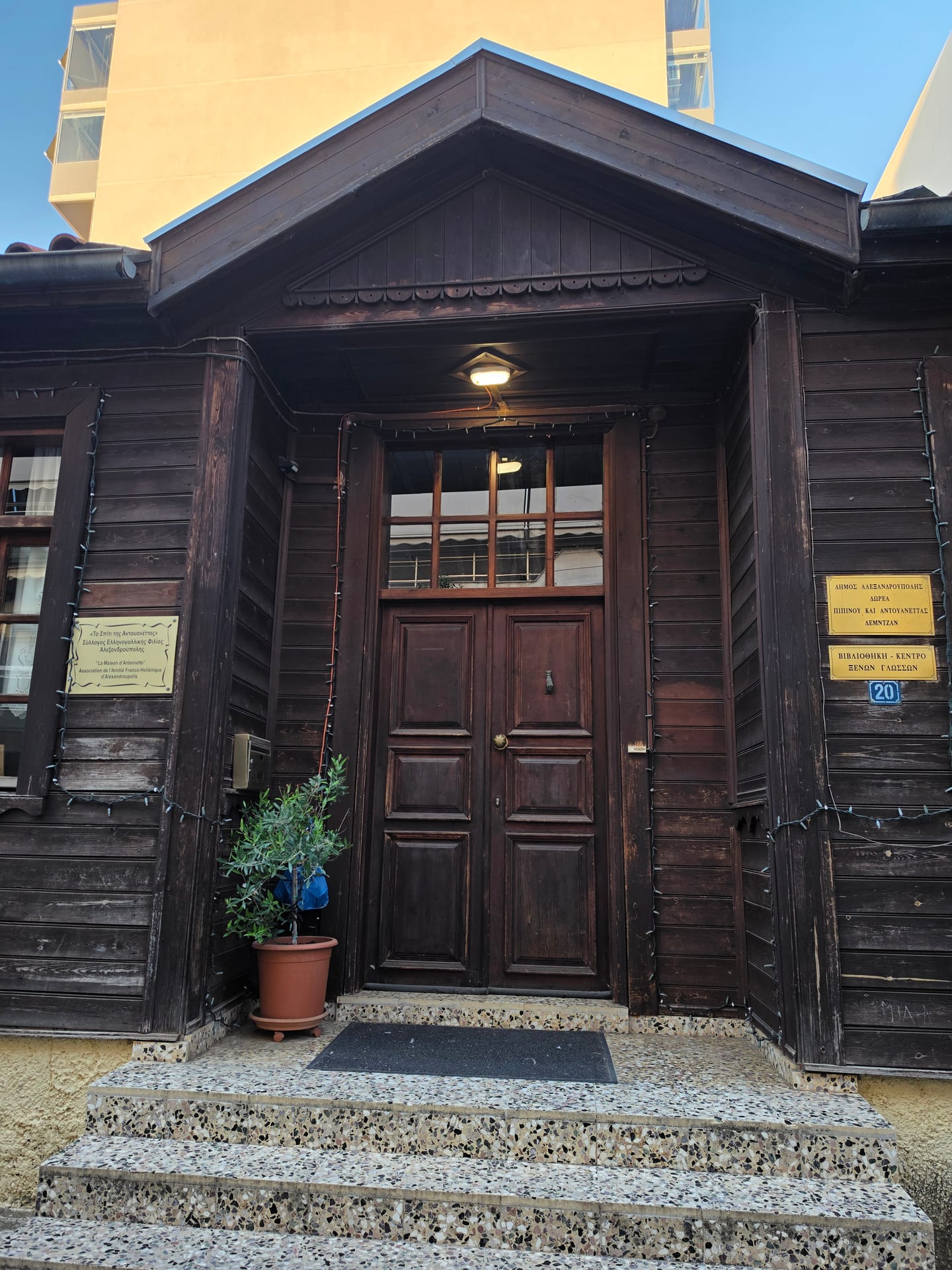
Antoinette Demtsian was the first French teacher of Alexandroupoli. Her wooden house, one of the oldest surviving residences in the city, today houses the Greek-French Friendship Society "Antoinette's House" . It is a symbol of the multicultural character of early Dedeagats, when the city had 8 consulates, French and Austrian post offices, and was a meeting place for Greeks, Armenians, Levantines, and Jews. Biography Antoinette Demtsian belonged to the community of French-speaking families of Dedeagats. In the late 19th century, the city was not a Greek village but an international port. It had a branch of the Ottoman Imperial Bank, the Bank of Thessaloniki, the German Bank of the East, an Austrian and a French post office, and a military and a municipal hospital. In this city, the families who had come from Ainos, Makri, and Maroneia, together with Armenians and Levantines, brought the French language as the language of commerce and diplomacy. Antoinette was the first to teach French systematically to the children of Dedeagats. Not many written sources survive about her life - as with most women of that era in Dedeagats - but her house speaks for her. Antoinette's house The wooden house is one of the oldest residences in Alexandroupoli. It stands near the Post Office building, where the ceremony handing over the city to Greece was signed on 14 May 1920. It is a wooden structure, a characteristic example of Dedeagats' architecture before it became Alexandroupoli - a time when most residences were built of wood rather than stone, unlike the 1899 Altinalmazis mansion. After decades of neglect, the house was saved and today is used by the Greek-French Friendship Society of Alexandroupoli "Antoinette's House" . Activity and memory today The "Antoinette's House" Society has approval from the Ministry of Education and the Institute of Educational Policy, and, in cooperation with the PE05 Educational Work Coordinator of the Regional Directorate of Education of Eastern Macedonia and Thrace, runs an educational programme. The programme has been presented at the 6th Experimental Gymnasium of Alexandroupoli and at other schools in the city. Its goal is for children to discover the multicultural history of Alexandroupoli through the French language. The house can be visited and is a stop on historical walks around the city, together with the 1920 Post Office and the Ethnological Museum of Thrace. Why she is worth remembering Antoinette Demtsian was not a benefactor of money, like Zarifis or Kritis . She was a benefactor of knowledge. At a time when Alexandroupoli was a fishing village, she brought French education. Together with Theodoros Kastanos , who founded the Didaskaleio, and Evangelos Papanoutsos , who directed the Zarifeios, she belongs to the trio of educators who made Alexandroupoli a spiritual centre of Thrace. Visiting Antoinette's House is located in the centre of Alexandroupoli, near 14is Maiou Street. It is one of the very few wooden buildings that survived the city's redevelopment era, when - as the Ethnological Museum's own history notes - "a well-known engineer made sure to demolish most of them."
 NEW
NEWEmmanouil Altinalmazis: the mayor who named the city
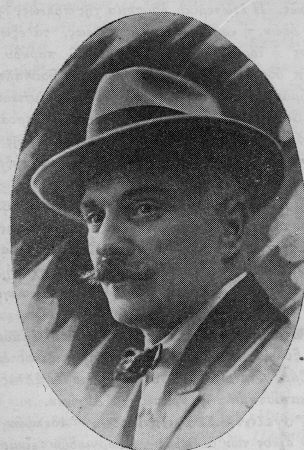
Emmanouil Altinalmazis was the first Greek mayor of Alexandroupoli after its liberation. Appointed as mayor and simultaneously as government representative, he governed the city during its most critical years, 1920-1924, when Dedeagats became part of Greece and had to become Alexandroupoli. His brother was Konstantinos Altinalmazis (1876-1948), the longest-serving mayor of the city, who succeeded him. Biographical details He came from Adrianople, from a family of merchants and landowners. Emmanouil was the first mayor appointed after liberation. In the list of mayors he is recorded as Emmanouil Altinalmazis (18??-19??), 1920-1924, Appointed - the first Mayor of Alexandroupoli and simultaneously the government's representative. After him, on 8 October 1924, he handed over the mayoralty to K. Manotos, and it was then taken up by his brother Konstantinos, who was elected as the city's first elected mayor on 25 October 1925. The chronicle of the renaming 1. Dedeagats - what it means The city was founded in the mid-19th century as a fishing village by settlers from Ainos, Makri and Maroneia. The name Dedeagats means "grandfather's tree" in Turkish (dede = grandfather, ağaç = tree), from a local tradition about a wise dervish who lived in the shade of a tree and was buried there, or from the oak trees that shaded the seafront (dede-ağaçları). 2. 14 May 1920 - The Liberation The 9th Division of Serres, commanded by General Epameinondas Zymvrakakis, seized the mountain passes, while a convoy of 22 ships landed the Division of Xanthi, under Kon. Mazarakis-Ainian, at Dedeagats. The French flag was lowered and the Greek flag was raised. The police director, K. Daniil, handed over the city. From the very first days, the local authorities and the Holy Metropolis, seeking the opinion of Dr. Achilleas Samothrakis - a scholar of Ancient Thrace and president of the Toponym Committees - decided to rename the city Neapoli, as the newest Greek city. 3. 8 July 1920 - The visit that changed the name King Alexander I (1893-1920), the second son of Constantine I, who had ascended the throne in 1917 after his father's exile, visited Thrace following its incorporation into Greece. On 8 July 1920 he visited Dedeagats. Mayor Emmanouil Altinalmazis, addressing the king, said that the city was being renamed Alexandroupoli in his honour. Alexander entered Adrianople a few days later as well. It was his last tour - on 2 October he was bitten by a monkey at Tatoi and died on 12 October 1920. The name was officially confirmed in the autumn of 1921, definitively replacing Dedeagats and the transitional name Neapoli. Why Alexandroupoli and not Neapoli? Neapoli was considered too generic a name, and there were already many towns called Neapoli. The Municipal Council's decision, proposed by Altinalmazis, to honour the young king who had been the first to visit liberated Thrace was politically powerful and directly linked the city with the Crown and with Venizelos. In his honour, the city bears his name. What remains Altinalmazi Street in Alexandroupoli. The Emmanouil I. Altinalmazis bequest - which still funds scholarships today. His brother Konstantinos is remembered in history as the mayor who built the city (1924-1941, 1946-1948).
 NEW
NEWKing Alexander I: the king who gave the city his name
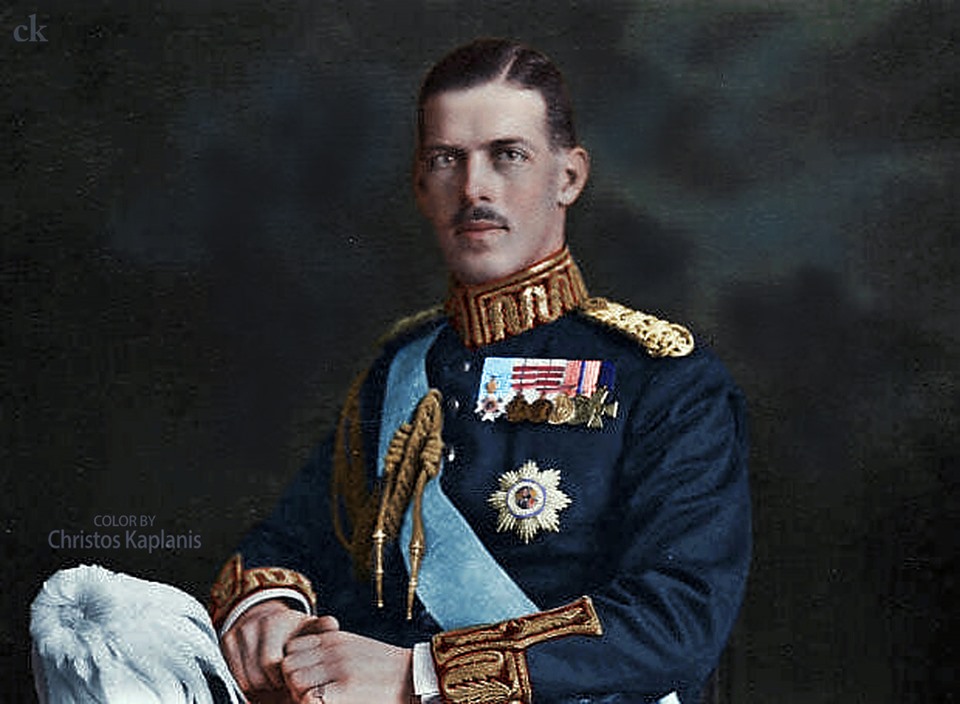
1893-1920 - Reigned 1917-1920 Alexander I was the most unfortunate and most misunderstood king of modern Greece. The second son of Constantine I and Sophia of Prussia, he was never meant for the throne. He ascended it at 23, not through succession but through a political coup engineered by the Allies, reigned for 3 years as a virtual prisoner of Venizelos in his own palace, and died at 27 from a monkey bite - a death that changed the entire course of Greece towards the Asia Minor Catastrophe. In his honour, Alexandroupoli bears his name. Biography Childhood - The mischievous prince He was born on 1 August 1893 at Tatoi, the second son of Crown Prince Constantine. He was a grandson of Christian IX of Denmark, a cousin of George V of England and Nicholas II of Russia, and a nephew of Wilhelm II of Germany. He was very close to his sister Helen, but not to his elder brother George. He was outgoing and mischievous - said to have smoked in secret, set fire to the playroom, and lost control of young Paul's pram. He studied at the Evelpidon Military Academy, was known for his mechanical skill, and was passionate about automobiles - among the first Greeks to own one. He distinguished himself in the Balkan Wars of 1912-13, accompanying his father during the liberation of Thessaloniki. 1917 - How he became king Greece was living through the National Schism. Constantine maintained pro-German neutrality in World War I, while Venizelos formed a government in Thessaloniki alongside the Allies. On 10 June 1917, the Entente's High Commissioner Charles Jonnart ordered Constantine to abdicate, threatening to bombard Piraeus. Constantine left without formally abdicating. The Allies wanted neither a republic nor the pro-German Crown Prince George. They chose the 23-year-old Alexander instead. On 11 June 1917 he was sworn in in the palace ballroom, attended only by Archbishop Theoklitos, his father, his brother, and Zaimis. He was hoarse and in tears. His father told him to consider himself a regent, not a king. His gravestone still reads: "Alexander, Royal Prince of Greece, reigned in place of his father." The king - Venizelos' prisoner The very next day, the entire royal family left for exile in Oropos. Their portraits were taken down, and ministers referred to Alexander as "the traitor's son." On 26 June he appointed Venizelos prime minister. Venizelos watched him day and night, and opened his letters to his parents. Alexander, initially cold towards him, gradually came to admire Venizelos. His only comfort was his childhood friend Aspasia Manou, daughter of Colonel Petros Manos. He fell in love with her in 1915, on Spetses. Marrying a commoner was a scandal for the era. Venizelos initially objected, fearing Alexander would communicate with the exiled royals through his father-in-law, but eventually consented. They married secretly in November 1919, at Zalokostas' house. The marriage was announced 6 months later. Aspasia gave birth to their daughter, Alexandra, 5 months after his death. A Greece of two continents and five seas Under Alexander, Greece's territory doubled. Through the Treaties of Neuilly (1919) and Sèvres (28 July 1920), it gained Western and Eastern Thrace as far as Chatalja, along with Imvros, Tenedos, and Smyrna. Venizelos was crowned with a laurel wreath at the Panathenaic Stadium. The connection to Alexandroupoli On 14 May 1920, Dedeagats was liberated. The local authorities, together with Dr. Achilleas Samothrakis, decided to rename it Neapoli. On 8 July 1920, Alexander visited Dedeagats as part of a tour of Thrace. Mayor Emmanouil Altinalmazis addressed the king and announced that the city was being renamed Alexandroupoli in his honour. In the days that followed: on 12 July the Smyrna Division entered Adrianople amid great enthusiasm, and on 13 July Alexander himself arrived there, welcomed with great splendour. He then visited Raidestos, Saranta Ekklisies, Didymoteicho, and Komotini. By the end of July, all of Eastern Thrace was Greek. It was his last shining moment. The city you see today, with its Lighthouse and fountain, took its name on that very day, from a 27-year-old who did not know he would be dead within 3 months. The strangest death of a head of state On 2 October 1920, during a walk at Tatoi, Alexander's German Shepherd, Fritz, attacked a female monkey (a Barbary macaque) kept as a pet by the estate's caretaker. Alexander tried to separate them, was then also attacked by a male monkey, and was bitten on the leg and hand. At first it seemed insignificant. Within a day or so, high fever, jaundice, and gastrointestinal disturbances set in. The best Greek doctors were called, and Venizelos brought in the world-renowned Dr. Vidal and the surgeon Pierre Delbet. On 22 September, streptococcus was identified; amputation was proposed but rejected. Savas' anti-streptococcal serum was administered. The sepsis spread to one lung. Delbet announced that amputation was no longer an option, due to the extent of the wounds. Alexander died on 12 October 1920, at Tatoi. No member of the royal family was permitted to enter the country, except for his grandmother, Olga. Venizelos delivered the funeral oration. What his death changed After his death, Venizelos called elections for 1 November 1920, framed as a choice between "Constantine or Venizelos." Despite having doubled Greece's territory, he lost. Following a referendum on 5 December, Constantine returned to the throne. The Allies, displeased, left the Greek army unsupported in Asia Minor. The Catastrophe of 1922 followed. As historians have written, these were "tragic developments, which might perhaps have been avoided, had King Alexander lived."
NEWDedeagats 1870-1920: from fishing village to a city of 8 consulates
Alexandroupoli is the youngest city in Thrace. It did not exist in 1821. It was born in 1870 because Ainos failed to become a port. In 40 years, it went from a deserted beach to the administrative capital of a Sanjak, with 8 consulates, 6 churches, and 2 mosques. Its name, Dedeagats, means "the old man's tree" in Turkish - dede, old man; agac, tree. 1870-1872: The railway gives birth to a city After the Crimean War (1854-1856), the Ottoman Empire decided to connect itself with Europe. In 1861 Abdulaziz became sultan, seeking an opening to the West. On 17 April 1869 a contract was signed with the German-Jewish entrepreneur Maurice de Hirsch. He founded the "Imperial Railways of European Turkey" company, based in Paris. The goal: a Constantinople-Vienna line via Adrianople, Sofia, Nis, Sarajevo, and Banja Luka. The network had 4 branches: Edirne-Dedeagac, Plovdiv-Burgas, Nis-Serbia, Pristina-Thessaloniki. The Adrianople (Karagats) - Dedeagats line began in May 1871 and was completed in June 1872. Initially, the plan was for it to terminate at Ainos. But the marshy, unstable ground and the mud that rendered the harbour useless - large vessels could not approach - made the project unviable. The economical solution was preferred: the line would run parallel to the western bank of the Evros and terminate at the deserted bay of Dedeagats. In 1872, as the 3rd Gymnasium of Alexandroupoli " Domna Visvizi " records, the first buildings began to go up: a railway station, warehouses, a customs house, and premises for the administration, the staff, and the workers. The steam-powered flour mill of Georgios Protopapas was built in 1874 next to the station. The first history of Dedeagats (1875) Our first history comes from the consul of Adrianople, K. Vatikiotis, in a memorandum to the Ministry of Foreign Affairs in early 1875: "Dedeagatsion, formerly a deserted shore, became known once those who surveyed and undertook the construction of the railways of European Turkey decided to build there the head of the Thracian and Bulgarian railways... ...the cereal crops of Thrace are now dispatched by railway... and the export of the other rich products is now conducted almost exclusively through Dedeagatsion... For this reason, people of every nationality are flocking to and settling in Dedeagatsion... and this formerly deserted shore is destined to be transformed into a city... The Greek subjects settled in Dedeagatsion number about fifty, engaged in various professions... They have now formed a brotherhood, to see not only to the construction and maintenance of an Orthodox church, but also to the support of the Greek schools of the neighbouring villages." The first settlers came from Ainos, Maroneia, Makri, Samothraki, and the wider Thrace. Alongside them were European employees of the Oriental Railways, officials of the Turkish administration, Armenians, and Jews. 1896: The second line - Dedeagats becomes a hub In 1893 a contract was signed with a consortium of banks and the "Chemin de fer jonction" (JSC) company was created, taking on the Thessaloniki-Dedeagats line. It was designed 15km inland from the sea so as to be out of range of enemy ships, following recommendations by Ottoman army officers, and with military stops. It was delivered at the end of March 1896. Initially it terminated at Feretzik (Feres), where it paid tolls to the Oriental Railways company. In 1909, after negotiations, the Potamos-Dedeagats lines were laid, with the company's own stations and access to the city and the port. It terminated above today's stadium - that was where the central station stood. The station was shelled in 1915 by Anglo-French ships during World War I and was destroyed. Afterwards, the station at today's KAPI building came into use. The "Gare Militaire" (military stop) is today a nursery on Rodou street. After the second line, Dedeagats became a commercial centre. By 1900 the population had more than doubled, reaching 8,000, with a predominance of the urban-commercial element. All the grain of Thrace left through the port. 1910: The city of 8 consulates In 1878 the Sanjak of Didymoteicho was formed out of territories from Gallipoli, Adrianople, and Samothraki (which until then belonged to the Vilayet of the Archipelago). Its seat was initially Didymoteicho, transferred to Dedeagats in 1884. The Sanjak had 3 kazas: Dedeagats (Feretzik, Mekri, Sahinler, Samothraki, Doganhisar), Soufli, and Ainos. In 1910, according to research by Ioannis Sidiras, the city was the administrative capital of the Sanjak, falling under the Vilayet of Adrianople, and the second ecclesiastical seat of the Holy Metropolis of Ainos (Metropolitan Ioakeim Georgiadis). It was connected by road and rail with Constantinople and Thessaloniki (12 hours), and by sea with Kavala (8 hours). Population in 1910: 2,310 Greeks, 1,542 Muslims, 369 Bulgarians, 325 Armenians, 230 Jews, 100 Catholics. Churches: 1 Greek with 3 priests, 1 Bulgarian, 1 Armenian, 1 synagogue, 1 Catholic, 2 mosques. Schools: a seven-grade Urban School for Boys with 430 pupils and 5 teachers, a six-grade girls' school with 133 pupils and 6 teachers, a kindergarten with 130 infants. The Turkish school had 200 pupils, the Bulgarian 46, the Armenian 50, the Jewish 30, the Catholic 25. Associations: the Philomouson Society, the Greek Club, the Musical Society, and the Ottoman Club of the Young Turk Committee (1908). Authorities: a Mutesarrif (governor), a military commander, a tax mudir, a gendarmerie chief, a police director, a harbourmaster, a customs officer, a mayor, an engineer, a doctor, a veterinarian, a sanitation director, and a mudir of post and telegraph. In operation: Austrian and French post offices, a military and a municipal hospital, and branches of the Ottoman Imperial Bank, the Bank of Thessaloniki, and the German Bank of the East. Consulates: England, Austria-Hungary, Germany, France, Greece, Italy, Persia, and Russia - 8 consulates. Professions (1910): flour merchants, soft-drink manufacturers, coachmen, coal merchants, life/marine/fire insurers, steam millers, booksellers, dairymen, grain merchants, lawyers, customs brokers, doctors, tobacco merchants, cafe owners, wine sellers, innkeepers, steamship agents, tailors, bankers, printers, pharmacists, goldsmiths, watchmakers. 1912-1920: Three occupations, one liberation 8 November 1912: the Bulgarians seize Dedeagats in the First Balkan War, pushing the Turks back as far as Chatalja. Treaty of London, 30 May 1913. 11 July 1913: the Greek army temporarily occupies Dedeagats in the Second Balkan War. Treaty of Bucharest 1913: Dedeagats is given to Bulgaria as its only outlet on the Aegean (110 km of coast). 1913-1919: Bulgarian administration. 14 May 1920: Liberation. The National Defence Army Corps under Major General Emmanouil Zymvrakakis receives an Allied mandate. The operation came by land (from Xanthi) and by sea - a landing at the port with the troopship Mykali, with units of the Division of Xanthi under Mazarakis-Ainian . Dedeagats was first renamed Neapoli (proposed by Achilleas Samothrakis ) and then Alexandroupoli, in honour of Alexander I . In 1929 the Oriental Railways were ceded to the French company "Compagnie Franco-hellenique," in 1954 they were bought out by the Greek state and incorporated into SEK, later OSE (1971). Visiting today The Army General Staff administration building today houses OSE offices. The port station, the Gare Militaire (the nursery on Rodou street), and the 1872 customs house all survive.
NEWSali & the Kikones: the ancient city beneath Alexandroupoli
Alexandroupoli is the youngest city in Thrace - founded in the mid-19th century as a fishing village by fishermen from Ainos, Makri, and Maroneia. But beneath its asphalt lies an ancient city: Sali. Herodotus mentions it when describing Xerxes' campaign of 480 BC; it was part of the Samothracian Peraia and, before that, the land of the Kikones whom Odysseus fought. The Kikones - the first inhabitants According to Herodotus (7.59), the whole zone from the Evros Delta to Lake Vistonida and the foothills of the Rhodope "in olden times belonged to the Kikones." The Kikones are the Thracian tribe Odysseus encounters immediately after Troy. In the Odyssey (book 9), Odysseus and his 12 ships stop at Ismaros, the city of the Kikones. There he spares Maron (son of Evanthes), the priest of Apollo, who lived in a dense grove of Apollo. Maron gives him the Maronean wine with which he later intoxicates the Cyclops Polyphemus. Ismaros is identified with Mount Ismaros near Maroneia. The Kikones fought bravely alongside the Trojans. Homer mentions Maroneia as Maron's homeland. The Samothracian Peraia The history of the Thracian shore opposite Samothraki was shaped by the six settlements of the so-called Samothracian Peraia: Zoni, Drys, Mesimvria, Sali, Tempyra, and Charakoma. Herodotus (7.108) calls them "Samothracian walls," that is, fortified positions. They were the mainland possessions and fortresses of Samothraki - the Samothracian walls. They controlled the passage into the Thracian hinterland, and had abundant timber, water, and an outlet to the sea. Most did not have large harbours like Maroneia or Stryme, but they were strategic. Sali The ancient city of Sali was probably founded by the Maroneans. The earliest reference is in Hecataeus of Miletus (6th c. BC), who describes it as a "city of Thrace," and Zoni as a "city of the Kikones." Herodotus describes Xerxes' campaign: "the shore adjoining Doriskos, where the Samothracian city of Sali is built, and Zoni, and last of these the famous cape Serreion. This region in olden times belonged to the Kikones" (7.59). Shortly afterwards: "as he marched from Doriskos he passed first the Samothracian walls, of which the westernmost is the city named Mesambrie" (7.108). So Mesimvria lies furthest west, with Sali and Zoni further east, near Doriskos. Scylax (4th c. BC) records: "Opposite these is the island and harbour of Samothrace. Opposite this, on the mainland, are the trading posts of Drys, Zoni..." In the years of the Peloponnesian War, Drys and Zoni (and Sali) were detached from Samothraki and joined the Athenian League - the tribute list IG I3 77 (422/421 BC) records them as "by Serreion." Serreion is cape Ismaros, the passage to the hinterland mentioned by Demosthenes. Where is Sali today? Early scholarship (Bakalakis 1961, Muller 1975, Isaac 1986) placed Sali at Alexandroupoli. Chance finds have indeed been made in Alexandroupoli: black-glaze pottery, two Hellenistic cist graves, a boundary inscription of the 1st c. AD, a headless marble statue of a youth, part of a pilaster with a cyma and a relief head, and above all a slab inscribed "Boundary of the sacred land of the Gods of Samothrace," which confirms the identification of the site. According to the Roman Itineraries (the Itinerarium Antonini and the Burdigalense), in Roman times there was a station of the Via Egnatia at Sali, the next one after Tempyra for travellers coming from the west. Subsequently, Mottas (1989) identified it with Makri, following the Jerusalem Itinerary, which places Sali 15 miles from Traianoupolis - a view considered more persuasive today (Loukopoulou et al. 2005, Psoma 2008, Tsatsopoulou-Kaloudi 2015). So Sali lies either beneath Alexandroupoli or just to its west, above the settlement of Makri. This is why the first boutique hotel in Thrace was named "Sali" - the name has its roots in Herodotus and in the Via Egnatia. What you can see today There is no organised archaeological site of Sali in Alexandroupoli. There are: Chance finds at the Archaeological Museum of Alexandroupoli Zoni has been precisely identified - it is being excavated at the point where the Paliorema torrent (Sapli Dere) flows out, west of Mesimvria The ArcGeoPerSa programme (Democritus University of Thrace + FORTH + the Ephorates of Rodopi/Evros + the Hellenic Foundation for Research) is conducting systematic surface survey, geophysical prospection, and remote sensing across the whole Peraia Why it matters Alexandroupoli has no ancient wall to show, but it has something rarer: it is built on top of one of the six fortress-cities of Samothraki that controlled the entire passage from the Aegean into the Thracian hinterland, from the 7th c. BC until Roman times. From the Kikones of Odysseus, to the Samothracians, to Xerxes in 480 BC, to the Athenian League in 422 BC, to the Via Egnatia station, to the fishermen of 1850, to the Dedeagats of 8 consulates, to the liberation of 1920.
 NEW
NEWThe story behind Maritime Week
Every summer, Alexandroupoli's harbour fills with music, lights and crowds for Maritime Week - an institution launched in 1933 by the Hellenic Navy and the Coast Guard to honour the people who have lived and worked by the sea. For decades the celebrations were confined to Greece's port cities. In 1984, on the initiative of then Minister of Culture Melina Mercouri, the tradition opened up to inland towns too, so that the whole country could feel closer to the sea, if only for a few days each year. In Alexandroupoli - a city founded in the 19th century by fishermen from Ainos, with its Lighthouse standing over the coast since 1880 - the festival found a natural home. Every July, around Lighthouse Square and the seafront, the city fills with concerts, art installations, dance nights and community initiatives such as voluntary blood drives: a week when the whole town turns to face the sea that gave it life.
NEWPractical Tips for Travelling in Greece
Snorkelling in Greek waters is generally very safe. Shark attacks are extremely rare; the most dangerous creatures you might encounter are a few venomous fish (such as the weever fish, which often hides in the sand) and some jellyfish. It's always a good idea to keep a basic first-aid kit for stings at the beach. Greece has some of the best beaches in the world, and next to them you'll almost always find a taverna. Tavernas are simple, affordable restaurants where in most cases you can eat well and cheaply; common drinks include retsina (a cheap white wine with a resin aroma), ouzo, tsipouro, raki and local wines. Something that often surprises visitors from abroad: at tavernas and cafes in Greece, it's customary to be brought a free glass of water alongside your coffee or meal, without asking for it - something you'll rarely encounter abroad. Tipping isn't mandatory, but it's customary to leave a euro or two on the table after your coffee or meal, as a gesture of politeness. If you order a beer or another drink, most of the time you'll be brought a small snack on the side, such as nuts or crisps, at no extra charge - a custom that isn't common abroad. In most cases you'll need mosquito repellent and sunscreen. In summer, daylight lasts roughly from 6:30am to 8:30pm, but the sun between 11am and 6pm is very strong - it's best to avoid it during those hours or protect yourself carefully. Greek people are generally friendly, and eye contact is completely normal in Greece - don't misread it. Greece has around 6,000 islands and islets, of which only 227 are inhabited. The most popular Greek islands number around 40 ( full list here , and a more detailed list of all Greek islands here ). Electricity in Greece runs on 230V/50Hz, with type C and F sockets (round, two-pin) - different from flat American 110-120V plugs. If your devices run on 110V/120V, you'll need a voltage converter (unless they're already "dual voltage", as most modern phone/laptop chargers are) and definitely a simple plug adapter. The currency is the euro (€). A few more useful notes: traffic in Greece drives on the right-hand side of the road; tap water is safe to drink in most towns and villages on the mainland, including Alexandroupoli; covered shoulders and knees are expected when visiting churches and monasteries; and for emergencies, remember 112, which works across the entire European Union.
NEWThe city grid and the Russian officers
For decades, popular tradition has held that the wide street grid of central Alexandroupoli - parallel streets with no dead ends, in stark contrast to the narrow lanes typical of Ottoman towns of the era - was designed by Russian officers stationed in what was then Dedeagach during the Russo-Turkish War of 1877-78. Recent research based on contemporary Constantinople newspapers challenges this account: the Russian military presence in the area lasted barely a year, and Dedeagach was at the time a small settlement with no pressing need for town planning. The grid appears to have actually taken shape around 1885, through cooperation between the Ottoman administration and the Oriental Railways company - seven years after the Russians had left. Despite the disputed origin story, the imprint of this layout remains clearly visible in the city centre today.
 NEW
NEWDomna Visvizi: the sea captain of Thrace
1783 Ainos - 1850 Piraeus Domna Visvizi is the most important woman naval commander of Thrace and one of the three great "kapetanisses" (ship-captains) of the 1821 Greek Revolution, alongside Bouboulina and Mando Mavrogenous. She was the only one who literally fought with her 5 underage children aboard her ship, and who died utterly poor and forgotten despite having spent her entire fortune on the Revolution. Biography Years before the Revolution She was born in 1783 in Ainos, Eastern Thrace, at the mouth of the Evros river, the daughter of a wealthy landowner. Ainos was then a major maritime power, with 4 large and 60 smaller ships in 1813, and 300 ships by 1821. In 1808 she married Captain Hadji-Antonis Visvizis, one of the wealthiest ship-owners of Ainos and one of the earliest members initiated into the Filiki Eteria (Society of Friends). He owned his own brig, the "Kalomoira," 31.10 metres long, 259 tons, with a luxurious cabin for meetings, armed with 16 cannons and a crew of 140 sailors. The couple had 5 children; the last was born after the captain's death. 1821 - Acting together In February 1821, Visvizis secretly transported weapons, ammunition, and Emmanouil Papas - who would go on to rouse Macedonia to revolt - from Constantinople to Mount Athos. On 2 May 1821, Ainos rose in revolt when a squadron from Psara under Giannitsis bombarded the fortress of Saros. Visvizis fled with the Psara squadron. Domna boarded the ship together with her underage children, carrying an icon of the Virgin Mary and soil from Ainos, and took part in all of the ship's operations. They took part in the naval battles of Athos, Lesvos and Samos, and supported Ypsilantis, Androutsos and Nikitaras at Agia Marina in Lamia in the effort to stop Dramalis. Androutsos and Nikitaras gave them a letter of gratitude on 15 April 1822, because the cannons of the Kalomoira had saved 3,000 Greeks. Death and taking command At the Naval Battle of Evripos, on 21 July 1822, Antonis Visvizis was killed on deck. Domna noted in her journal: "17 June 1822 - Calm seas. Tuesday, eight hours into the night, Captain Antonis Visvizis lost his life to a bullet. Command of the brig 'Kalomoira' passes to his widow, Domna Visvizi." She asked that the dead be carried down to the hold, and took full command herself without interrupting the operation. Assisted by first mate Captain Stavris, she continued the siege. Her ship was among the largest of the fleet and was used for the meetings of the Areios Pagos (High Court) of Eastern Continental Greece with Androutsos and Nikitaras. Filimon wrote: "...she herself took command of the ship like a man, for a long time, so that the siege would not be deprived of assistance from the sea." For a year and a half she paid wages, provisions and ammunition out of her own pocket, because the state did not pay her, as she herself wrote in a report in 1823. In September 1824, without money and facing heavy maintenance costs, she offered the "Kalomoira," fully equipped, as a fire ship. With it, Pipinos burned the Turkish treasure-frigate Hazine Gemisi at Cesme. Poverty and the end She found herself without a ship, utterly poor, "lacking even her daily bread... having neither a home, nor a homeland." First Hydra, then Syros, then Nafplio and Ermoupoli. In 1827 she donated 46 Spanish thalers for the liberation of Chios. In the winter of 1826 she lost a child to famine. In despair she wrote: "I weep, I find no mercy anywhere..." In August 1829 she wrote to Kapodistrias from Argos: "...I have been reduced to lying bedridden in a foreign place... I do not even have my basic necessities... The father of my underage orphans sacrificed both his life and his estate for the nation, and his children are starving..." She died in 1850 in Piraeus, forgotten by everyone. The Connection to Alexandroupoli Alexandroupoli is considered the natural continuation of Ainos after 1922. Refugees from Ainos settled in the area en masse and brought with them the memory of the Visvizis family. The Monument at the Lighthouse: At the foot of the Lighthouse, at the spot marked by the fountain, stands the sculpture group of Hadji-Antonis and Domna Visvizi. It is the most photographed spot on the square - a bust of Domna and a bust of her son, Themistoklis Visvizis. Schools: The 3rd Gymnasium of Alexandroupoli was named "Domna Visvizi," and has officially carried her name since 2006, with educational programmes such as "From Niki to... Domna." A symbol of Thrace: Her son, Themistoklis-Timoleon, became the beloved child of philhellenic circles in Paris. His portrait was sold in thousands of copies to raise money for food and ammunition for the fighters, and this same portrait became the model for the bust on the Alexandroupoli seafront. Folk song: A Thracian folk song survives about "Lady Domnitsa, the chief captain, who owns a priceless ship..." still sung today by the descendants of Ainos refugees in Alexandroupoli. For Alexandroupoli, Domna is not simply a heroine of 1821 - she is the mother-symbol of Thracian Hellenism, who lost her homeland of Ainos but never stopped fighting for Greece.
NEWSaint Nicholas, patron saint of the city
The patron saint of Alexandroupoli is Saint Nicholas, whose feast day is honoured every year on 6 December. The celebration takes place at the Metropolitan Church of Saint Nicholas in the city centre, which also holds a portion of his sacred relic. It was the first church built in the city by its earliest settlers; construction began in 1900 and the first liturgy was held in 1901, under Metropolitan Bishop Germanos of Ainos. In 1908, with financial help from Vlassios Souchour, the Austro-Hungarian consul in Alexandroupoli, its two bell towers were built. It was renovated in 1947 under Metropolitan Ioakeim Kavyris. The church serves as the seat of the Metropolis of Alexandroupoli, Traianoupoli and Samothrace. It also houses the portable icon of the Panagia Tryfiotissa, held in particular affection by the city's residents, while priceless sacred icons and vessels are displayed at the Metropolis' Ecclesiastical Museum.
NEWEvangelos Papanoutsos (1900-1982): the philosopher who was the Zarifeios' first director
The most important philosopher-educator of the 20th century to have passed through Alexandroupoli. First director of the Zarifeios , 1934-36, later Secretary General of the Ministry of Education and architect of the 1964 education reform. Biography He was born on 9 August 1900 in Piraeus, his family originating from Sopoto, Achaea. He studied Theology in Athens from 1915-19, then in Germany and France from 1924-27, earning his doctorate at Tübingen in 1927 with the thesis "Das Religiöse Erleben bei Platon." He taught at the Averofeio Gymnasium of Alexandria 1921-23 and 1927-30, the Didaskaleio of Mytilene in 1931, the Zarifeios of Alexandroupoli 1934-36, Ioannina 1937-38, the Marasleio 1938-39, Tripoli 1939-43, and the Ralleios of Piraeus 1943-44. He then served as Director General of the Ministry of Education in 1944-46, 1950, and 1963, under Georgios Papandreou. He founded the "Athinaion" People's University, 1947-67, and was a contributor to the newspaper "To Vima." He was a Member of Parliament for the State constituency 1974-77, and a member of the Academy of Athens from 1980. He died on 2 May 1982 in Athens. The 1964 reform: the establishment of demotic (spoken) Greek, the separation of Gymnasium and Lyceum, 9 years of compulsory education, and technical education.
NEWFotis Kosmas (1926-1995): the Olympian who gave his name to the stadium
The greatest athlete Alexandroupoli has produced. Mediterranean champion, 7th place at the 1952 Helsinki Olympics, 4-time Greek champion in the 400m hurdles and 4-time champion in the decathlon. The city's stadium bears his name. Biography He was born on 26 November 1926 in Klio, Lesvos, the son of refugees - his father from Ayvalik, his mother from Mytilene. The family moved to Alexandroupoli before World War II; during the war they went to Samothraki, where he met his wife Meropi. He took up athletics in 1946, at age 20, at Ethnikos Alexandroupolis, coached by Giannis Barbagiannis. In 1948 he came 1st in the 400m hurdles at the Paneparchiako SEGAS meet, in 1949 1st in the decathlon with a national record, and in 1950 competed at the European Championships in Brussels. In 1951, at the Mediterranean Games in Alexandria, he won gold in the decathlon with a new national record. In 1952, at the Helsinki Olympics, he finished 7th with a national record. In 1955 he placed 4th at the European Championships in Barcelona. In 1958 he retired, turning down money offered by Panathinaikos. In 1960 he received the Golden Cross of the Order of the Phoenix, in 1994 a gold medal at the Olympic Stadium, and on 21 May 1995 an honour from the Municipality of Alexandroupoli. He died on 15 June 1995 in Alexandroupoli. The connection The Municipal Stadium was begun in 1925 under Altinalmazis, and inaugurated in 1928 by Venizelos. Capacity: 3,000. It was renamed "Fotis Kosmas" on 27 September 1997. There is also a Fotis Kosmas Street.