Stories of the City

People

People who left their mark on the history of Alexandroupoli and Evros.

Photo: Spiridon Ion Cepleanu, CC BY-SA 4.0

← Back to ALX.GR
Domna Visvizi: the sea captain of Thrace
Πρόσωπα

Domna Visvizi: the sea captain of Thrace

1783 Ainos - 1850 Piraeus Domna Visvizi is the most important woman naval commander of Thrace and one of the three great "kapetanisses" (ship-captains) of the 1821 Greek Revolution, alongside Bouboulina and Mando Mavrogenous. She was the only one who literally fought with her 5 underage children aboard her ship, and who died utterly poor and forgotten despite having spent her entire fortune on the Revolution. Biography Years before the Revolution She was born in 1783 in Ainos, Eastern Thrace, at the mouth of the Evros river, the daughter of a wealthy landowner. Ainos was then a major maritime power, with 4 large and 60 smaller ships in 1813, and 300 ships by 1821. In 1808 she married Captain Hadji-Antonis Visvizis, one of the wealthiest ship-owners of Ainos and one of the earliest members initiated into the Filiki Eteria (Society of Friends). He owned his own brig, the "Kalomoira," 31.10 metres long, 259 tons, with a luxurious cabin for meetings, armed with 16 cannons and a crew of 140 sailors. The couple had 5 children; the last was born after the captain's death. 1821 - Acting together In February 1821, Visvizis secretly transported weapons, ammunition, and Emmanouil Papas - who would go on to rouse Macedonia to revolt - from Constantinople to Mount Athos. On 2 May 1821, Ainos rose in revolt when a squadron from Psara under Giannitsis bombarded the fortress of Saros. Visvizis fled with the Psara squadron. Domna boarded the ship together with her underage children, carrying an icon of the Virgin Mary and soil from Ainos, and took part in all of the ship's operations. They took part in the naval battles of Athos, Lesvos and Samos, and supported Ypsilantis, Androutsos and Nikitaras at Agia Marina in Lamia in the effort to stop Dramalis. Androutsos and Nikitaras gave them a letter of gratitude on 15 April 1822, because the cannons of the Kalomoira had saved 3,000 Greeks. Death and taking command At the Naval Battle of Evripos, on 21 July 1822, Antonis Visvizis was killed on deck. Domna noted in her journal: "17 June 1822 - Calm seas. Tuesday, eight hours into the night, Captain Antonis Visvizis lost his life to a bullet. Command of the brig 'Kalomoira' passes to his widow, Domna Visvizi." She asked that the dead be carried down to the hold, and took full command herself without interrupting the operation. Assisted by first mate Captain Stavris, she continued the siege. Her ship was among the largest of the fleet and was used for the meetings of the Areios Pagos (High Court) of Eastern Continental Greece with Androutsos and Nikitaras. Filimon wrote: "...she herself took command of the ship like a man, for a long time, so that the siege would not be deprived of assistance from the sea." For a year and a half she paid wages, provisions and ammunition out of her own pocket, because the state did not pay her, as she herself wrote in a report in 1823. In September 1824, without money and facing heavy maintenance costs, she offered the "Kalomoira," fully equipped, as a fire ship. With it, Pipinos burned the Turkish treasure-frigate Hazine Gemisi at Cesme. Poverty and the end She found herself without a ship, utterly poor, "lacking even her daily bread... having neither a home, nor a homeland." First Hydra, then Syros, then Nafplio and Ermoupoli. In 1827 she donated 46 Spanish thalers for the liberation of Chios. In the winter of 1826 she lost a child to famine. In despair she wrote: "I weep, I find no mercy anywhere..." In August 1829 she wrote to Kapodistrias from Argos: "...I have been reduced to lying bedridden in a foreign place... I do not even have my basic necessities... The father of my underage orphans sacrificed both his life and his estate for the nation, and his children are starving..." She died in 1850 in Piraeus, forgotten by everyone. The Connection to Alexandroupoli Alexandroupoli is considered the natural continuation of Ainos after 1922. Refugees from Ainos settled in the area en masse and brought with them the memory of the Visvizis family. The Monument at the Lighthouse: At the foot of the Lighthouse, at the spot marked by the fountain, stands the sculpture group of Hadji-Antonis and Domna Visvizi. It is the most photographed spot on the square - a bust of Domna and a bust of her son, Themistoklis Visvizis. Schools: The 3rd Gymnasium of Alexandroupoli was named "Domna Visvizi," and has officially carried her name since 2006, with educational programmes such as "From Niki to... Domna." A symbol of Thrace: Her son, Themistoklis-Timoleon, became the beloved child of philhellenic circles in Paris. His portrait was sold in thousands of copies to raise money for food and ammunition for the fighters, and this same portrait became the model for the bust on the Alexandroupoli seafront. Folk song: A Thracian folk song survives about "Lady Domnitsa, the chief captain, who owns a priceless ship..." still sung today by the descendants of Ainos refugees in Alexandroupoli. For Alexandroupoli, Domna is not simply a heroine of 1821 - she is the mother-symbol of Thracian Hellenism, who lost her homeland of Ainos but never stopped fighting for Greece.

Georgios Zarifis: the national benefactor behind the Zarifeios Academy
Πρόσωπα

Georgios Zarifis: the national benefactor behind the Zarifeios Academy

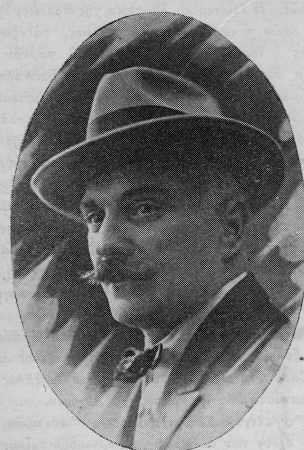
Georgios Ioannou Zarifis (1807-1884) was the wealthiest Greek banker of Galata in the 19th century and one of the greatest national benefactors. The word "zarifiliki" in Constantinople came to mean nobility and generosity. Biography - From Odessa to Galata Son of Ioannis Zarifis, a wine merchant from the Bosphorus, and Tarsou Kaplanoglou. He was born in 1807 at Megas Revmatos on the Bosphorus (Arnavutkoy), at the Zarifis family's summer house on the island of Aloni near Proikonisos. In 1821, aged 15, he fled with his parents to Odessa because of the persecutions in Constantinople, was placed under the Tsar's protection, and studied at the Richelieu Lyceum. In 1830 he came to Greece, and under Kapodistrias was appointed secretary of Karytaina. At 25, disillusioned by the misery of provincial life, he took his family and returned to Constantinople. There he was employed at the house of Stefanos Zafeiropoulos. Within 2 years the firm became "Zafeiropoulos & Zarifis," with connections in Constantinople, Marseille, London, and Odessa. He married his partner's daughter, Eleni Zafeiropoulou, and kept his Greek citizenship despite the Sultan's offers of high office in exchange for becoming a "rayah." He founded his own commercial bank, which took on Ottoman debt. Together with other Greek bankers, he was a leading figure in imposing the first International Financial Control on the Ottoman Empire in 1881, on behalf of Greek and foreign creditors. He became immensely wealthy. He was a banker and financial advisor to Sultan Abdul Hamid II. He died on 28 March 1884 in Constantinople. His wife Eleni tried to save the Didaskaleia. His work was continued until 1922 by his son Leonidas Zarifis (1840-1923), and afterwards by his grandson Konstantinos Zarifis (1891-1979). The great vision: teachers for Thrace For Zarifis, education was Hellenism's weapon of survival. For 40 years he gave away huge sums: 1865, Bursa: He sees that no Greek there speaks Greek. He offers to build 2 schools, for boys and for girls, and promises a Gymnasium if, within 5 years, the children speak Greek. 1875, Plovdiv: He founds the Zarifeia Didaskaleia for boys and girls, a higher institute of learning. The goal: graduate teachers would return to the villages of Thrace and Macedonia. He funded their upkeep with 1,000 gold pounds a year. They operated until 1906. Others: the Great School of the Nation at Phanar (rebuilt entirely with his donation), the Constantinople Philological Society, the "Love One Another" brotherhood that sent teachers to the villages, the Filergos Society (1866-77) which gave tools to needy craftsmen, the Zarifeio wing of the Balukli Hospital, and the girls' school of Triglia. Zarifis also funded Georgios Vizyinos from 1875 to 1884 for his studies in Gottingen, Leipzig, Berlin, Paris, and London. From Plovdiv to Alexandroupoli After the Zarifeia closed in 1906, and given the political developments in Bulgaria, the bequest had to continue elsewhere. 1923: The first Didaskaleio was founded in Alexandroupoli, because Karagats, where the original Didaskaleio of Epivates had been relocated for 11 months, remained in Turkey under the Treaty of Lausanne. Its director was the educator Theodoros Kastanos, who fought hard to complete today's neoclassical building. 1934: The Didaskaleio was abolished and became a two-year Pedagogical Academy, one of the first 6 in Greece. Its first director was Evangelos Papanoutsos (1934-36), and its last was Nikolaos Raptis (1976-78). 15 June 1936: Inauguration of the Zarifeios Pedagogical Academy , attended by Zarifis' grandson and King George II. The grandson donated a piano and funds for musical instruments and furniture. The connection was not merely honorary. After the closure, an annual sum of 25,000 gold French francs was transferred to Alexandroupoli. The memory today The building is one of the most important neoclassical buildings in Alexandroupoli. Since 1983 the Academy has been the Pedagogical Department of the Democritus University of Thrace, at Nea Chili. Today it houses the 1st Experimental Primary School of Alexandroupoli - Zarifeios . In the garden, at the National Independence Park, stands the marble bust of Zarifis, a work by Nikos Perantinos. It is perhaps the only monument in Greece bearing the Zarifis name - a family that invested not in roads and statues, but in teachers. And this idea, from Plovdiv in 1875 to Alexandroupoli in 1934, remained the same: to create people who would pass on knowledge.

Emmanouil Altinalmazis: the mayor who named the city
Πρόσωπα

Emmanouil Altinalmazis: the mayor who named the city

Emmanouil Altinalmazis was the first Greek mayor of Alexandroupoli after its liberation. Appointed as mayor and simultaneously as government representative, he governed the city during its most critical years, 1920-1924, when Dedeagats became part of Greece and had to become Alexandroupoli. His brother was Konstantinos Altinalmazis (1876-1948), the longest-serving mayor of the city, who succeeded him. Biographical details He came from Adrianople, from a family of merchants and landowners. Emmanouil was the first mayor appointed after liberation. In the list of mayors he is recorded as Emmanouil Altinalmazis (18??-19??), 1920-1924, Appointed - the first Mayor of Alexandroupoli and simultaneously the government's representative. After him, on 8 October 1924, he handed over the mayoralty to K. Manotos, and it was then taken up by his brother Konstantinos, who was elected as the city's first elected mayor on 25 October 1925. The chronicle of the renaming 1. Dedeagats - what it means The city was founded in the mid-19th century as a fishing village by settlers from Ainos, Makri and Maroneia. The name Dedeagats means "grandfather's tree" in Turkish (dede = grandfather, ağaç = tree), from a local tradition about a wise dervish who lived in the shade of a tree and was buried there, or from the oak trees that shaded the seafront (dede-ağaçları). 2. 14 May 1920 - The Liberation The 9th Division of Serres, commanded by General Epameinondas Zymvrakakis, seized the mountain passes, while a convoy of 22 ships landed the Division of Xanthi, under Kon. Mazarakis-Ainian, at Dedeagats. The French flag was lowered and the Greek flag was raised. The police director, K. Daniil, handed over the city. From the very first days, the local authorities and the Holy Metropolis, seeking the opinion of Dr. Achilleas Samothrakis - a scholar of Ancient Thrace and president of the Toponym Committees - decided to rename the city Neapoli, as the newest Greek city. 3. 8 July 1920 - The visit that changed the name King Alexander I (1893-1920), the second son of Constantine I, who had ascended the throne in 1917 after his father's exile, visited Thrace following its incorporation into Greece. On 8 July 1920 he visited Dedeagats. Mayor Emmanouil Altinalmazis, addressing the king, said that the city was being renamed Alexandroupoli in his honour. Alexander entered Adrianople a few days later as well. It was his last tour - on 2 October he was bitten by a monkey at Tatoi and died on 12 October 1920. The name was officially confirmed in the autumn of 1921, definitively replacing Dedeagats and the transitional name Neapoli. Why Alexandroupoli and not Neapoli? Neapoli was considered too generic a name, and there were already many towns called Neapoli. The Municipal Council's decision, proposed by Altinalmazis, to honour the young king who had been the first to visit liberated Thrace was politically powerful and directly linked the city with the Crown and with Venizelos. In his honour, the city bears his name. What remains Altinalmazi Street in Alexandroupoli. The Emmanouil I. Altinalmazis bequest - which still funds scholarships today. His brother Konstantinos is remembered in history as the mayor who built the city (1924-1941, 1946-1948).

Alexandros Kritis: the physician who donated his villa for Alexandroupoli's Administration House
Πρόσωπα

Alexandros Kritis: the physician who donated his villa for Alexandroupoli's Administration House

Alexandros Kritis was a doctor based in Alexandroupoli during the first decades of the 20th century. He was not the city's most famous doctor - at the time, that name was Achilleas Samothrakis - but he was the most generous. His name endured not for a medical achievement, but for an act that shaped the map of public administration in Evros: he donated his villa to the Greek State to become the Prefecture building. The Villa of Dr. Alexandros Kritis In the early 1900s Alexandroupoli was still Dedeagats, and was being built up with neoclassical villas belonging to merchants, consuls, and doctors. Among them was Villa Kritis, one of the very few mansions still standing today in the city centre, on Vas. Alexandrou Street 26, where today stands the former Prefecture , now the building of the Regional Unit of Evros. It was a typical example of the era's urban architecture: two storeys with a garden, high ceilings, wooden floors, symmetrical facade - similar to the other surviving residences of the first French teacher, Antoinette Demtsian, and the Post Office where the handover of the city was signed in 1920. In the sources it is always referred to as "Villa of Dr. Alexandros Kritis" - not a mere house, but a landmark. The donation to the Greek State Kritis, having no heirs to keep the property, decided to donate it to the Greek State for public benefit. The act was crucial: after the liberation in 1920, the new Greek state had nowhere to house its services. The Prefecture office, the Nomarchy, the Court were all looking for a roof. With Kritis' donation, the state acquired a ready-made public building in the city centre, without expropriations. The villa was converted first into the Prefecture office and later into the Prefecture of Evros , until its abolition in 2010 under the Kallikratis reform. Today it houses services of the Regional Unit of Evros. Without this gesture, the public space on Vas. Alexandrou would most likely have been built differently, or would have remained private. His memory in today's Prefecture building His memory has not faded: The Alexandros Kritis Hall: The 2nd floor of the building bears his name, on a commemorative plaque. The will: On the same floor, an excerpt from his will is on display, in which he explicitly states the donation for public purpose. The photo exhibition: The permanent photographic history exhibition of the Prefecture begins with Villa Kritis, and shows its transformation from residence to public building, with archival photographs from the 1920s-30s. It is one of the few buildings in Alexandroupoli whose history is told through the building itself. A donor, not just a name For Alexandros Kritis, we do not have a full biography. Neither his birthplace nor his birth/death dates are documented with certainty in open sources. The references describe him as a doctor based in Alexandroupoli, like Samothrakis, Alexandridis, and Kastanos - a generation of professionals who arrived after 1920 to organise the new Greek city. What is beyond dispute is the act itself: in a city being built from scratch, a private doctor gave his own home to become the administrative centre of the prefecture. And a hundred years later, when you walk into the Prefecture for a certificate, you are still walking into his villa.

Achilleas Samothrakis (1876-1944): the doctor who named the city Neapoli
Πρόσωπα

Achilleas Samothrakis (1876-1944): the doctor who named the city Neapoli

Achilleas Samothrakis was the most learned man of early Alexandroupoli. A doctor, district medical officer, school doctor, historian, and lexicographer. Chairman of every toponym committee. He was the one who proposed renaming Dedeagats to Neapoli on 14 May 1920, before it became Alexandroupoli . Biography He was born in 1876 in Ainos, Eastern Thrace. He studied at the Zarifeia Didaskaleia in Plovdiv, served as a teacher in Ainos and Dedeagats, and then studied Medicine in Athens, earning his doctorate in 1906. He spent 15 years as a doctor in Zagazig, Egypt. In 1920 he was summoned by the High Commissioner of Thrace, Ant. Sachtouris, and organised the 150-bed Civil Hospital of Adrianople. After 7 months he settled permanently in Alexandroupoli as a doctor, district medical officer, and school doctor. For 20 years he taught Hygiene at the Gymnasium and at the Pedagogical Academy. He became Regional Sanitary Inspector and the first president of the Evros Medical Association. He was a Venizelist. In 1940, pursued by the Bulgarians, he fled to Athens, where he died on 31 May 1944 of liver cancer, without living to see Alexandroupoli free again. His work His most important work: the "Dictionary, geographical and historical, of Thrace," in the 28th volume of "Thrakika." Polydoros Papachristodoulou called him "the Stephanus of Byzantium of Thrace." He also wrote "History of Thrace 1939," "History of Medicine," and "Hippocrates." His famous library is today housed, unused, at the 1st Gymnasium of Alexandroupoli. His sister Despina was a teacher at the 3rd Primary School.

Theodoros Kastanos (1886-1932): the teacher who brought the Zarifeios to Alexandroupoli
Πρόσωπα

Theodoros Kastanos (1886-1932): the teacher who brought the Zarifeios to Alexandroupoli

The greatest educator to pass through Thrace. Founder of the Work School movement in Greece. He was the one who moved the Didaskaleio from Karagats to Alexandroupoli and founded the Zarifeios . Biography He was born on 1 December 1886 in Vrontados, Chios. He taught in Parparia and Viki on Chios until 1912, then volunteered in the Balkan Wars. On a scholarship he went to Germany: in 1913 he studied at the University of Jena under W. Rein, and from 1915-18 in Berlin - Pedagogy, Philosophy, Experimental Psychology. He earned his doctorate with "Die Bildung der Volksschullehrer in Griechenland" in 1920. There he encountered the New Education movement. In 1920 he became director of the Didaskaleio for Girls in Thessaloniki - introducing educational excursions and a school garden. In 1921 he became the first male director of the Archigeneios Educational Institutions in Epivates, Eastern Thrace. In 1922, with the evacuation of Eastern Thrace, he issued certificates to the students and transferred the institution to Karagats (old Orestiada), where it merged with the Zappeio Girls' School. He taught there for 11 months. Under the Treaty of Lausanne, Karagats was given to the Turks - through his own efforts, he transferred everything to Alexandroupoli in 1923. He founded the Didaskaleio, which in 1934 would become the Pedagogical Academy . He was its first director. He persuaded displaced young women to continue their studies, founded a boarding house in the wooden building on Vas. Georgiou street, and organised the "Syntrofia" for teacher training. In 1926 he was transferred to Kastoria after a clash with the regime, in 1927 to Karpenisi, and in 1929 to Florina. He died on 12 February 1932 in Florina, aged 44. His saying: "The purpose of school is not the wise child, but the happy child." Books: "The Work School" (1929). Memory: the 4th Gymnasium of Alexandroupoli, "Theodoros Kastanos."

Fotis Kosmas (1926-1995): the Olympian who gave his name to the stadium
Πρόσωπα

Fotis Kosmas (1926-1995): the Olympian who gave his name to the stadium

The greatest athlete Alexandroupoli has produced. Mediterranean champion, 7th place at the 1952 Helsinki Olympics, 4-time Greek champion in the 400m hurdles and 4-time champion in the decathlon. The city's stadium bears his name. Biography He was born on 26 November 1926 in Klio, Lesvos, the son of refugees - his father from Ayvalik, his mother from Mytilene. The family moved to Alexandroupoli before World War II; during the war they went to Samothraki, where he met his wife Meropi. He took up athletics in 1946, at age 20, at Ethnikos Alexandroupolis, coached by Giannis Barbagiannis. In 1948 he came 1st in the 400m hurdles at the Paneparchiako SEGAS meet, in 1949 1st in the decathlon with a national record, and in 1950 competed at the European Championships in Brussels. In 1951, at the Mediterranean Games in Alexandria, he won gold in the decathlon with a new national record. In 1952, at the Helsinki Olympics, he finished 7th with a national record. In 1955 he placed 4th at the European Championships in Barcelona. In 1958 he retired, turning down money offered by Panathinaikos. In 1960 he received the Golden Cross of the Order of the Phoenix, in 1994 a gold medal at the Olympic Stadium, and on 21 May 1995 an honour from the Municipality of Alexandroupoli. He died on 15 June 1995 in Alexandroupoli. The connection The Municipal Stadium was begun in 1925 under Altinalmazis, and inaugurated in 1928 by Venizelos. Capacity: 3,000. It was renamed "Fotis Kosmas" on 27 September 1997. There is also a Fotis Kosmas Street.

Evangelos Papanoutsos (1900-1982): the philosopher who was the Zarifeios' first director
Πρόσωπα

Evangelos Papanoutsos (1900-1982): the philosopher who was the Zarifeios' first director

The most important philosopher-educator of the 20th century to have passed through Alexandroupoli. First director of the Zarifeios , 1934-36, later Secretary General of the Ministry of Education and architect of the 1964 education reform. Biography He was born on 9 August 1900 in Piraeus, his family originating from Sopoto, Achaea. He studied Theology in Athens from 1915-19, then in Germany and France from 1924-27, earning his doctorate at Tübingen in 1927 with the thesis "Das Religiöse Erleben bei Platon." He taught at the Averofeio Gymnasium of Alexandria 1921-23 and 1927-30, the Didaskaleio of Mytilene in 1931, the Zarifeios of Alexandroupoli 1934-36, Ioannina 1937-38, the Marasleio 1938-39, Tripoli 1939-43, and the Ralleios of Piraeus 1943-44. He then served as Director General of the Ministry of Education in 1944-46, 1950, and 1963, under Georgios Papandreou. He founded the "Athinaion" People's University, 1947-67, and was a contributor to the newspaper "To Vima." He was a Member of Parliament for the State constituency 1974-77, and a member of the Academy of Athens from 1980. He died on 2 May 1982 in Athens. The 1964 reform: the establishment of demotic (spoken) Greek, the separation of Gymnasium and Lyceum, 9 years of compulsory education, and technical education.

Konstantinos Mazarakis-Ainian (1869-1949): the liberator of Alexandroupoli
Πρόσωπα

Konstantinos Mazarakis-Ainian (1869-1949): the liberator of Alexandroupoli

The general who landed at the port of Dedeagats on 14 May 1920 and took over the city. A hero of the Macedonian Struggle, known as Kapetan Akritas. Biography He was born in 1869 in Nafplio (or Kythnos), the son of a military doctor and a poet. He entered the Evelpidon Military Academy in 1890. In 1897 he fought at Domokos, and from 1904-08 in the Macedonian Struggle - working at the Consulate of Thessaloniki under the alias Dimos Stergiakis, and as leader of the guerrilla band Kapetan Akritas around Mount Vermio, Naousa, and Lake Giannitsa. He coordinated activity across central and western Macedonia. In the Balkan Wars of 1912-13 he led Scout units, in 1916 he took part in the National Defence Movement in Thessaloniki, and in 1918 he headed a military mission to Sofia, contributing to Western Thrace being awarded to Greece. In 1919 he founded the Division of Xanthi (the 13th, 14th, and 15th Regiments). In May 1920 he took part in the occupation of Western Thrace. He died on 19 May 1949 in Athens. The liberation "At dawn on 14 May 1920, the first units of the Division of Xanthi sailed into the port of Alexandroupoli, aboard the troopship Mykali. The landing and the occupation of the city began immediately."

Antoinette Demtsian: the first French teacher and the wooden house that saved the memory of Dedeagats
Πρόσωπα

Antoinette Demtsian: the first French teacher and the wooden house that saved the memory of Dedeagats

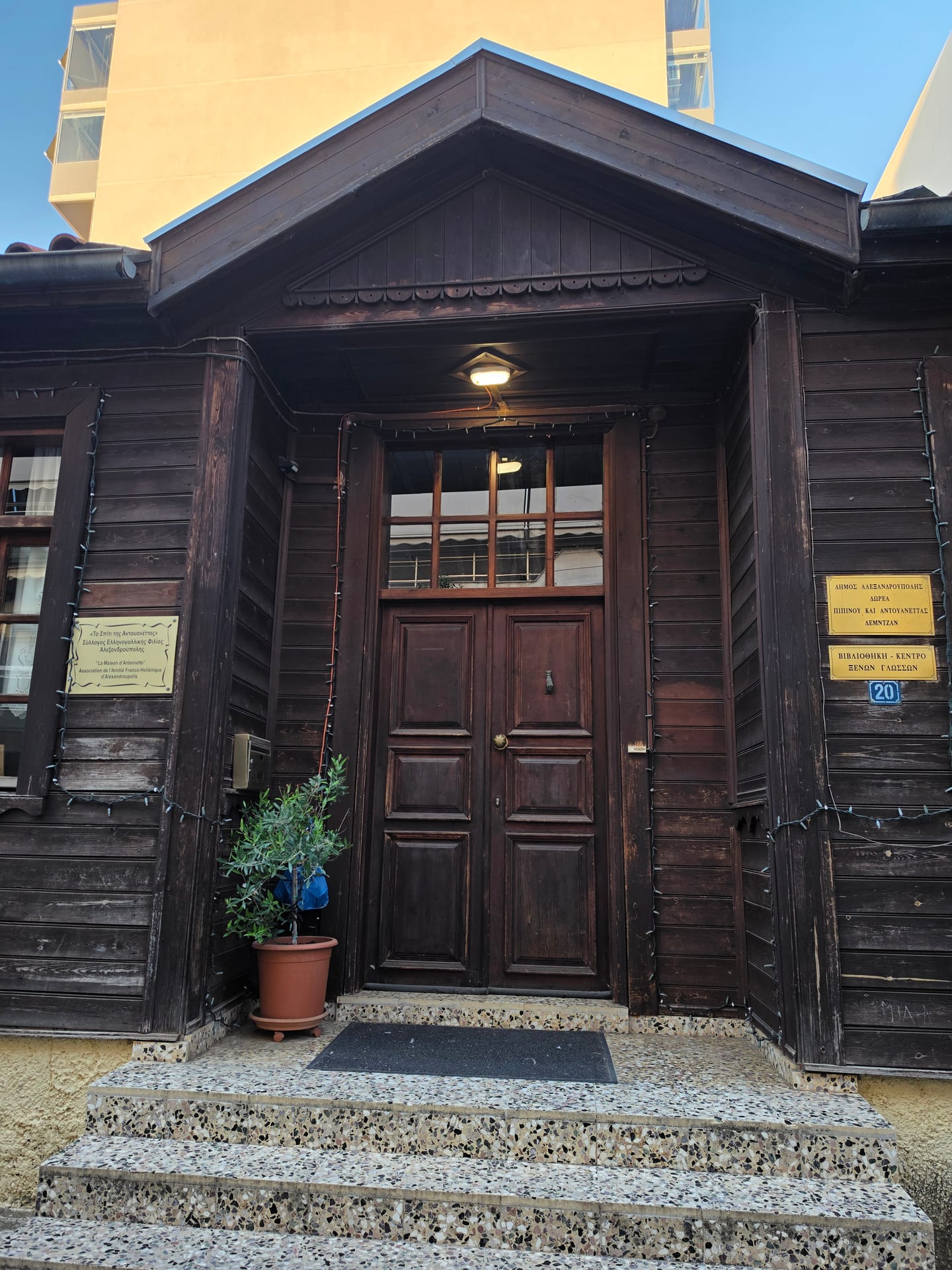
Antoinette Demtsian was the first French teacher of Alexandroupoli. Her wooden house, one of the oldest surviving residences in the city, today houses the Greek-French Friendship Society "Antoinette's House" . It is a symbol of the multicultural character of early Dedeagats, when the city had 8 consulates, French and Austrian post offices, and was a meeting place for Greeks, Armenians, Levantines, and Jews. Biography Antoinette Demtsian belonged to the community of French-speaking families of Dedeagats. In the late 19th century, the city was not a Greek village but an international port. It had a branch of the Ottoman Imperial Bank, the Bank of Thessaloniki, the German Bank of the East, an Austrian and a French post office, and a military and a municipal hospital. In this city, the families who had come from Ainos, Makri, and Maroneia, together with Armenians and Levantines, brought the French language as the language of commerce and diplomacy. Antoinette was the first to teach French systematically to the children of Dedeagats. Not many written sources survive about her life - as with most women of that era in Dedeagats - but her house speaks for her. Antoinette's house The wooden house is one of the oldest residences in Alexandroupoli. It stands near the Post Office building, where the ceremony handing over the city to Greece was signed on 14 May 1920. It is a wooden structure, a characteristic example of Dedeagats' architecture before it became Alexandroupoli - a time when most residences were built of wood rather than stone, unlike the 1899 Altinalmazis mansion. After decades of neglect, the house was saved and today is used by the Greek-French Friendship Society of Alexandroupoli "Antoinette's House" . Activity and memory today The "Antoinette's House" Society has approval from the Ministry of Education and the Institute of Educational Policy, and, in cooperation with the PE05 Educational Work Coordinator of the Regional Directorate of Education of Eastern Macedonia and Thrace, runs an educational programme. The programme has been presented at the 6th Experimental Gymnasium of Alexandroupoli and at other schools in the city. Its goal is for children to discover the multicultural history of Alexandroupoli through the French language. The house can be visited and is a stop on historical walks around the city, together with the 1920 Post Office and the Ethnological Museum of Thrace. Why she is worth remembering Antoinette Demtsian was not a benefactor of money, like Zarifis or Kritis . She was a benefactor of knowledge. At a time when Alexandroupoli was a fishing village, she brought French education. Together with Theodoros Kastanos , who founded the Didaskaleio, and Evangelos Papanoutsos , who directed the Zarifeios, she belongs to the trio of educators who made Alexandroupoli a spiritual centre of Thrace. Visiting Antoinette's House is located in the centre of Alexandroupoli, near 14is Maiou Street. It is one of the very few wooden buildings that survived the city's redevelopment era, when - as the Ethnological Museum's own history notes - "a well-known engineer made sure to demolish most of them."

King Alexander I: the king who gave the city his name
Πρόσωπα

King Alexander I: the king who gave the city his name

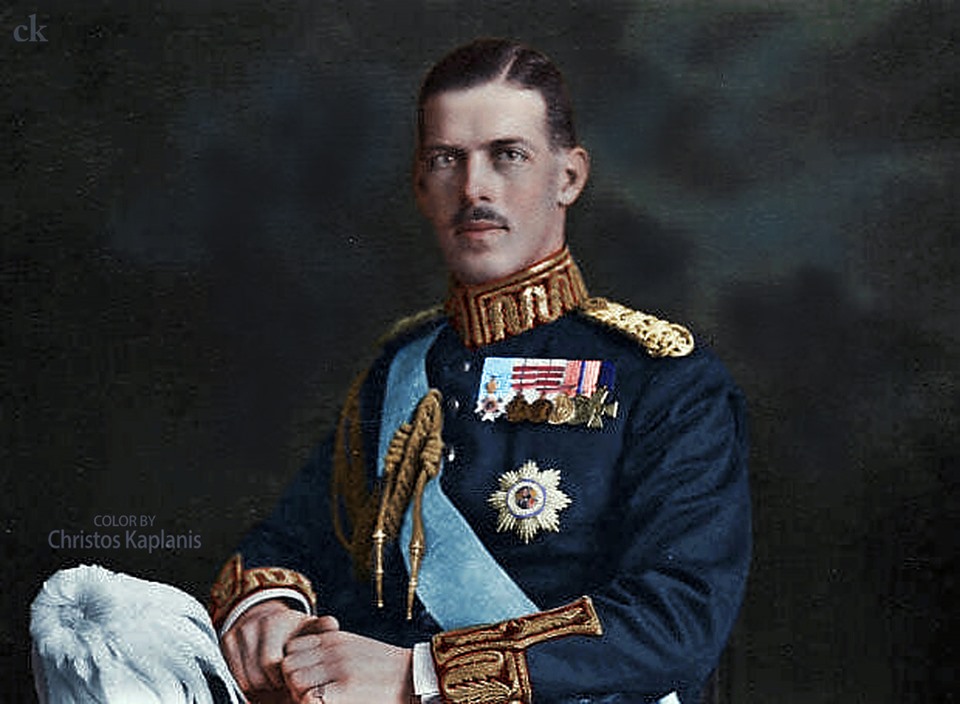
1893-1920 - Reigned 1917-1920 Alexander I was the most unfortunate and most misunderstood king of modern Greece. The second son of Constantine I and Sophia of Prussia, he was never meant for the throne. He ascended it at 23, not through succession but through a political coup engineered by the Allies, reigned for 3 years as a virtual prisoner of Venizelos in his own palace, and died at 27 from a monkey bite - a death that changed the entire course of Greece towards the Asia Minor Catastrophe. In his honour, Alexandroupoli bears his name. Biography Childhood - The mischievous prince He was born on 1 August 1893 at Tatoi, the second son of Crown Prince Constantine. He was a grandson of Christian IX of Denmark, a cousin of George V of England and Nicholas II of Russia, and a nephew of Wilhelm II of Germany. He was very close to his sister Helen, but not to his elder brother George. He was outgoing and mischievous - said to have smoked in secret, set fire to the playroom, and lost control of young Paul's pram. He studied at the Evelpidon Military Academy, was known for his mechanical skill, and was passionate about automobiles - among the first Greeks to own one. He distinguished himself in the Balkan Wars of 1912-13, accompanying his father during the liberation of Thessaloniki. 1917 - How he became king Greece was living through the National Schism. Constantine maintained pro-German neutrality in World War I, while Venizelos formed a government in Thessaloniki alongside the Allies. On 10 June 1917, the Entente's High Commissioner Charles Jonnart ordered Constantine to abdicate, threatening to bombard Piraeus. Constantine left without formally abdicating. The Allies wanted neither a republic nor the pro-German Crown Prince George. They chose the 23-year-old Alexander instead. On 11 June 1917 he was sworn in in the palace ballroom, attended only by Archbishop Theoklitos, his father, his brother, and Zaimis. He was hoarse and in tears. His father told him to consider himself a regent, not a king. His gravestone still reads: "Alexander, Royal Prince of Greece, reigned in place of his father." The king - Venizelos' prisoner The very next day, the entire royal family left for exile in Oropos. Their portraits were taken down, and ministers referred to Alexander as "the traitor's son." On 26 June he appointed Venizelos prime minister. Venizelos watched him day and night, and opened his letters to his parents. Alexander, initially cold towards him, gradually came to admire Venizelos. His only comfort was his childhood friend Aspasia Manou, daughter of Colonel Petros Manos. He fell in love with her in 1915, on Spetses. Marrying a commoner was a scandal for the era. Venizelos initially objected, fearing Alexander would communicate with the exiled royals through his father-in-law, but eventually consented. They married secretly in November 1919, at Zalokostas' house. The marriage was announced 6 months later. Aspasia gave birth to their daughter, Alexandra, 5 months after his death. A Greece of two continents and five seas Under Alexander, Greece's territory doubled. Through the Treaties of Neuilly (1919) and Sèvres (28 July 1920), it gained Western and Eastern Thrace as far as Chatalja, along with Imvros, Tenedos, and Smyrna. Venizelos was crowned with a laurel wreath at the Panathenaic Stadium. The connection to Alexandroupoli On 14 May 1920, Dedeagats was liberated. The local authorities, together with Dr. Achilleas Samothrakis, decided to rename it Neapoli. On 8 July 1920, Alexander visited Dedeagats as part of a tour of Thrace. Mayor Emmanouil Altinalmazis addressed the king and announced that the city was being renamed Alexandroupoli in his honour. In the days that followed: on 12 July the Smyrna Division entered Adrianople amid great enthusiasm, and on 13 July Alexander himself arrived there, welcomed with great splendour. He then visited Raidestos, Saranta Ekklisies, Didymoteicho, and Komotini. By the end of July, all of Eastern Thrace was Greek. It was his last shining moment. The city you see today, with its Lighthouse and fountain, took its name on that very day, from a 27-year-old who did not know he would be dead within 3 months. The strangest death of a head of state On 2 October 1920, during a walk at Tatoi, Alexander's German Shepherd, Fritz, attacked a female monkey (a Barbary macaque) kept as a pet by the estate's caretaker. Alexander tried to separate them, was then also attacked by a male monkey, and was bitten on the leg and hand. At first it seemed insignificant. Within a day or so, high fever, jaundice, and gastrointestinal disturbances set in. The best Greek doctors were called, and Venizelos brought in the world-renowned Dr. Vidal and the surgeon Pierre Delbet. On 22 September, streptococcus was identified; amputation was proposed but rejected. Savas' anti-streptococcal serum was administered. The sepsis spread to one lung. Delbet announced that amputation was no longer an option, due to the extent of the wounds. Alexander died on 12 October 1920, at Tatoi. No member of the royal family was permitted to enter the country, except for his grandmother, Olga. Venizelos delivered the funeral oration. What his death changed After his death, Venizelos called elections for 1 November 1920, framed as a choice between "Constantine or Venizelos." Despite having doubled Greece's territory, he lost. Following a referendum on 5 December, Constantine returned to the throne. The Allies, displeased, left the Greek army unsupported in Asia Minor. The Catastrophe of 1922 followed. As historians have written, these were "tragic developments, which might perhaps have been avoided, had King Alexander lived."

Angelos Poimenidis: the teacher who discovered Alexandroupoli's ancient history
Πρόσωπα

Angelos Poimenidis: the teacher who discovered Alexandroupoli's ancient history

Angelos Poimenidis was not simply a dedicated educator, but the man who gave Alexandroupoli its historical depth, drawing its ancient identity back out of oblivion. Born in 1904 in Ortaköy near Adrianople (present-day Ivaylovgrad, Bulgaria), he lived through displacement and settled permanently in Alexandroupoli in 1924. His professional life became inseparable from the 3rd Primary School, where he served as a teacher and, from 1956, as its headmaster. Alongside his educational work, he developed an immense passion for the archaeological research of the region. The archaeological discovery In 1961 he was appointed extraordinary curator of antiquities for Alexandroupoli. He was the first to systematically research ancient settlements such as Zoni and Mesimvria, recovering valuable coins and pottery shards that today adorn the Archaeological Museums of Komotini and Athens. His crowning discovery came in 1966: studying ancient structures uncovered during the opening of coastal roads, he identified that modern Alexandroupoli is built directly over the ruins of ancient Sale, an important city of the Perea of Samothrace. His legacy In 1963 he published his seminal work "Historical and Archaeological Matters around Alexandroupoli". Ten years after his death (22 October 1968), the city honoured him by officially recognising him in 1978 as one of the four pillars of its intellectual life, alongside Samothrakis, Spanos and Mamelis. Today, in his honour, the 3rd Primary School of Alexandroupoli bears his name.

Eleni Filippidi: the folklorist who saved the Thracian tradition
Πρόσωπα

Eleni Filippidi: the folklorist who saved the Thracian tradition

Eleni Filippidi stands as one of the most charismatic and influential figures in Alexandroupoli's modern history, having devoted her life to preserving and promoting local folklore. Although born in Thessaloniki in 1917, with roots in Siatista, her fate became inseparably linked with Evros, where she settled permanently in 1946. As a student at the Women's Teacher Training College and a violin student at the Macedonian Conservatory, she had the good fortune to study alongside "giants" of Greek tradition such as Stilpon Kyriakidis and Angeliki Hatzimichali. This apprenticeship shaped her vision. Her work in Alexandroupoli In Alexandroupoli she took an active role, serving as president of the historic Ladies' Association (1947-1950 & 1958-1968). Through the association, she not only carried out extensive charitable work but also made an innovative move: she founded a Carpet-Weaving School. There she incorporated motifs drawn exclusively from Thracian tradition, creating carpets that became known nationwide as the celebrated "carpets of Thrace". At the same time, she literally saved, at the last possible moment, Sarakatsani embroidery and weaving. Her invaluable personal collection today forms one of the most precious treasures of the Alexandroupoli Historical Museum. Recognition and legacy In 1975 the Academy of Athens recognised her important work, awarding her for her historical and folklore studies. A year after her death in 1994, the Municipality of Alexandroupoli renamed Prousis Street to "Eleni Filippidi Street", while today the city's 5th High School proudly bears her name.

Margaritis Koutavos: the heroic sea captain of 1821 and the bitter letter of injustice
Πρόσωπα

Margaritis Koutavos: the heroic sea captain of 1821 and the bitter letter of injustice

Thrace's contribution to the Greek Revolution of 1821 was decisive yet often overlooked, with the maritime city-state of Ainos (which then possessed 300 ships) leading the struggle. The foremost figure of this fleet was Margaritis Koutavos. The captain of the Poseidon Son of the great sea captain Hatzis Frantzis Koutavos, the young Margaritis took command of the family ship "Poseidon", armed with 12 cannons. His exploits were epic: he saved hundreds of Chiots during the island's terrible massacre, actively took part in the campaign along the coast of Olympus and in the siege of Chalkida. When his ship was in danger of falling into Ottoman hands, he chose to burn and sink it himself. The newly formed state acknowledged his enormous financial sacrifice (amounting to 37,000 piastres) by simply granting him a state bond. Integrity and service to the new state Beyond his naval skill, Koutavos stood out for his character. In 1825, appointed General Quartermaster of the Athens Camp, he became known for his honesty, going so far as to personally count 46,000 sheep and goats when he suspected abuses by his subordinates. After liberation, he served the Greek state as vice-consul in Kydonies (Ayvalik) and, in 1863, in Varna. The bitter letter of injustice His reward, however, was his unjust dismissal in 1864. He then wrote a monumental, bitter letter of protest that captures the grievance of the Thracian fighters: "Had I been a Peloponnesian or a mainlander...", he wrote, condemning the fact that men who "had never even seen the smoke of gunpowder" were rewarded with ranks and posts, while he, who "ate gunpowder by the handful" and sacrificed his fortune, was cast out into the street. Today, Koutavou Street in Alexandroupoli keeps alive the memory of this selfless patriot and his heroic family.